Why the “AI Slop” Debate Is Being Reframed in 2026
The AI Quality Debate Is Shifting
As AI-generated content becomes deeply embedded in search, productivity tools, and everyday workflows, criticism around quality, reliability, and economic impact has grown louder.
But in early 2026, a noticeable shift in tone has emerged from tech leadership.
Rather than directly addressing whether AI output is accurate, helpful, or harmful, some leaders are reframing the conversation around how people feel about AI, not what AI is doing.
This shift matters — especially for publishers, creators, and marketers already feeling the downstream effects of AI-driven discovery.
A New Framing: Moving Past “Good vs Bad” AI
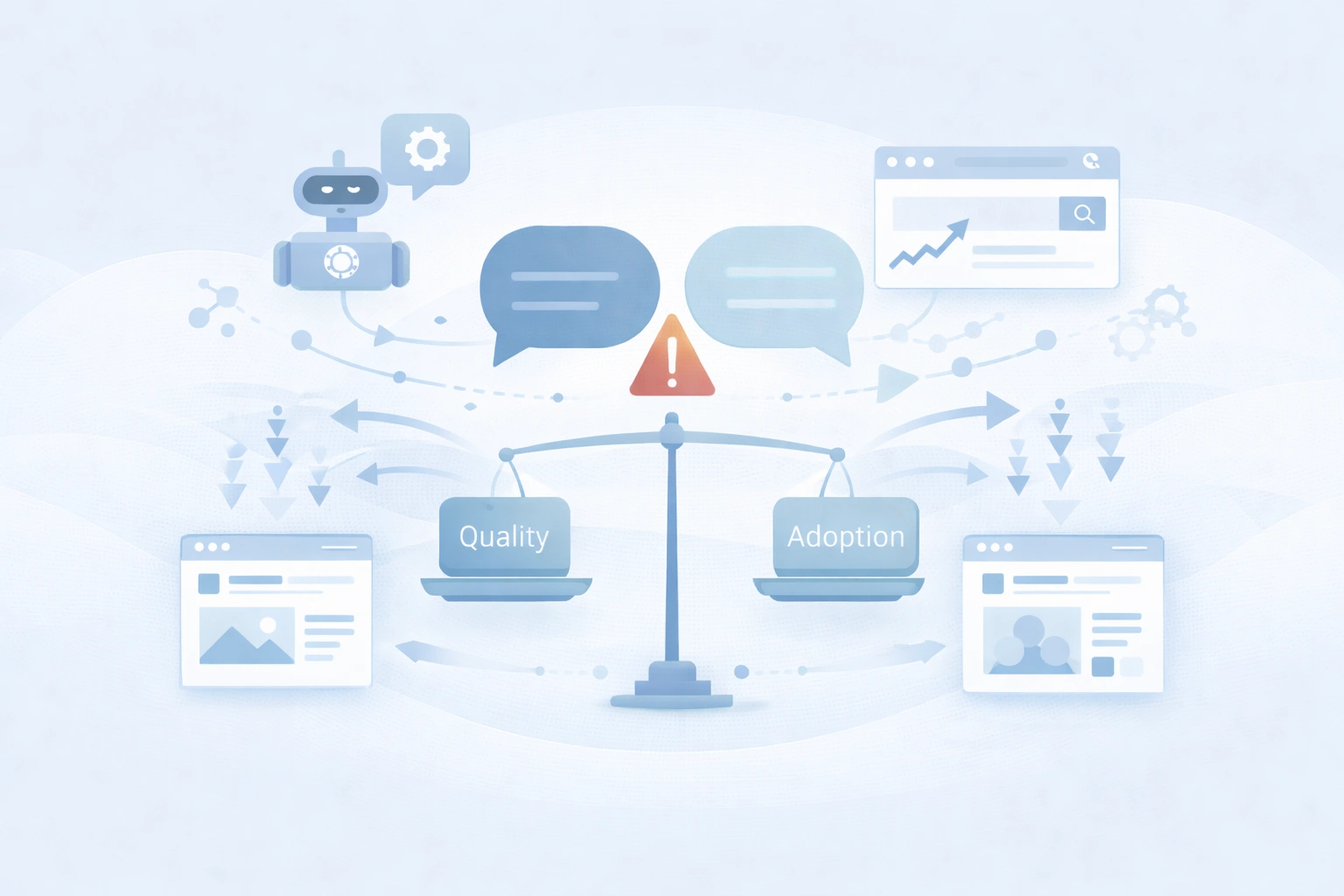
One major theme emerging from recent leadership commentary is a call to move beyond judging AI output as simply “good” or “bad.”
The argument goes something like this:
- AI should be evaluated by how it fits into real-world workflows
- The debate should focus on integration and usefulness
- Quality arguments risk becoming distractions
In this framing, AI is positioned as a tool to amplify human capability, not a finished product to be judged by traditional content standards.
This shift doesn’t deny quality concerns — it redirects attention away from them.
Burnout as an Explanation for AI Pushback
Another framing gaining traction is that resistance to AI is less about flaws in the technology and more about user fatigue.
The idea is that:
- People feel overwhelmed by constant new tools
- Forced adoption creates frustration
- Skepticism is a natural reaction to rapid change
In this view, criticism is treated as an emotional or psychological response rather than a signal of systemic issues.
That interpretation has sparked pushback, especially from professionals who argue their concerns are not about novelty fatigue, but about accuracy, reliability, cost, and control.
Why This Framing Feels Different to Publishers
For publishers, creators, and site owners, this reframing can feel dismissive.
For years, platforms emphasized:
- Content quality standards
- Expertise and trust signals
- Responsibility in sensitive topics
At the same time, AI systems now:
- Summarize content directly
- Reduce the need to click through
- Provide answers with limited transparency
When leaders encourage moving past quality debates, publishers hear something else:
“The system is changing, and quality concerns are no longer central to the conversation.”
The Traffic Reality Behind the Debate
This conversation isn’t happening in a vacuum.
Publishers continue to document:
- Declines in organic traffic
- Higher zero-click search rates
- Reduced referral value
When AI-generated summaries appear, users are far less likely to visit external websites. While platforms often describe remaining traffic as “higher intent,” volume still matters for ad revenue, subscriptions, and sustainability.
For many publishers, the issue is not philosophical — it’s economic.
Crawling vs Referrals: A Growing Imbalance
Another concern emerging alongside AI summaries is the imbalance between:
- How much content is crawled
- How little traffic is returned
AI systems require vast amounts of content to function, but referrals back to original sources are becoming increasingly rare.
This disrupts the long-standing understanding of the web:
Content is shared freely in exchange for visibility and traffic.
When that exchange weakens, publishers question whether the relationship remains fair.
Why the “Quality Debate” Isn’t Going Away
Reframing criticism as burnout or distraction may change the tone of the conversation, but it doesn’t eliminate the underlying issues.
Concerns remain around:
- Accuracy and hallucinations
- Accountability for errors
- Transparency in sourcing
- Economic impact on content creators
For publishers, these are not abstract worries. They affect hiring, investment, and long-term viability.
What This Signals for 2026
The messaging coming from tech leadership suggests how AI criticism may be handled moving forward:
- Less focus on output quality
- More emphasis on adoption and integration
- Framing resistance as emotional rather than structural
That doesn’t mean products won’t improve — but it does suggest the burden of adaptation is shifting toward users and publishers, not platforms.
What Marketers and Publishers Should Watch
In 2026, it’s worth paying attention to:
- How quality standards are enforced (or relaxed)
- Whether referral incentives change
- How transparency around AI citations evolves
- Whether product design responds to publisher feedback
The language leaders use often signals future priorities.
Final Thought: Reframing Doesn’t Resolve the Tension
The debate around AI quality isn’t just about taste or burnout.
It’s about:
- Accuracy
- Trust
- Economics
- Sustainability of the open web
Reframing criticism may reduce friction in the short term, but the underlying tension remains unresolved.
In 2026, the question is no longer whether AI will be everywhere — it already is.
The real question is:
Who absorbs the cost of that transformation, and who benefits from it?