

Hey there, content creators and website owners! Have you noticed how fast the world of search is changing? It’s not just about keywords anymore. With the rise of generative AI, how people find and interact with information is getting a whole new twist. This means our approach to creating amazing content needs to evolve too. That’s where something called “Prompt Research” comes in. Think of it as a super-powered way to understand what your audience truly wants to know, especially when they’re talking to AI systems or using search engines that anticipate their needs. It helps your content shine in both traditional search results (SEO) and those clever, AI-generated answers (GEO). Why Your Content Needs a Fresh Look To really stand out today, your content needs to be more than just a collection of facts. It needs to cover a topic comprehensively, like a helpful friend explaining everything you could possibly want to know. It also needs to provide the clear context that AI systems rely on to give accurate, synthesized answers. Here’s how we can make our content smarter: Be the Authority: Don’t just answer one question; aim to answer all the related questions around a topic. This builds your “topical authority,” making you a go-to source. Clear Connections: When you mention companies, products, or ideas, make sure their relationships are crystal clear. Search engines and AI love understanding how things fit together. Organized & Tidy: Well-structured content with clear headings, short paragraphs, and logical sections is a dream for both humans and machines. It helps them quickly grasp your main points. Talk Like a Human: People ask questions in natural language. If your content directly answers those natural questions – with explanations, comparisons, and FAQs – it’s far more likely to resonate with both search queries and AI prompts. Your Simple Blueprint for Prompt Research So, how do you actually do this “prompt research”? It’s simpler than it sounds, and we can break it down into four friendly steps: Discover What People Ask: Start by looking where your audience hangs out. This could be your AI chat logs, customer support questions, community forums, or even looking at how AI-assisted search experiences provide information. You’re looking for real questions people type in! Group Similar Questions: Once you have a bunch of questions, group them together. You’ll start to see patterns – some are “what is it?” questions, others are “how do I do it?” or “which is better?”. This helps you understand the different ways people explore a topic. Connect to Your Content: Now, look at your existing content. Which of these clustered questions do you already answer? What new content could you create? This step helps you fill in gaps and make sure you’re addressing what people truly want to know. Optimize Your Answers: Finally, make sure your content is designed to give clear, concise answers. Put key explanations right at the top of sections. Use FAQ sections that directly mirror the questions you discovered. Support your points with examples or data. This makes your content super user-friendly and highly digestible for AI. By embracing prompt research, you’re not just chasing trends; you’re building content that truly serves your audience, no matter how they’re searching. It’s about being helpful, clear, and always one step ahead in this exciting new world of digital information.

Prompt Research: Essential SEO for the Conversational AI Era
Hey there, fellow content creators and digital explorers! You know how the digital world is always shifting, right? Just when we thought we had a handle on SEO, a whole new layer appears, bringing exciting new opportunities and a fresh way to think about how people find information. For years, our focus has been on keywords – understanding what people type into a search bar. But things are evolving. We’re now entering an era where AI-powered search is becoming incredibly conversational. Think about it: you’re probably already asking questions to AI tools the same way you’d chat with a friend or a colleague – in full, natural sentences, with context, and often with follow-up questions that build on the previous answer. Welcome to the World of Prompt Research This shift isn’t just a minor tweak; it’s a fundamental change in how discovery happens. Instead of just matching keywords, generative AI systems synthesize answers by pulling together information they deem credible and relevant to your *prompt*. This means that for your content to truly shine and be found, it needs to align with the actual questions and conversational patterns people are using when they interact with AI systems. This isn’t to say traditional search results are disappearing. Not at all! Our current discovery landscape is a rich blend of classic ranked results, AI-generated summaries, and those helpful conversational assistants. But this blending introduces a crucial new layer of understanding: **prompt research**. It’s fast becoming a foundational practice for both traditional SEO and what we’re now calling Generative Engine Optimization (GEO). So, what does prompt research really mean for us? It means we need to dig deeper than just keywords. We need to understand *how* prompts are phrased, *how* they’re sequenced, and *how* users refine their questions in a conversational flow. Instead of optimizing for isolated queries, we’re now thinking about the entire dialogue, the user’s evolving intent, and the multiple steps in their information-seeking journey. This is where the magic happens. By understanding these prompt patterns – the natural language, the context, the follow-up questions – we can craft content that doesn’t just rank, but truly answers, engages, and satisfies the curiosity of users in this new conversational search environment. It’s about being truly helpful, just in a slightly different way than before. So, let’s embrace this exciting evolution and start exploring the fascinating world of prompt research!

Beyond Keywords: Prompt Research for AI Search
Navigating the New Frontier of Search: Welcome to Prompt Research! Ever feel like the internet is constantly evolving? Just when we get comfortable with one way of doing things, a new shift comes along to keep us on our toes. And right now, the biggest shift is happening in how we search for information, thanks to the incredible rise of AI. Remember when searching meant typing a few keywords into a box? Well, those days aren’t entirely gone, but a whole new layer has emerged. Today, more and more people are turning to AI assistants and generative tools, asking questions just like they would a friend or colleague. They’re using full sentences, adding context, and often having a multi-turn conversation to get exactly what they need. Beyond Keywords: The Power of Conversation This means search isn’t just a lookup anymore; it’s a dialogue. Users ask an initial question, review the AI’s response, and then refine their query with follow-up prompts – adding more details, asking for comparisons, or specifying new conditions. This conversational flow, often driven by voice interfaces and natural language, builds a chain of intent. For us, this introduces a crucial new practice: prompt research. Think of it as the next evolution of keyword research. Instead of simply analyzing what terms people type, prompt research digs into the actual questions people ask AI systems, how those questions evolve, and what kind of answers those systems produce. Why Prompt Research is Your New Best Friend for Content Why does this matter? Because AI systems synthesize answers from sources they deem credible and relevant to the *prompt*. If your brand’s content isn’t structured to align with these conversational questions, you might miss out on being the trusted source AI shares. It’s about being visible where your audience is truly having their conversations. Prompt research helps you identify recurring question patterns and anticipate how a user’s inquiry might expand. For example, someone might start with, “What are the best CRM tools for small businesses?” But then follow up with, “Which ones integrate with Mailchimp?” or “What features are essential for a team of five?” Understanding this journey allows you to craft content that addresses the entire conversation, not just the starting point. This isn’t about ditching traditional SEO; it’s about expanding it. Prompt research allows you to move beyond optimizing individual pages to creating content clusters that answer a whole network of related questions. It’s about being thoughtful, comprehensive, and truly helpful in the age of conversational AI. Embracing this new layer ensures your brand continues to show up and shine wherever your customers are searching.

How Prompt Research Shapes Your AI Content Strategy
Hey there, content creators and curious minds! Have you ever noticed how the way we search for information keeps getting smarter, almost like it’s reading our minds? It’s an exciting time, because our online conversations are changing, and with them, how our content gets discovered. Gone are the days when searching meant just typing a few isolated keywords into a box. Thanks to the magic of AI, our search interactions are becoming wonderfully conversational. We’re now chatting with AI tools almost like we’re asking a friend or colleague for advice – using full sentences, adding context, and even following up with more questions to refine our search. Think about it: when you’re looking for something, you might start with a broad question. Then, based on the answer, you add specifics, ask for comparisons, or introduce new conditions. This back-and-forth isn’t just a quirk; it’s the new normal. AI assistants and voice search encourage this natural way of speaking, turning a simple lookup into a dynamic conversation. The Rise of Prompt Research This big shift brings us to a really important new practice called “prompt research.” If you’re familiar with keyword research – understanding what words people type into search engines – then prompt research is its savvy, AI-era sibling. It’s all about digging into the actual questions people ask AI systems and figuring out how those prompts shape the answers they get. For example, instead of just optimizing for “email marketing tools,” you’d look at how a user’s inquiry might unfold: “What are the best email marketing tools for small businesses?” “Which of those are easiest for beginners?” “How does Mailchimp compare to ConvertKit for someone starting out?” Prompt research helps us identify these conversational patterns. It’s about understanding not just the initial query, but the whole journey of questions a user might take. Why This Matters for Your Content So, why should you care? Because AI systems synthesize answers from sources they deem credible and relevant to these evolving prompts. This means your content’s visibility increasingly depends on whether it aligns with the actual questions and follow-ups people are asking AI, not just the keywords they type into traditional search engines. By understanding these prompt patterns, you can structure your content to answer a wider range of related questions, anticipate user intent, and provide comprehensive, helpful information that AI systems will love to pull from. It expands your content strategy from just individual pages to entire clusters of related questions and topics. It’s an exciting challenge, but ultimately, it means creating content that’s even more helpful and human-centric. By embracing prompt research, you’re not just optimizing for machines; you’re truly speaking to your audience’s curiosity and needs, one thoughtful conversation at a time.

Google On Phantom Noindex Errors In Search Console
Google’s “Phantom” Noindex Errors: What They Mean for Your SEO Decoding Phantom Noindex Errors Google Search Console sometimes reports “indexed, though blocked by robots.txt” or “noindexed” errors when your page is actually perfectly fine. John Mueller recently confirmed these can be “phantom” issues. These aren’t always real problems with your site. Often, Search Console is showing a cached or historical view, or it’s simply delayed in updating its status. It means Google *perceived* a block or `noindex` directive at some point, even if that directive has since been removed or was never truly there for long. Why This Isn’t Just Noise Phantom errors are problematic because they create unnecessary work and panic. You might spend valuable time troubleshooting an issue that doesn’t exist. This diverts your focus from real SEO priorities like content optimization, link building, or addressing actual technical debt. Misinterpreting these errors can lead to poor decisions about your site’s indexation strategy, slowing your growth. Practical Steps: How to Verify and Act The core issue here is often a reporting lag within Search Console itself. Your immediate action should be verification, not immediate panic. When you see one of these “phantom” reports, always cross-reference with live data. Inspect Live URL: Use the URL Inspection Tool in Search Console. Click “Test Live URL” to see Googlebot’s current perspective. Check Source Code: Manually view the page’s source code for a `<meta name=”robots” content=”noindex”>` tag. Verify Robots.txt: Ensure your `robots.txt` file isn’t blocking the specific URL or directory. Site Search: Perform a `site:yourdomain.com/exact-page-url` search on Google. If it appears, it’s indexed, regardless of what GSC might be lagging on. Real-world example: An e-commerce site briefly set a new product launch page to `noindex` during staging. When live, they removed the tag. Search Console continued reporting “noindexed” for a week. A quick `site:` search revealed the page was already ranking, proving the GSC report was outdated. The Deeper Takeaway Don’t treat Search Console as a real-time indexation monitor. It’s a diagnostic tool that provides insights, but its data isn’t always immediate or perfectly reflective of Google’s current index state. Your primary focus should always be on controlling what you send to Google: correct `noindex` tags, accurate `robots.txt` directives, and clean sitemaps. Trust your direct checks over a potentially stale report. Focus on what you can control to ensure proper indexing, rather than chasing ghosts. Quick Q&A Q: How long does it take for GSC to update? A: It varies significantly. For some pages, updates can be near-real-time; for others, especially those with less frequent crawling, it can take days or even weeks. Q: Should I ignore all GSC errors? A: Absolutely not. This applies specifically to confirmed “phantom noindex” errors. Always investigate other reported issues thoroughly, as most Search Console alerts are critical indicators of real problems.
Google’s Mueller: Free Subdomain Hosting Makes SEO Harder
Why Free Subdomain Hosting Hampers Your SEO Efforts John Mueller from Google recently reiterated a critical point: relying on free subdomain hosting platforms can complicate your SEO. This isn’t about avoiding a small fee; it’s about fundamentally misunderstanding how Google assesses digital real estate. What Free Subdomains Actually Mean for Google When you build on a free subdomain (e.g., `yourbrand.wixsite.com` or `myblog.blogspot.com`), you’re not owning the primary domain. You’re essentially building a sub-section on someone else’s much larger property. Google sees `wixsite.com` or `blogspot.com` as the primary entity, not your specific brand. Your content exists, but its authority and perceived independence are tied to the host, not truly yours. It’s like renting a small stall inside a giant marketplace versus owning your standalone shop. The Real Impact on Your Organic Growth This structure creates significant challenges for long-term SEO. The core issues are clear: Authority Dilution: Any links, trust signals, or domain authority you build primarily benefit the root domain (Wix, Blogspot, etc.), not your specific subdomain. You’re lending strength to the platform, not consolidating it for yourself. Perceived Trust: While Google indexes these sites, free subdomains are often associated with temporary projects, personal blogs, or even spam. This can subconsciously affect how quickly Google grants high levels of trust for competitive queries. Limited Control: You have fewer technical SEO controls. Advanced features like server-level redirects, specific caching, or deep analytics integrations might be restricted. These are vital for maximizing performance. Branding Weakness: A custom domain (`yourbrand.com`) immediately signals professionalism and permanence. A free subdomain can inadvertently convey a hobbyist approach, even if your business is serious. Consider a small, local accounting firm. If they launch on `accountantspro.wordpress.com`, they face an uphill battle. Every local citation, every quality backlink, every piece of authoritative content they create is feeding the `wordpress.com` domain’s overall authority, not exclusively their own digital asset. It dilutes their ability to become the definitive local resource in Google’s eyes. How to Prioritize Your Digital Real Estate For any business serious about growth, owning your primary domain is non-negotiable. It’s the foundation of your entire online strategy. Invest in a custom domain and professional hosting. This ensures: All SEO efforts accumulate directly to your brand. You have full control over technical optimizations. Your brand looks credible and professional. This isn’t just about SEO; it’s about building a sustainable, valuable digital asset that you truly own and control. FAQ: Should I Ever Use a Free Subdomain? Q: Is a free subdomain ever acceptable? A: For truly temporary projects, personal non-business hobbies, or testing ideas without serious long-term intent, yes. For any business, brand, or project aiming for sustained visibility and growth, absolutely not. It’s a short-term convenience with long-term penalties. Q: What’s the immediate alternative? A: Purchase your own domain name (often under $15/year) and secure reliable hosting (can start around $5-10/month). Migrate your content to `yourbrand.com` as soon as possible. The upfront cost is minimal compared to the compounding SEO benefits.
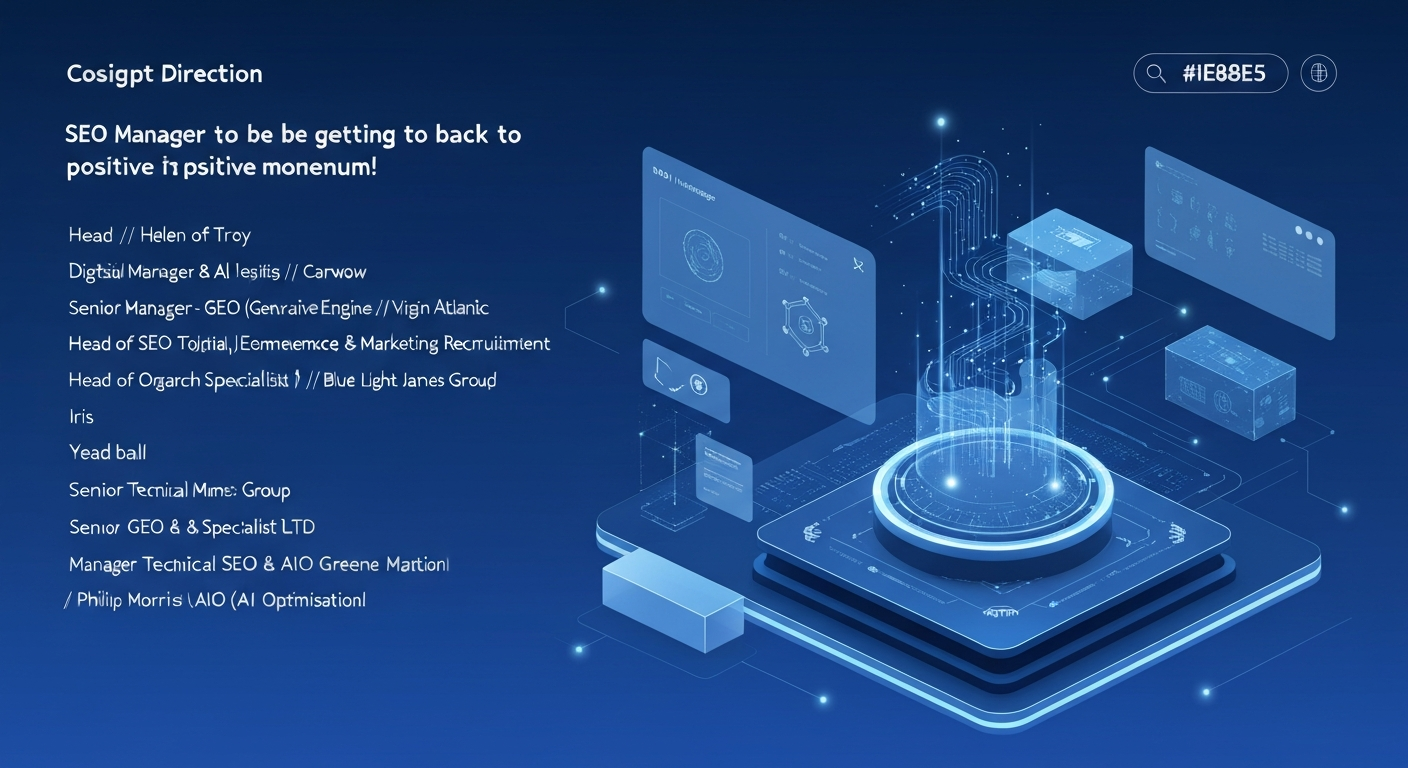
SEO’s Positive Momentum: Understanding the Evolving Search Landscape
If you’ve been around the digital block a few times, you might have heard whispers that SEO is ‘dead’ or ‘dying.’ But let me tell you, that couldn’t be further from the truth! In fact, it feels like we’re experiencing a fantastic resurgence, a real positive shift in momentum for all things search. It’s not just a feeling either; the job market is buzzing with activity. I’ve seen some incredibly exciting roles popping up recently that really underscore this renewed energy. We’re talking about positions like ‘SEO Manager’ at big-name brands and ‘Organic Growth Managers’ who are championing how businesses are found online. This shows that the foundational need for visibility is as strong as ever. But here’s where it gets truly fascinating: the evolution of SEO itself. We’re now seeing dedicated roles focused on ‘Generative Engine Optimisation’ (GEO) and even ‘AI Optimisation’ (AIO). Think about that for a moment! This isn’t just about tweaking keywords anymore; it’s about understanding how new AI-powered search engines generate answers and how we can best help our content be discovered in those exciting, dynamic spaces. These new job titles, from ‘Senior Manager – GEO’ at a major airline to ‘Manager Technical SEO & AIO’ at a global company, clearly show that businesses aren’t just dabbling in AI; they’re investing heavily in professionals who can navigate and shape the future of digital discovery. It’s a clear signal that SEO isn’t just surviving; it’s adapting, expanding, and becoming more vital and complex than ever before. So, if you’ve been thinking about getting into digital marketing, or if you’re already in the field and wondering about its future, take heart! The world of search is vibrant, constantly evolving, and full of incredible opportunities. It’s a dynamic space where curiosity, adaptability, and a genuine passion for helping people find what they’re looking for are your greatest assets. It’s a great time to be in SEO, and it’s only going to get more fascinating!
Databricks’ Dual AI Strategy: Genie Code and Quotient for Agent Evals
Hey there, amazing folks! Have you ever started a new project, super excited to build something incredible, and then realized how important it is to make sure it actually works, and works well? That feeling of balancing innovation with reliability is something many of us can relate to. Well, in the fast-paced world of artificial intelligence, a similar balancing act is constantly underway. And recently, Databricks, a big name in the data world, made some really thoughtful moves that highlight both sides of this coin: building AI faster and ensuring it’s trustworthy. First up, they launched something called Genie Code. Imagine having a super smart assistant that helps you write code faster and more efficiently. That’s essentially what Genie Code aims to be. For data professionals and developers, this is a game-changer. It means less time bogged down in repetitive coding tasks and more time focusing on the exciting, creative parts of building AI models and applications. It’s all about empowering teams to innovate at speed, democratizing access to complex AI capabilities and making development smoother. But here’s the often-overlooked secret to truly powerful AI: evaluation. It’s not enough to just build; you have to test, refine, and trust what you’ve built. This is where Databricks’ acquisition of Quotient AI comes in. Quotient AI focuses on “agent evaluations.” In simple terms, this means checking how well these smart AI programs (or “agents”) are performing their tasks. Are they accurate? Are they fair? Are they doing exactly what they’re supposed to do, every single time? Just like you’d test a new recipe before serving it to guests, or rigorously check new software before a big launch, evaluating AI agents is crucial to ensure they’re reliable and safe for real-world use. This two-pronged approach from Databricks is incredibly thoughtful. On one hand, Genie Code helps you accelerate the creation of AI. On the other, Quotient AI ensures that the AI agents we create are not just clever, but also robust, reliable, and truly beneficial. It’s like building a high-performance race car (Genie Code helping you assemble it quickly) and then putting it through rigorous track tests and safety checks before it ever hits the main road (that’s Quotient AI). For all of us navigating the exciting world of AI, this sends a clear message: the future isn’t just about building more AI, but about building better, more responsible, and more trustworthy AI. And that’s a future we can all feel good about.

5 AI Bots Every Digital Marketer Needs to Build
Hey there, fellow marketers! Let’s chat about something truly exciting: the incredible world of AI. It’s no secret that artificial intelligence is reshaping how we work, especially in digital marketing. But often, we think of AI as something big tech companies build for us to use. What if I told you that you, a digital marketer, could actually *build* your own AI bots? I know, it might sound intimidating, but hear me out! We’re not talking about complex coding here. We’re talking about leveraging accessible tools and platforms (think custom GPTs, no-code automation, or smart prompt engineering) to create simple, powerful bots that can seriously supercharge your daily tasks. It’s about moving beyond just using AI to actively shaping it to fit your needs. Think of it as crafting your own little digital assistant. Ready to dive in? Here are five AI bots every digital marketer should consider building to unlock new levels of efficiency and creativity. 5 AI Bots to Empower Your Marketing The Content Idea Generator Bot Ever stare at a blank screen, feeling that familiar pinch of writer’s block? This bot is your new best friend. Feed it a topic, a keyword, or even just your niche, and watch it spit out fresh blog post ideas, social media themes, or video concepts. It’s like having a brainstorming partner available 24/7, ready to spark your creativity and keep your content calendar full. The Social Media Post Creator & Optimizer Bot Crafting engaging social media updates can be time-consuming. Imagine a bot that helps you draft catchy captions, suggests relevant hashtags, and even optimizes post length for different platforms. You provide the core message or a link, and it generates several options, freeing you up to focus on strategy and engagement. The Basic Customer Service FAQ Bot Many customer inquiries are repetitive. Building a simple FAQ bot can be a game-changer for your website or even within a messaging app. It can answer common questions about products, services, or shipping, providing instant support and reducing the workload on your customer service team. This allows you to focus on more complex, high-value interactions. The Ad Copy & Headline Variator Bot Running ad campaigns means constantly testing new copy and headlines. This bot helps you generate multiple variations of your ad copy based on a single core message. It can suggest different angles, calls to action, and emotional appeals, giving you a wider array of options to test and significantly improve your ad performance. The Email Subject Line & Preview Text Bot Open rates are crucial for email marketing success. A bot that generates compelling subject lines and preview texts can make a huge difference. You give it the email’s purpose or main offer, and it provides several optimized options designed to grab attention and boost those open rates. It’s a small tweak that can lead to big results. Building these bots isn’t about replacing human creativity; it’s about augmenting it. It’s about taking the mundane and making it efficient, so you have more time for strategy, relationship-building, and truly impactful work. Don’t be afraid to experiment! Start small, see what works, and watch how these little digital helpers transform your marketing efforts. The future of marketing is in your hands – go build something amazing!

The Real Tools Used to Make Reels Viral
Hey there, fellow creative! Have you ever scrolled through your feed, stopped dead in your tracks, and thought, “Wow, how did they make that reel go viral?” It’s a common question, and it often leads us to wonder about the ‘secret sauce’ – specifically, the exact tools creators are using. It’s natural to think there’s some magical software or expensive gadget behind every viral hit. But here’s a little secret: while tools are super helpful, they’re rarely the whole story. Think of it like a chef – a great chef can make an amazing meal with basic kitchen tools, but even the fanciest gadgets won’t turn an inexperienced cook into a culinary wizard overnight. It’s about skill, creativity, and understanding your audience, too! The Go-To Tools That Truly Help That said, having the right tools certainly makes the creative process smoother and more professional. Here are some of the popular categories and examples that many successful creators lean on: Video Editing Apps: This is where the magic really comes together. For quick, mobile-first editing, apps like CapCut and InShot are incredibly popular because they’re user-friendly, packed with features, and often free or very affordable. For more complex projects, creators might step up to desktop software like DaVinci Resolve (which is free and powerful!) or Adobe Premiere Pro/Rush. Audio & Music: A reel is nothing without great sound! Most editing apps offer vast music libraries, but creators also use royalty-free music sites to find unique tracks that resonate with their content. Lighting & Stability Gear: You don’t need a professional studio, but good lighting (even natural sunlight!) and stable footage make a huge difference. A simple ring light or a small tripod/gimbal can elevate your production value significantly. Idea & Trend Research: This isn’t a physical “tool,” but it’s crucial! Successful creators are constantly on social platforms, observing trends, listening to popular audio, and brainstorming unique angles for their content. This ‘tool’ is pure observation and creativity! It’s More Than Just the App What truly makes a reel go viral isn’t just *which* button they pressed in CapCut, but *why* they pressed it. It’s about knowing your message, understanding what resonates with people, and then using these accessible tools to bring that vision to life. The beauty of today’s technology is that the barrier to entry is lower than ever. You can create incredible, high-quality content right from your phone. So, instead of chasing the “exact tool,” focus on honing your craft, experimenting with storytelling, and letting your unique voice shine through. The tools are there to support your brilliance, not to create it for you. Keep creating, keep learning, and who knows? Your next reel might just be the one that takes off!