

Namaste, fellow MBA-passouts and chai-fueled corporate warriors! So, you did the MBA grind—group discussions, awkward presentations, case studies that felt like Netflix thrillers, and sleepless nights (thanks to PPT deadlines and last-minute economics mugging). You now officially have the license to say “let’s circle back” even if nobody knows where the circle started. Now comes the million-rupee question (because we don’t deal in millions of dollars yet): “MBA ke baad kya karein?” First, breathe. You’ve survived B-school. That alone deserves a standing ovation (and a weekend getaway). Quote of the Blog: “MBA doesn’t guarantee success, but it does make you fluent in sounding successful in every meeting.” 🎯 1. Corporate Jobs – The Classic Placement Plot Twist The most popular route: getting placed into companies that pay you to do what you discussed in your MBA group projects — only with actual consequences. Marketing: Brand Manager, Digital Marketing Head, Product Manager (Kya aapke toothpaste mein namak hai? You’ll be the one asking.) Finance: Investment Banker, Financial Analyst, Risk Manager (Markets down? Blame the intern.) HR: Talent Manager, L&D Head, HRBP (Also known as Chief Birthday Cake Arranger.) Operations & Supply Chain: Efficiency guru, Procurement ninja (Jugaad meets logistics) IT/Systems: Business Analyst, Product Owner (Explain tech to non-tech people while sounding smart) Packages vary, but one thing’s constant—chai and meetings. 💼 2. Startup Life – Become the Jugaadu Entrepreneur If you’ve got the “Shark Tank India” bug or watched too many TEDx talks, this one’s for you. Start your own venture and make your MBA worth every EMI. You can also join a budding startup as a co-founder, growth hacker, or strategy head. Roles are chaotic, but learning = 10x. Reality check: You may end up being the founder, marketer, HR, delivery guy, and office boy—sometimes all in one day. But hey, at least you’ll be on Forbes 30 Under 30… in your WhatsApp bio. 🧳 3. Consulting – Kyunki Gyaan Har Jagah Bikta Hai Want to use 10-slide decks to solve global problems? Join firms like McKinsey, BCG, Bain (if you’ve cracked the secret MBA code). Or go for boutique consultancies or niche sectors like education, healthcare, etc. Your job? Give expert advice. Your tool? PowerPoint. Your enemy? Excel crashing before deadline. You’ll fly business class before you buy a business class ticket. 🧠 4. Product Management – The Cool MBA Job Everyone Wants Ah yes, PM = Product Manager, not Prime Minister. Manage digital products like apps, websites, software. Ideal for MBA + tech combo folks. Work with designers, developers, and customers while looking serious in Zoom calls. Bonus: You get to say “Let’s A/B test this” like it’s rocket science. 🌏 5. Go Global – MBA Ko International Banana Hai? Use your MBA to apply for: Jobs abroad (MNCs, tech giants, etc.) Global fellowships or executive programs Internships with international exposure You’ll learn new ways to say “let’s touch base,” possibly in French or German. 📈 6. Freelancing & Independent Consulting – Be Your Own Boss (Literally) Why work under someone when you’ve got an MBA? Offer consulting services to SMEs, startups, or solopreneurs. Freelance in digital marketing, business strategy, or operations. Freedom, flexibility, and lots of chai at your own desk. Caution: No paid leaves. But also no office politics. 🏛️ 7. Government Sector – MBA + Sarkari Naukri = Stability Jackpot MBA grads are eligible for roles in: PSU Management Trainee posts RBI, NABARD, SEBI UPSC (if you’re in the mood for more exams) Safe job, pension dreams, and an “officer” tag your relatives will worship. 🎤 8. Teaching & Academics – Guru Bano, Gyaan Do If you enjoy guiding confused souls (like yourself two years ago), teaching might be for you. Teach at B-schools, conduct workshops, become a guest faculty. Requires UGC NET for some roles. You’ll get to say “Back in my MBA days…” unironically. 🎯 Final Gyaan: MBA is a Key, Not a Guarantee Dear MBAs, the degree doesn’t hand you success in a gift-wrapped PPT. But it sharpens your ability to solve, sell, strategize, and story-tell. Whether you end up in a 10x startup, a Fortune 500 company, or launch your own chai delivery empire, the MBA spirit is all about: “Let’s make things happen… and if not, let’s pivot!” Now go wear that formal shirt over pyjamas (because WFH still exists), update your LinkedIn bio, and chase your version of success. MBA ho gaya? Ab zindagi ko pitch karo like a boss.

Lack of Support: The Silent Syllabus No One Talks About
Lack of support isn’t a chapter in the textbook Imagine preparing for a final exam, your brain is fried, the pressure is at its peak, and you reach out to someone… but all you get is a “hmm.” That’s not a response, that’s emotional buffering. For many students, lack of support isn’t a chapter in the textbook—it’s the whole book. Whether it’s academic guidance, emotional backing, or just a listening ear that doesn’t say, “Itna stress kyun lete ho?”, the absence of a support system can feel heavier than a semester’s worth of group projects where you did all the work. “Sometimes the loudest thing in a student’s life is silence—from those who were supposed to stand beside them.” The Three Types of “Support Missing” in a Student’s Life: 1. Academic Guidance? Error 404 Not Found You ask a doubt in class. The professor answers like you’re pursuing a PhD in rocket science. Your peers nod in agreement but also look equally lost. Welcome to the blind-leading-the-blind university of life. Tip: Find your tribe. Study groups, forums, or even that one genius in class who actually enjoys explaining concepts—cling to them like Wi-Fi in a train. 2. Emotional Support: The Invisible Best Friend Sometimes all a student needs is someone to say, “I get it.” But instead, you get unsolicited advice or worse, comparison. “When I was your age…” Uncle, please. You also wore bell bottoms unironically. Tip: Vent without seeking solutions. Journaling, trusted friends, or even pets (they won’t interrupt)—just unload your brain clutter. 3. Parental Support: Love With a Side of High Expectations Parents mean well, but the translation from “I’m proud of you” to “Sharma ji ka beta…” is an art form we wish was less common. Many students feel the pressure to constantly achieve, fearing that anything less than an A+ is an emotional bankruptcy. Tip: Communicate clearly. Express feelings without drama or sarcasm (even if it’s tempting). Sometimes parents need help understanding what “support” looks like today. 📎 So What Can We Do? Support doesn’t always mean grand gestures. Sometimes it’s a quick reply, a non-judgmental talk, or someone simply showing up—like that one friend who always has class notes ready. If you’re a student, remember: it’s okay to ask for help, repeatedly if needed. And if you’re someone who can offer help—do it. Your one small check-in could be someone’s major turning point. Need help doesn’t mean you’re weak. It means you’re human. And humans thrive in communities, not silos.

Hi Boss! Let’s Talk About Why You Bought That Jacket You Hated
Hello-ji! Ever agreed to a movie plan, worn something totally not you, or signed up for a college event just because your friends were doing it? Yep, that’s not just FOMO — that’s peer pressure in full Bollywood mode. It starts subtly — “Everyone’s doing it” or “Just try it once, bro” — and before you know it, you’re standing in the middle of a party, wondering why you said yes to things that make you feel like a guest in your own life. Let’s decode the pressure cooker that is student life. 1. The “Cool Crowd” Checklist Everyone wants to fit in. It’s natural. But suddenly, there’s a list: Dress like this Talk like that Don’t be too smart, don’t be too boring And for heaven’s sake, don’t carry a tiffin. Trying to match this “cool template” turns college into a runway show where no one feels truly themselves. 2. The Party Paradox There’s always that one friend: “You never come yaar, it’s just one drink/event/trip.” And you think, “Maybe I should go… else I’ll look boring.” Peer pressure often masks itself as harmless fun. But if it makes you feel uncomfortable, drained, or unlike yourself, it’s not harmless anymore — it’s emotional EMI. 3. The Academic Arms Race “I joined coding class, bro, it’s the future.” “You didn’t apply for that internship?” “Arre you’re still using PowerPoint?” Suddenly, everyone’s CV is 3 pages long and you’re questioning your whole degree. It’s not just pressure — it’s silent competition wearing the mask of inspiration. 4. Relationship Status: Pressured If you’re single, you’re questioned. If you’re dating, you’re judged. If you’re focused on yourself, they ask, “Koi toh pasand aata hoga?” Peer pressure isn’t always about fitting in — sometimes, it’s about forcing yourself into trends that don’t fit you. 5. The Cost? Confidence. When you constantly say “yes” to things just to be accepted, you start: Ignoring your instincts Doubting your own choices Forgetting what you actually like You become a version of yourself that’s socially approved but personally confused. How to Handle Peer Pressure Without Turning Into a Monk Pause before you say yes: Not everything needs an instant reply. Think before syncing. Check your reason: Are you doing this for you or because of them? Have your own ‘non-negotiables’: Things you won’t change just to please people. Find your tribe: Friends who respect your vibe, not just your Instagram aesthetics. Be the one who says no (sometimes): Trust me, it inspires more people than you think. “Fitting in is easy. Being yourself takes guts. But that’s where the magic happens.” Peer pressure is sneaky Peer pressure is sneaky — it doesn’t always shout, sometimes it whispers. And the voice often sounds like a friend, a trend, or a joke. But here’s the truth: saying “no” doesn’t make you rude, boring, or arrogant. It makes you aware. And in a world of copy-paste lives, choosing authenticity is the real flex.

Hi Champ, Let’s Talk About Something We Often Don’t
Hello there! Hope your chai is strong and your spirit stronger — because today, we’re talking about something not-so-funny, yet very real: bullying. Now, before you say “Arre, it’s just a joke” or “Yaar sab chalta hai,” let’s hit pause. If someone laughs at you, and you’re not laughing with them — that’s not a joke. That’s a red flag. Bullying in schools and colleges has become sneakier — it’s no longer just physical shoving or stealing lunchboxes. It’s digital digs, silent exclusion, and sarcasm so sharp it cuts deeper than a board exam result. 1. The “Mazaak Tha Yaar” Excuse You know the classic line — “Arre mazaak kar raha tha, itna serious kyun ho gaya?” But constant jokes about someone’s weight, background, accent, clothes, or marks? That’s not comedy. That’s cruelty in disguise. And no, growing a “thicker skin” is not the solution. Respect is. 2. The Social Media Smackdown Earlier, bullying stopped at the school gate. Now? It follows you home on Instagram stories, WhatsApp groups, and meme tags. A slightly awkward photo becomes viral overnight. Group chats become courtroom dramas. And that one typo you made in class? Immortalised in screenshots. 3. The “Cool Crowd” Control Sometimes bullying comes masked as popularity. “Sit here only if you’re in our group.” “Why are you friends with that guy?” “You weren’t invited because… well, you wouldn’t fit in.” This silent rejection hits harder than words. You start doubting your worth — for no good reason. 4. Teachers & Parents Missing the Signs Most students don’t say anything. Why? Because they’re told: “Ignore it, it’ll stop.” “Maybe you’re too sensitive.” “They’re just jealous of you.” Meanwhile, confidence crashes, self-worth takes a hit, and attending school feels like a daily war zone. 5. The Long-Term Impact? Not So Light Anxiety and trust issues Fear of speaking up in public Anger bottled up like a pressure cooker Feeling isolated, even in a crowd Bullying doesn’t just leave bruises. It leaves belief systems — about how you see yourself. What Can Students (and Everyone Else) Actually Do? Speak up (even if it’s awkward): Tell a friend, mentor, teacher — someone who will listen. Don’t laugh along: Silence often supports the bully more than words do. Be the buffer: If you can’t confront directly, at least support the person being targeted. Block, report, repeat: Online bullying? Report it like you report spam calls. Create safe spaces: Let your friend group be known for support, not snark. “If your joke needs someone else to feel small — maybe it’s not that funny.” 🧭 Final Thoughts Bullying is not a “phase.” It’s a problem. And ignoring it doesn’t make you stronger — it just makes the bully louder. You don’t need to fight fire with fire. Sometimes, just calling it out is enough to burn the whole drama down. So next time someone says, “Chill, it’s just for fun”, ask them: “Whose fun exactly?” Because being kind is free. And much cooler.
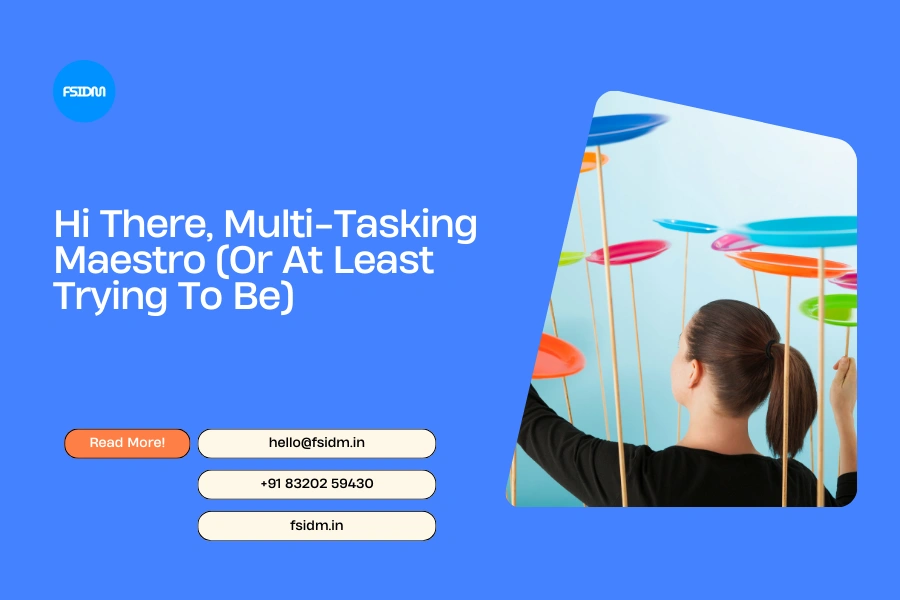
Hi There, Multi-Tasking Maestro (Or At Least Trying To Be)
Hello-hello! Are you currently juggling assignments, internship deadlines, your friend’s breakup drama, and somehow still expected to call your parents every evening? If yes — welcome to the chaos club of student commitments. Students today aren’t just attending classes. They’re running a full-time circus — college, side hustles, society events, family responsibilities, and of course, replying to that one friend who keeps asking “kaha gayab ho?” Let’s break down why managing commitments feels like trying to hold five watermelons with one hand — without dropping your mental peace. “Ignoring digital marketing is like opening a shop and not telling anyone.” 1. The Myth of “Time Milega Yaar” Every student thinks they’ll find time “after this week.” Spoiler alert: That mythical free time never arrives. There’s always something — a last-minute project, an event, or your roommate needing a therapist, a chef, and a photographer… all in one day. 2. The Overcommitment Olympics Took up a leadership role in the college fest. Said yes to a group study plan. Accepted a freelance gig. Promised to attend your cousin’s engagement. Also planned a Sunday detox. End result? Everything’s half-baked, your to-do list is a horror story, and Sunday feels like Monday’s trailer. 3. FOMO Makes It Worse You don’t want to say no. Because what if something fun happens and you miss it? You end up saying yes to everything — and before you know it, you’re attending an event with dead eyes, fake smiles, and a mind busy drafting tomorrow’s apology emails. 4. The Productivity Paradox The more tools you use to stay productive — planners, Notion boards, habit trackers — the more overwhelmed you get when things still fall apart. It’s like buying gym clothes before the workout plan. Hopeful, but slightly delusional. 5. Mental Health Takes the Hit When you’re spread too thin, things start to crack: You forget deadlines. You burn out. You ghost your friends unintentionally. Worst of all, you start losing confidence — thinking you’re just “bad at managing time.” You’re not. You’re just overbooked and human. Quick Fixes to Save Your Sanity The “3 Priority” Rule: No one can do 10 things well. Pick your top 3 priorities daily. Let the rest chill. Learn to say “no” without guilt: You’re not rude. You’re just respecting your time. Time block smartly: One hour focused > three hours distracted. Don’t multi-task emotional & mental tasks: Study and Netflix? Not friends. Protect your ‘me-time’ like exam dates: If it’s not urgent, it can wait. Take a Deep Breath Managing commitments as a student today is like trying to dance on a moving train while writing a research paper. Ambitious? Yes. Sustainable? Not really. It’s okay to miss a plan, skip a call, or postpone a task. The goal isn’t to be busy — it’s to be balanced. So take a deep breath, pick your priorities, and remember: even Google Calendar crashes sometimes.

Hi There, Broke Budding Genius! Let’s Talk Money (Or the Lack of It)
Hello-ji! If you’ve ever calculated whether you can afford that second chai after tiffin, or you’ve asked your friend “bhai tu UPI kar de, main baad mein deta hoon,” then congratulations — you’re officially a student with a financial crisis. Don’t worry, you’re not alone. Most students in India are experts in surviving on tight budgets, managing rising expenses, and still somehow affording a birthday cake for a friend. Let’s unravel the (empty) wallet tales of today’s youth — with a side of humour and reality. 1. Pocket Money = Pocket Panic Let’s be honest. Monthly pocket money ends faster than a 2GB daily data plan. Rent, food, travel, recharge, sudden group outings, exam printouts, and of course, emotional damage from surprise expenses. Parents think ₹2,000 is enough. Reality: It barely covers Maggi, mobile recharge, and mood swings. 2. Education Is Expensive, Emotionally Too College fees, coaching fees, project fees, exam fees, re-exam fees (ouch) — education might be priceless, but it sure comes with a hefty bill. And that’s before we even talk about buying textbooks that cost more than your entire wardrobe. 3. Part-Time Jobs? Great. Time? Not So Much. Many students try to balance part-time gigs or freelancing to earn a few bucks. Noble effort, but managing studies, deadlines, and demanding clients — all for ₹300 an hour — isn’t exactly glamorous. Also, you thought clients ghosting only happens in relationships? Wait till you freelance. 4. Hostel Life = Managing a Budget with MasterChef Skills One gas stove, five flatmates, and a single packet of instant noodles. Miracles happen in hostels. Financial creativity is off the charts. You’ll learn how to make chai for five in one teabag, and how to stretch ₹100 for a week. Financial literacy? Certified by hostel life. 5. Social Life Tax: Unexpected, Unavoidable, Unnecessary (Sometimes) Farewell party, fresher’s night, birthdays, sudden trips, movie plans — peer pressure is not just academic, it’s economic. Saying “no” without sounding broke is an art. Let’s be honest: You’ve attended events you couldn’t afford just to avoid looking like a killjoy. How to Survive (Without Selling a Kidney) Track every rupee: Not in your head, on an app or a notebook. Yes, even that ₹20 spent on chocolate. Set daily/weekly budgets: And try not to break it on Day 1. Cook occasionally: Swiggy doesn’t love you back. Avoid emotional spending: Buying things when sad is a trap. So is buying them when you’re happy. Emergency fund: Even ₹200 saved monthly can help during those “Bro, mujhe ₹50 chahiye urgently” moments. “Being broke teaches you what a budgeting app never will: the power of saying no to cold coffee.” 🧭 Final Thoughts Every student has, at some point, looked at their wallet and wondered, “Where did all my money go?” Financial struggles are real, but so are the lessons they bring. You learn value, priorities, and creative survival hacks that no MBA course will teach. So the next time you’re broke, hungry, and hustling — just know, you’re not failing. You’re just financially fluent in student life.

Hi Beta, Why So Stressed? (And No, It’s Not Just the Exams)
Hello-hello! If you’re reading this with a racing heart, a long to-do list, and a half-eaten packet of Parle-G beside you — welcome to the club. Student life today isn’t just about books, boards, and bunking. It’s a high-pressure performance act — expectations from parents, pressure from peers, fear of failure, and somewhere in between, you’re expected to “enjoy college life.” Classic. Let’s break down the stressful soup most students are drowning in — minus the sugarcoating and sympathy lectures. 1. Exam Season = Panic Season When exams come, sleep goes, motivation hides, and panic takes the front seat. The only thing scarier than the question paper? The relatives asking “Kitna aaya?” after it’s all over. No matter how much you study, the fear of “yaar bhool na jaun” never leaves. 2. Career Ka Confusion Unlimited Doctor, engineer, UPSC, MBA, YouTuber, graphic designer, startup founder, crypto investor — the buffet is endless, and so is the confusion. Choosing a career feels like choosing a Netflix show — so many options, so little clarity, and after two hours, you still don’t know what you want. 3. “Look at Sharma Ji’s Son” Syndrome The great Indian tradition of comparison continues: “You know Ravi scored 99.4%?” “That girl next door already got placed.” “Arre, he cracked IIT and started a business.” Meanwhile, you’re just trying to figure out what day it is and whether you submitted that assignment or just dreamt about it. 4. Social Media = Stress Media Everyone’s flaunting achievements, vacations, glow-ups, and #hustlelife. What they don’t post: breakdowns, failures, or that 2 a.m. crying session. Students often compare their behind-the-scenes to someone else’s highlight reel. No wonder stress levels are off the charts. 5. No Time to Breathe, Let Alone Chill Between college, tuition, part-time jobs, internships, and family expectations, students have packed calendars but empty energy levels. It’s like you’re living in a loop — wake up, rush, stress, repeat. How to Stress Less (Without Becoming a Monk) Here are a few sanity-saving steps: Prioritize like a pro: Not everything needs to be done today. Chill. Break up with multitasking: Focus on one thing at a time. Your brain isn’t a circus. Talk to someone: Friend, counselor, that one cousin who “gets it.” Sleep. Seriously.: Stress looks uglier when you’re sleep-deprived. Exercise a little: It’s cheaper than therapy (though therapy’s great too). “Stress doesn’t come from what’s happening in your life. It comes from your need to control everything that’s happening.” Stress is not a sign of weakness; it’s a signal. A signal that your mind and body need a break, not just a breakdown. So take a breath, take a nap, take a moment. Because your peace of mind matters more than Sharma ji’s son’s CV.

Lack of Sleep: The Modern Student’s Silent Enemy
Once upon a time, in a land full of exams and deadlines, sleep used to exist. Then came assignments, semester stress, late-night Netflix, and boom—RIP goodnight’s sleep. Today’s student doesn’t just survive on knowledge. It’s 20% academics, 30% stress, and 50% sheer willpower running on three hours of sleep and two cups of chai. Let’s get under the blanket (pun intended) and understand why students are permanently exhausted and how it’s more serious than just a few yawns in class. 1. “5 More Minutes” Turns Into 3 a.m. Whether it’s revising for that test, binge-watching a web series, or doom-scrolling through reels — students have perfected the art of time mismanagement after sunset. The result? Mornings feel like hangovers… minus the party. 2. The Exam-Netflix-Social Media Triangle Sleep often finds itself stuck between guilt and temptation. Guilt says: “You’ve not studied enough, stay awake!” Temptation says: “Just one episode yaar…” Brain says: “Let’s overthink everything we’ve ever done in life. Now.” With such a party happening in the head, who has time to sleep? 3. “I’ll Sleep After Exams” — The Big Fat Indian Lie This is the most recycled student promise after “I’ll start studying from tomorrow.” Sleep is treated like a reward. Like some sort of luxury resort you can only visit post-finals. The truth? Sleep is not optional. It’s a basic requirement — like food, WiFi, and Maggi during deadlines. 4. The Not-So-Cute Side Effects Running on sleep debt isn’t heroic. It’s hazardous. Memory issues: What chapter? What topic? What name? Mood swings: One minute fine, next minute Hulk. Low immunity: Cough, cold, and chaos. Poor focus: You opened your book, stared at the same paragraph for 15 minutes, and still don’t know what it says. It’s not just the brain. The whole body is saying, “Boss, reboot kara lo.” 5. Hostel Life = Sleep Is a Group Discussion One person wants to sleep, the other wants to talk about their ex, another one is cooking Maggi at midnight, and someone’s laughing like they just heard the funniest joke in the world. In short: Mission “good sleep” is constantly sabotaged by squad goals. What Can Be Done? (No, Drinking 5 Coffees Isn’t the Solution) Set a cutoff time: No screens after a certain hour (your future self will thank you). Power naps help: 20-minute recharge = better focus. Stick to a routine: Yes, even on weekends. Your body isn’t a randomizer. Avoid the “scroll hole”: One reel becomes 50 reels — block it! Make sleep sacred: As sacred as your phone battery when it hits 5%. “If sleep were a subject, most students would fail. And ironically, that’s what makes them fail everything else.” To Wrap It Up Students need sleep not just to rest, but to function like actual human beings. You can’t pour from an empty cup — or in this case, you can’t top exams with a brain that hasn’t recharged in days. So, close the books, silence the group chats, turn off the lights — and just sleep. Because no topper ever said, “Success came to me after five all-nighters and three dark circles.”

Why Are Students So Stressed? (No, It’s Not Just Because of Maths)
“Beta, tension lene ka nahi, dene ka!”—if only it were that easy, right? From mugging up definitions to juggling expectations of parents, peers, and even that distant Sharma Aunty, Indian students today are under more pressure than a pressure cooker with a broken whistle. And the result? Anxiety and depression are no longer rare “foreign concepts.” They’re very much a reality, sitting quietly in classrooms and hostels across the country. Let’s break it down—no complex jargon, just the truth, the whole truth, and nothing but the (sometimes uncomfortable) truth. 1. The Syllabus of Stress Between 8 a.m. classes and 12 a.m. panic attacks, students are carrying more weight on their backs than just their heavy bags. Boards, entrance exams, college cut-offs — it’s like every stage of life comes with a final boss level. And when someone says, “You have it easy, enjoy your student life!” — they clearly haven’t seen today’s timetable or fee structure. 2. The Comparison Olympics Indian students don’t compete in sports as much as they do in comparisons. Cousin scored 98%? “Arre, uska bhi toh dimaag hai, tumhara kya gaya?” Friend cracked IIT? “Toh usne kya alag kiya, tu bhi try karta!” It’s exhausting. Constant comparison kills confidence and seeds self-doubt — a silent trigger for depression. 3. Fear of Failure (Aka: The Great Indian Nightmare) In our culture, failing an exam feels worse than failing at life. One bad result, and suddenly the whole colony knows. No wonder so many students feel cornered — where one mistake equals a character certificate of “useless.” Truth: Failure is feedback, not a final destination. 4. Social Media & The Filtered Life While you’re figuring out what to do with your life, Instagram is showing you 22-year-olds buying Mercedes and launching startups. Thanks, algorithm — that’s just what we needed for our self-esteem! What we forget? Everyone posts their highlight reel. Nobody uploads their anxiety, therapy bills, or “cried for 3 hours” moments. 5. Silence is Louder Than Screams Mental health isn’t always visible. Some students look perfectly fine — smiling, attending classes, participating in fests — but inside, they’re spiraling. And when they try to speak up? “Arey, it’s just a phase.” “Go for a walk, you’ll feel better.” “Focus on studies, everything will be okay.” Spoiler alert: It doesn’t work that way. So, What Can Be Done? (Without Becoming Baba Ramdev) Here are a few grounded, simple steps that can actually help: Talk it out: With friends, a counselor, or someone who won’t judge. Limit screen time: Especially doom-scrolling during exam season. Create routines: Sleep, study, chill — balance is everything. Exercise, not Excel: A little walk > 50 open tabs of pending assignments. Seek professional help: Therapy is not a luxury, it’s a necessity for many. And it’s not just “for mad people.” “It’s okay if your report card doesn’t shine — your mental health should.” 🧭 Final Thoughts We expect our students to be toppers, coders, dancers, and future CEOs — all while ignoring the mental weight they carry. Maybe it’s time we change that. Let’s make space for conversations, not just competitions. Because behind every “I’m fine” is a student silently hoping someone notices they’re not.

When Missing Home Isn’t Just About Food: Homesickness & Depression in Student Life
You’re in a new city, a new room, a new routine. You’ve got your bucket, books, bunk bed… but something’s missing. No, it’s not your charger (although, check under the pillow). It’s home. That warm, noisy, slightly overprotective chaos you didn’t know you’d miss this much. Homesickness hits different when you’re away as a student—especially in a country like India where families are tight-knit, food is sacred, and calling your mom five times a day is still normal. What’s Going On? Why Homesickness Feels So Heavy Contrary to popular belief, homesickness isn’t just “missing people.” It’s a real emotional response to being away from your support system, routines, and comfort zone. For many students, it gradually blends into something deeper—depression. Especially if: You’ve moved out for the first time You’re feeling isolated in a new environment The pressure to perform is building up silently You’re eating more Maggi than you should admit Common Signs That Aren’t Just “Mood Swings” Feeling tired even after 10 hours of sleep Losing interest in things you normally enjoy (yes, even cricket!) Avoiding social interactions, even with friends Feeling teary for no “logical” reason (TV ads suddenly feel emotional?) Frequent headaches or body aches without much cause If any of these feel familiar, your mind might be asking for help. Gently listen. So, What Helps? (Beyond Video Calls & Paneer Fridays) 1. Routine is Your Friend No one’s asking for a military timetable, but a simple morning ritual can ground your day. Wake up, stretch, have chai, breathe. It sounds silly. It works. 2. Talk it Out Whether it’s your roommate, a friend, or a mental health counselor, don’t bottle it up like pickle jars in your suitcase. Venting lightens the load. 3. Move That Body A brisk walk, dancing to Bollywood songs alone in your room, or just cycling to get milk — movement helps release happy chemicals. No gym membership needed. 4. Eat. Sleep. Repeat (Properly) Skimping on nutrition or sleep makes everything worse. Your brain needs fuel, not just notes and pressure. 5. Make New Mini-Families Find your people — friends who become siblings, hostel mates who save you tea, or classmates who share lecture notes without ego. They make the new place feel a little less foreign. “Sometimes the smallest step in the right direction ends up being the biggest step of your life.” Missing home is not weakness. Feeling low doesn’t make you any less ambitious or capable. It makes you human. Adjusting to a new life takes time, and while nothing beats maa ke haath ka khana, the human heart is surprisingly adaptable. With the right care, a little patience, and a few emotional phone calls (okay, many), things do get better. You’re not alone—even if your room feels like it. And if today was hard, remember: tomorrow comes with chai and another chance to feel better.