How to Get Recommended by AI Assistants (Before Your Competitors Do)
Local Discovery Has Changed Forever
In 2026, customers don’t always search.
They ask.
Instead of scrolling through Google results, people now say things like:
- “Who’s the best plumber near me?”
- “Find a reliable dentist nearby.”
- “Which café is open right now and has good reviews?”
AI assistants don’t show a list.
They recommend one or two businesses.
If your business isn’t selected, you don’t appear second or third.
You simply don’t exist in that moment.
This is why Local AEO (Answer Engine Optimization) has become critical for small businesses.
What Is Local AEO (In Simple Terms)?
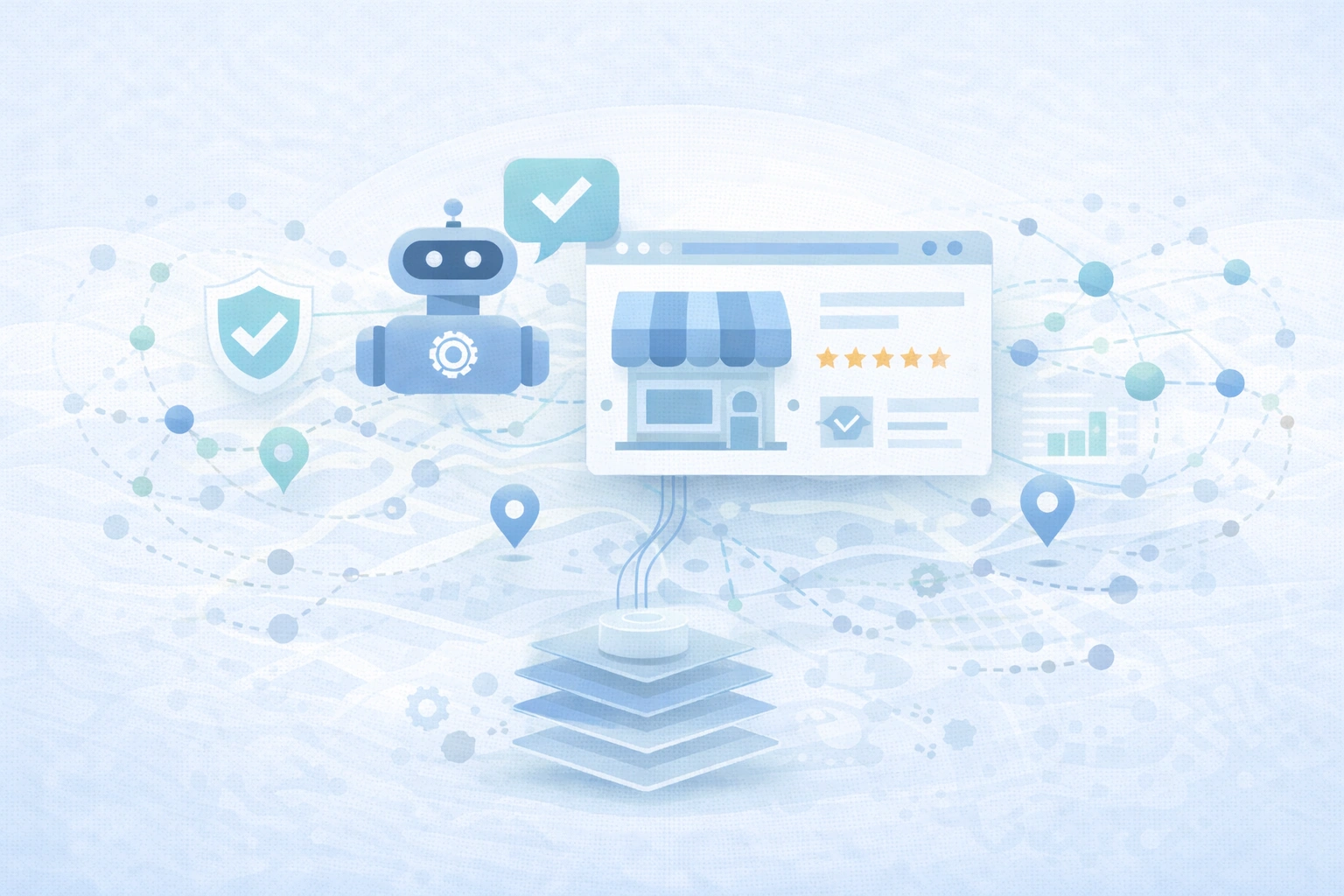
Local AEO is the process of making your business easy for AI assistants to understand, trust, and recommend when someone asks for a local service.
Traditional local SEO focused on:
- Rankings
- Maps visibility
- Website clicks
Local AEO focuses on:
- Being named as the answer
- Being confidently recommended
- Being selected without a click
AI assistants choose businesses based on clarity, consistency, trust, and relevance, not just keywords.
Why Most Small Businesses Are Invisible to AI
AI assistants don’t guess.
If information is missing or confusing, they skip your business entirely.
The most common problems:
- Business details differ across platforms
- Services are unclear or poorly described
- Reviews exist but lack context
- No structured data for AI to rely on
- Outdated hours, locations, or contact info
To AI systems, uncertainty equals risk.
And risk means no recommendation.
How AI Assistants Decide Which Local Business to Recommend
When an AI assistant receives a local query, it evaluates multiple signals at once:
1. Accuracy & Consistency
AI checks whether your:
- Business name
- Address
- Phone number
- Hours
- Service area
…are identical everywhere.
If your Google profile says one thing and your website says another, trust drops.
2. Service Clarity
AI prefers businesses that clearly explain:
- What they do
- Who they serve
- Where they operate
Vague descriptions like “We offer quality services” don’t work.
Clear descriptions like “Emergency residential plumbing services within 15 miles of Austin” do.
3. Trust Signals
AI looks for:
- Reviews with detail (not just star ratings)
- Consistent positive sentiment
- Evidence of real customer experiences
- Mentions across trusted platforms
It’s not about being perfect.
It’s about being credible.
4. Structured, Machine-Readable Data
AI assistants rely heavily on structured data to avoid misinterpretation.
This includes:
- Local business schema
- Service schema
- FAQ schema
- Accurate categories and attributes
If AI can’t parse your information easily, it won’t use it.
Local AEO Best Practices for 2026
1. Fix Your Business Data First (Non-Negotiable)
Before anything else, ensure:
- One official business name everywhere
- One primary phone number
- One canonical address (or defined service area)
- Accurate hours, including holidays
This consistency is the foundation of AI trust.
2. Rewrite Your Service Descriptions for Humans and AI
Your services should answer these questions clearly:
- What exactly do you offer?
- Who is it for?
- Where do you provide it?
- When is it available?
Avoid marketing fluff.
Use plain, specific language.
Example:
“24/7 emergency electrical repairs for residential homes in North Dallas.”
3. Add Structured Data to Your Website
Structured data acts like a translation layer between your business and AI systems.
Key schema types for local businesses:
- LocalBusiness
- Service
- FAQ
- Review
- OpeningHours
This helps AI confidently extract:
- Services
- Availability
- Trust indicators
4. Create Local, Answer-Focused Content
AI assistants often pull from content that:
- Answers real customer questions
- Is written clearly
- Uses simple structure
Examples:
- “Do you offer same-day service?”
- “How much does X service usually cost?”
- “What areas do you cover?”
Each answer should stand alone and make sense without extra context.
5. Improve Review Quality (Not Just Quantity)
AI understands language, not just numbers.
Encourage reviews that mention:
- Specific services
- Location
- Outcomes
- Experience quality
Example:
“They fixed our leaking pipe the same day and explained everything clearly.”
These details help AI associate your business with real solutions.
6. Make Your Website Easy to Crawl and Understand
AI systems still rely on crawlable content.
Make sure:
- Important content isn’t hidden behind scripts
- Contact and service pages are easy to find
- Mobile experience is clean and fast
- Internal links clearly connect services and locations
If AI can’t read it reliably, it won’t recommend it.
Measuring Local AEO Success in 2026
Clicks aren’t the only metric anymore.
New indicators of success include:
- Increase in branded searches
- More direct calls and bookings
- Customers saying “AI recommended you”
- Higher-quality leads, even with less traffic
- Visibility in AI answers and summaries
Local AEO is about being chosen, not just seen.
The Future of Local Discovery
Local search is becoming:
- Conversational
- Predictive
- Selective
AI assistants won’t list ten options forever.
They will narrow choices aggressively.
Small businesses that win in 2026 will be those that:
- Are easy to understand
- Are easy to trust
- Remove ambiguity from their data
- Focus on clarity over cleverness
Final Takeaway
In 2026, local visibility isn’t about ranking #1.
It’s about being clear enough for AI to say your name out loud.
If your business information is:
- Accurate
- Structured
- Consistent
- Trustworthy
AI assistants will recommend you.
If not, they’ll skip you—silently.Local AEO isn’t optional anymore.
It’s how small businesses stay discoverable in an AI-first world.