
The Digital Toss: Why AI Giants are Dominating the IPL The Indian Premier League (IPL) has always been more than just a cricket tournament; it is a high-octane blend of entertainment, massive financial stakes, and cutting-edge marketing. However, the 2024-2025 cycle has witnessed a seismic shift in the sponsorship landscape. If you look closely at the jerseys and the boundary boards this season, you will notice a new breed of giants taking over. Today, 9 out of 10 IPL teams now partner with AI brands, marking a significant transition from traditional fintech and edtech sponsors to the world of Artificial Intelligence. From Google Gemini’s prominent presence to integrations involving OpenAI’s ecosystem, the cricket field has become the new playground for Silicon Valley. This isn’t just about placing a logo on a sleeve; it is a strategic move to normalize AI in the daily lives of millions of viewers. As the “AI race” heats up globally, the IPL provides the perfect stage for these tech behemoths to showcase their muscle. Beyond the Logo: What These Partnerships Actually Mean For years, IPL sponsorships were dominated by soft drinks, cement, and more recently, betting apps and cryptocurrency platforms. The pivot to AI brands like Google and the influence of OpenAI-backed technologies signals a “maturing” of the sponsorship market. But what do these brands get out of a cricket match? The answer lies in mass-market adoption. While tech enthusiasts already use AI tools for coding or writing, the average cricket fan might still view AI as something from a sci-fi movie. By partnering with iconic teams like the Mumbai Indians or the Chennai Super Kings, brands like Google can position their AI tools as helpful, everyday companions. Whether it is using AI to predict match outcomes or creating personalized fan experiences, the goal is to make “AI” a household name. Data-Driven Cricket: How AI is Changing the Game The partnership between 9 out of 10 IPL teams and AI brands goes deeper than marketing. It is fundamentally changing how the game is played and managed. AI is now being used to solve complex problems that were previously left to human “gut feeling.” Player Auction Strategy: Teams are using AI models to analyze thousands of data points on domestic and international players to determine their “true value” before spending millions at the auction table. Injury Prevention: Wearable tech integrated with AI platforms helps medical staff predict when a fast bowler might be reaching a fatigue threshold, preventing season-ending injuries. Real-Time Tactics: AI algorithms can analyze a batter’s weakness against specific spin angles in real-time, allowing captains to make data-backed bowling changes. This level of integration ensures that the partnership is functional, not just decorative. When a team uses Google Cloud’s AI capabilities to optimize their performance, the sponsorship pays for itself in trophies and wins. Enhancing the Fan Experience with Generative AI If you are a fan watching from home, the influence of these AI brands is likely already reaching you. Generative AI, spearheaded by the likes of OpenAI and Google, is revolutionizing how fans consume cricket content. We are seeing a move toward hyper-personalization that was impossible five years ago. Imagine an AI chatbot that doesn’t just give you the score, but analyzes the “momentum shift” in the 15th over based on historical data. Or consider social media teams using AI to generate high-quality match highlights and graphics in seconds, keeping the engagement levels sky-high throughout the tournament. These tools allow teams to talk to millions of fans individually, offering a unique digital experience to every follower. The Future of Sports Sponsorship The fact that 9 out of 10 IPL teams now partner with AI brands is a clear indicator of where the global economy is heading. We are moving away from the “platform era” and into the “intelligence era.” In this new world, the brands that can provide the most value through data and automation are the ones with the deepest pockets and the most influence. This trend is unlikely to slow down. As AI tools become more integrated into our smartphones and workspaces, their presence in sports will only grow. We might soon see AI-powered “virtual coaches” or augmented reality experiences in stadiums that allow fans to see real-time AI statistics overlaid on the pitch through their phone cameras. Conclusion: A New Chapter for the IPL The IPL has always been a mirror of India’s economic and technological aspirations. The current dominance of AI brands signifies that India is not just a consumer of global tech, but a central battleground for its implementation. As 9 out of 10 IPL teams embrace these partnerships, the line between sports and technology continues to blur. For the teams, these partnerships provide the capital and the tools to stay competitive. For the brands, it provides a direct line to one of the most engaged audiences on the planet. And for the fans? It means a smarter, faster, and more immersive version of the game we love. The AI revolution hasn’t just arrived in the tech world; it has officially taken the field.

Digital Marketing Course in Sarkhej: FSIDM ROI Blueprint
Sarkhej Mein Career Grow Karna Hai? Ab Door Jane Ki Zaroorat Nahi! Sarkhej ke aas-pass reh kar bhi agar aap wahi purane career options ke baare mein soch rahe ho, toh boss, ab update hone ka time aa gaya hai. Aaj kal Sarkhej-Gandhinagar (SG) Highway aur Makarba area business ka hub ban chuke hain. Har chota-bada business online ja raha hai, aur isi wajah se digital marketing course ki demand aasman chu rahi hai. Aap shayad Google par “digital marketing course near me” search kar rahe honge, par kya aapko pata hai ki sahi institute kaise chune? Sirf certificate lene se kaam nahi chalega, aapko chahiye real-world skills. FSIDM: Sarkhej Ka Best Choice Kyun Hai? Full Stack Institute of Digital Marketing (FSIDM) mein hum sirf baatein nahi karte, karke dikhate hain. Humne dekha hai ki log digital marketing classes toh join kar lete hain, par jab client ka kaam milta hai toh confused ho jate hain. FSIDM par hum aapko industry-ready banate hain: 100% Practical Training: Boring PPTs ko bolo bye-bye. Hum live projects aur real ad budgets par kaam karna sikhate hain. Expert Mentors: Humare trainers digital marketing pros hain jo din-raat algorithms aur ROI ke saath khelte hain. Job Placement Assistance: Training khatam hote hi hum aapko industry ke bade players se connect karte hain. Hum Kya Seekhayenge? Humari digital marketing training mein aap SEO (Search Engine Optimization), PPC (Google Ads), aur Social Media Strategy ko detail mein samjhenge. Hum sirf tools nahi sikhate, hum aapko conversion funnel banana sikhate hain taaki aap kisi bhi business ki sales badha sakein. Course complete hone ke baad milne wala digital marketing certificate aapke resume ko wo power dega jo recruiters dhoond rahe hain. Sahi Price, Sahi Value! Bahut se log puchte hain ki digital marketing course price kya hai? Simple sabdo mein kahe toh, FSIDM par hum “Full Stack” value dete hain jo market mein sabse competitive hai. Humara focus aapke career ke ROI (Return on Investment) par hai. FSIDM Pro-Tip: Yaad rakhiye, tools toh koi bhi seekh sakta hai, par strategy banana hi ek asli digital marketer ki pehchan hai. Tools badal jayenge, par marketing ke fundamentals hamesha wahi rahenge. Sarkhej ya Sanathal Circle ke pass rehte ho? Toh aaj hi Full Stack Institute of Digital Marketing (FSIDM) visit karein aur apne career ko ek naya digital boost dein!
India’s AI Ranking: Where Does the Nation Stand?
Hey there! Have you ever wondered how countries stack up in the exciting world of Artificial Intelligence? It’s a question many of us ponder, especially when we see AI transforming everything around us. When it comes to a vibrant, digitally-savvy nation like India, figuring out its exact “rank” in AI is a really insightful question! The truth is, giving India a single, definitive number for its AI rank isn’t as straightforward as it might seem. Why? Because AI leadership isn’t just about one thing. It’s a rich tapestry woven from many threads: talent, research, innovation, investment, ethical frameworks, and even how widely AI is adopted by businesses and everyday people. India’s Remarkable Stance in AI India, with its vast talent pool and booming tech sector, has been making incredible strides in the AI landscape. Here’s a peek into where it truly shines: Talent Powerhouse: India boasts one of the largest and most skilled workforces in data science and AI globally. Our engineers and researchers are highly sought after and contribute significantly to AI development worldwide. Many reports consistently place India among the top 5-10 nations for AI skills and talent availability. Startup Ecosystem: The country is a hotbed for AI startups. From healthcare to finance to agriculture, Indian innovators are building impressive AI solutions that are solving real-world problems and attracting global investment. Research and Academia: Indian academic institutions and research labs are increasingly contributing to global AI research, publishing papers, and developing new algorithms. The focus is growing on applied AI and responsible AI development. Government Initiatives: The Indian government has recognized the strategic importance of AI. Initiatives like the National Strategy for Artificial Intelligence (“AI for All”) aim to leverage AI for economic growth and social good, promoting research, ethical AI, and widespread adoption. Digital Public Infrastructure: India’s robust digital public infrastructure, like Aadhaar and UPI, provides a fantastic foundation for AI-powered applications to scale rapidly across the population. While specific reports might place India anywhere from the top 10 to top 20 in overall global AI indices (depending on the metrics they prioritize, such as investment, patents, or publications), what’s undeniable is its rapid growth and critical contributions. It’s often cited as a major player and a quickly ascending force in the global AI arena. So, while we might not pinpoint a single “rank,” it’s clear that India is not just participating in the global AI race – it’s a significant and dynamic contender, shaping the future of artificial intelligence with its unique blend of talent, innovation, and ambition. It’s an exciting time to be part of India’s AI journey!
India’s Five-Year Plan for AI Deployment
Hey there, ever feel like the world is speeding up, especially when it comes to technology? It truly is! And right now, there’s some really exciting news coming out of India that perfectly captures this feeling: a big five-year plan to bring Artificial Intelligence into the market in a meaningful way. Now, when we hear “five-year plan” or “deploy AI,” it can sound a bit technical or even daunting. But let’s break it down in a way that truly matters to us, to you, and to the future. This isn’t just about government initiatives; it’s about shaping the daily lives, jobs, and opportunities for millions of people. What Does This Really Mean for Us? Think about it like this: India, a country known for its incredible talent and innovation, is making a deliberate move to harness the power of AI across various sectors. This means we could see AI playing a bigger role in: Better Healthcare: Helping doctors diagnose faster or making medical advice more accessible. Smarter Agriculture: Assisting farmers with crop management, weather predictions, and resource optimization. Efficient Services: Making everything from customer support to public services smoother and quicker. Boosting Businesses: Giving startups and established companies new tools to innovate, grow, and create jobs. It’s about making systems more intelligent, processes more efficient, and perhaps even solving some long-standing challenges in new ways. Imagine less waiting, more personalized experiences, and solutions to problems we didn’t even know AI could tackle. Embracing the Change Of course, any big technological shift brings questions. What about jobs? What about privacy? These are valid concerns, and addressing them thoughtfully will be crucial. But this plan also presents an incredible opportunity for growth and learning. It means there will be a growing demand for skills in AI development, data analysis, ethical AI implementation, and even entirely new roles we haven’t even imagined yet. For us, this is an invitation to be curious, to learn, and to adapt. It’s a chance to be part of a massive transformation that could elevate India’s position on the global stage and improve countless lives within its borders. It’s not just about machines doing things; it’s about humans using incredible tools to build a brighter, more efficient, and more innovative future. So, let’s keep an eye on this journey. It’s going to be fascinating to watch AI become an even more integral part of India’s vibrant market, creating ripples of change and opportunity for everyone involved.

The 30% Rule in AI: Explained Simply
Hey there! It’s awesome that you’re digging into the world of AI and asking such specific questions. It shows you’re really thinking about how things work under the hood! You asked about “the 30% rule in AI,” and that’s a really interesting point to bring up. Here’s the thing: unlike some hard-and-fast laws you might find in physics or traditional engineering, there isn’t one universally recognized, official “30% rule” that everyone in AI adheres to. However, the idea of using percentages, like 30%, is super common in AI, especially when we’re talking about practical applications and building intelligent systems. Often, these “rules” are more like helpful guidelines or best practices that people adopt in specific contexts. Where You Might See Percentages Like 30% in AI When someone mentions a percentage like 30% in AI, they might be referring to a few different things. Let me share a couple of common scenarios: 1. Data Splitting for Model Training: One of the most frequent places you’ll see percentages is when preparing data for an AI model. Imagine you have a big pile of data (like pictures of cats and dogs for an image classifier). You can’t just feed it all to the AI to learn from. You need to hold some back to test if it actually learned well, or if it just memorized the training data. A very common practice is to split your data, say, 70% for training the model and 30% for testing it. Sometimes it’s 80/20, or even 60/20/20 (training/validation/testing). The “30%” here is crucial for evaluating how well your AI performs on data it hasn’t seen before. It helps prevent the model from becoming too specialized or “overfitting” to its training data. 2. Human Oversight and Intervention: Another way a “30% rule” might pop up is in discussions about human-in-the-loop systems. Perhaps an organization decides that for certain critical decisions, an AI can automate 70% of the initial analysis, but the final 30% always requires human review and approval. This isn’t a formal rule across the board, but a sensible operational guideline to ensure accuracy, ethics, and safety. 3. Incremental Adoption or Goal Setting: Sometimes, a “30% rule” could be a team’s internal goal – maybe aiming to automate 30% of a manual process with AI in the first phase, or achieving a 30% improvement in efficiency thanks to a new AI tool. It’s more about setting measurable targets than a universal law. So, while there isn’t a single, definitive “30% rule” etched in stone for all of AI, the idea behind it – using percentages to guide decisions, manage data, and set practical boundaries – is incredibly important. It speaks to the thoughtful, measured approach we need when building and deploying intelligent systems. Keep asking these great questions! It’s how we all learn and grow in this exciting field.
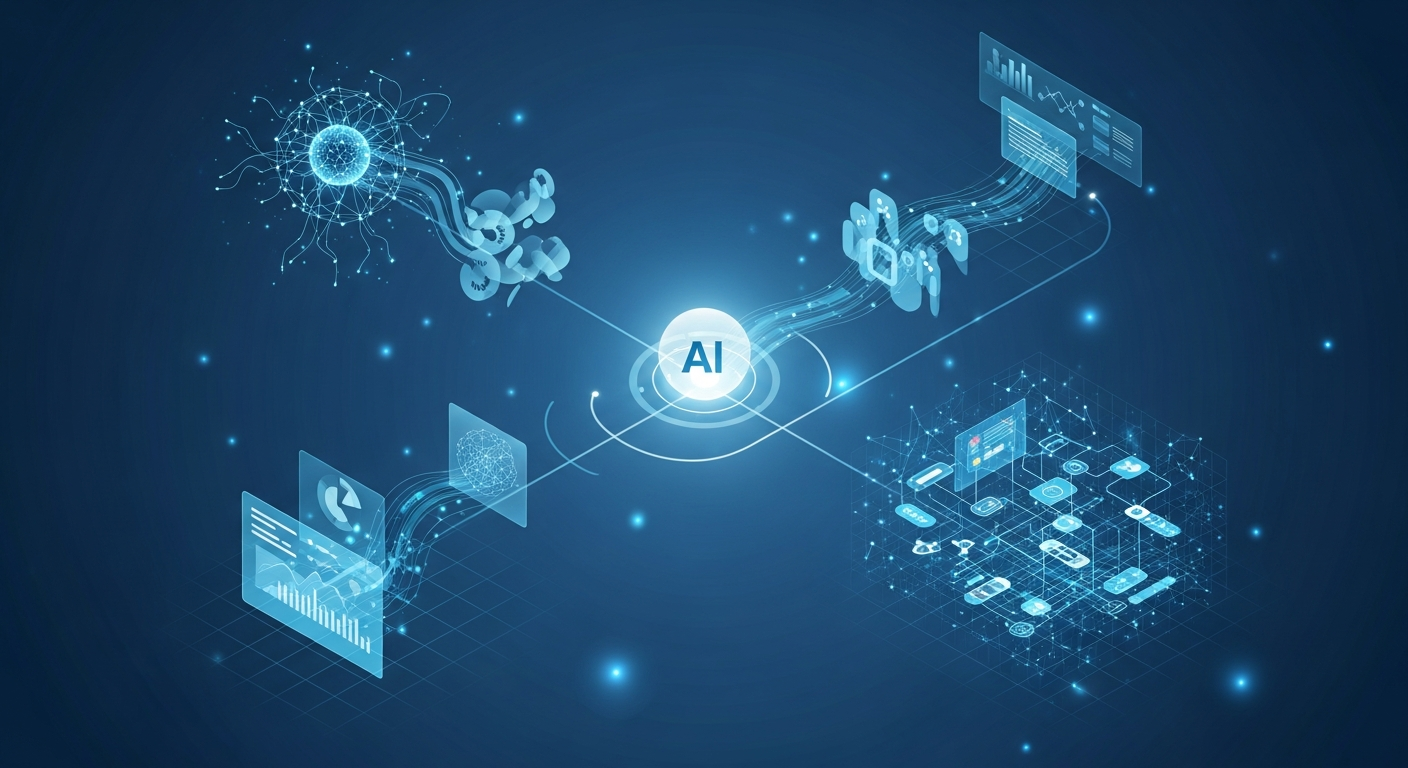
What Are the 4 Fundamental Types of AI?
Hey there, ever feel like AI is everywhere? From your phone’s assistant to those personalized recommendations online, it’s pretty clear that artificial intelligence is becoming a bigger part of our daily lives. But have you ever wondered if all AI is the same, or if there are different “kinds” of it? It turns out, AI isn’t just one big thing. Researchers often categorize AI into different types based on their capabilities and how they function. Think of it like a journey, from simple tools to complex, futuristic possibilities. Let’s break down these fascinating categories so you can understand the AI landscape a little better! 1. Reactive Machines This is the most basic form of AI. Reactive machines are exactly what they sound like – they can only react to the present situation. They don’t have any memory, so they can’t learn from past experiences to make future decisions. A classic example is IBM’s Deep Blue, the chess computer that beat Garry Kasparov. It could see the board and predict moves, but it didn’t “remember” past games or learn from them in a human-like way. 2. Limited Memory AI Moving a step up, we have AI with limited memory. These systems can look back into the past for a short period to make more informed decisions. They use previously collected information to perform specific tasks. A great example of this is a self-driving car. It needs to remember the speed and direction of nearby cars, pedestrian movements, and traffic signals for a short time to navigate safely. Our virtual assistants like Siri or Google Assistant also fall into this category, remembering parts of your conversation to respond effectively. 3. Theory of Mind AI Now we’re venturing into the future! Theory of Mind AI is still largely conceptual, but it represents a huge leap in AI development. This type of AI would be able to understand human emotions, beliefs, intentions, and desires. Imagine an AI that could truly grasp why you’re feeling a certain way or predict your actions based on your emotional state. This level of social intelligence would open up incredible possibilities for human-AI interaction. 4. Self-Aware AI This is the ultimate, most advanced, and currently purely hypothetical form of AI. Self-Aware AI would possess its own consciousness, feelings, and self-awareness, much like a human being. It would not only understand emotions but also experience them. Think of the intelligent robots from sci-fi movies – that’s the realm of self-aware AI. While exciting to imagine, we’re still a very long way from creating anything like this. So, there you have it! From simple reactive programs to the complex, conscious machines of tomorrow, AI is a field that’s constantly evolving. Understanding these different types helps us appreciate just how much progress has been made and how much potential still lies ahead. It’s a journey we’re all on together, and it’s pretty exciting to watch unfold!
FSIDM: Personalized Digital Marketing Training with AI Tools
Ever feel like the world is moving at warp speed, especially online? For businesses and individuals alike, being seen and heard in this digital age isn’t just a nice-to-have; it’s absolutely essential. That’s where digital marketing comes in – it’s the superpower that helps you shine online! But let’s be honest, diving into digital marketing can feel a bit overwhelming. There’s so much to learn, from SEO and social media to content creation and analytics. It’s easy to get lost in a sea of online tutorials and generic courses that don’t quite hit the mark. What if you could learn all these vital skills with truly personalized guidance? Imagine having someone right there with you, every step of the way, tailoring the learning experience to your unique needs and pace. That’s exactly the kind of transformative experience offered by the Full Stack Institute of Digital Marketing, or FSIDM for short. FSIDM stands out because they focus on practically one-on-one, personal digital marketing course training. Think about it: no getting lost in a big classroom, no struggling to keep up, and no feeling shy about asking questions. It’s about getting direct feedback, understanding concepts deeply, and applying them in real-world scenarios. This hands-on, tailored approach makes a huge difference in mastering complex skills efficiently. And here’s where FSIDM truly shines in today’s fast-evolving landscape: they don’t just teach the basics. They integrate perfect AI tools and cutting-edge marketing techniques into their training. We all know AI is changing everything, and marketing is no exception. Learning how to leverage AI isn’t just smart; it’s essential for anyone who wants to be a leader in digital marketing tomorrow. The ‘Full Stack’ in their name isn’t just a fancy title; it means they cover the entire spectrum of digital marketing. You’re not just learning one piece of the puzzle; you’re building a comprehensive skill set that makes you incredibly versatile and valuable in the job market or for growing your own business. So, if you’re serious about mastering digital marketing, gaining practical experience, and staying ahead with the latest AI innovations, taking a closer look at FSIDM could be a truly wise step. It’s an investment in yourself, your career, and your future in the exciting digital world. Imagine the confidence you’ll gain, knowing you have the skills to make a real impact. It’s time to unlock your full digital potential!

Cloudflare Report: Googlebot Tops AI Crawler Traffic
What the Cloudflare Report Really Means for Your Marketing Strategy Cloudflare’s latest report confirms a critical reality: Googlebot remains the dominant internet crawler, significantly outperforming all AI-driven bots combined. This isn’t just a technical footnote; it’s a direct signal about where your optimization efforts still need to be centered. In simple terms, while AI crawlers like OpenAI’s GPTBot are growing, they’re not yet dictating the search landscape. Google’s core search engine still acts as the primary gatekeeper for organic visibility. Why Googlebot’s Dominance Matters More Than Ever This data cuts through the hype: your visibility still largely depends on how well Googlebot understands and ranks your content. Organic traffic, brand discovery, and lead generation are intrinsically tied to Google’s indexing. Neglecting Google’s established crawling mechanisms in favor of prematurely optimizing for a nascent AI search ecosystem is a misstep. Your growth relies on capturing current user intent, which predominantly flows through Google Search. Think about a business aiming to attract local clients. A “Miami-based plumbing service,” for example, needs to ensure Googlebot can effectively parse their location, service offerings, and contact details to connect with users searching for “emergency plumber Miami.” If Googlebot can’t find it, neither will potential customers, regardless of AI bot activity. Actionable Insights: Optimizing for the Reigning Bot This report reaffirms the enduring importance of fundamental SEO practices. Don’t chase speculative trends when the core engine of organic traffic is clearly defined. Content Quality and Relevance: Googlebot prioritizes high-quality, authoritative content that genuinely answers user queries. Focus on depth and value. Technical SEO Health: Ensure your site’s crawlability, mobile-friendliness, and loading speed are impeccable. A well-structured site helps Googlebot efficiently index your pages. Semantic Optimization: Go beyond keywords. Create content that covers a topic comprehensively, using related terms and natural language. This helps Googlebot understand context and intent. Schema Markup: Implement structured data for crucial information like business hours, services, and location. This provides explicit signals to Googlebot. Looking Ahead: The Shifting Landscape While Googlebot is king today, AI crawlers are certainly on the rise. This data doesn’t dismiss their future impact, but it grounds strategy in current reality. Stay informed about AI search developments, but don’t divert resources from what’s working now. The smartest play is always to build a robust, user-centric website that serves clear value. This foundation will serve you well, whether the dominant bot is Googlebot, GPTBot, or something entirely new. Quick Answers Does this mean AI search isn’t important? No. It means traditional Google Search remains the primary organic traffic driver currently. AI search is growing, but its impact on traffic is not yet comparable. Should I ignore AI bots completely? Don’t ignore them, but don’t prioritize them over Googlebot. Focus on solid SEO fundamentals; these strategies often prepare you for future changes, including AI search.

Google Warns Noindex Can Block JavaScript From Running
Google’s Latest Warning: Noindex Can Block JavaScript Execution Google just clarified a critical point: applying a noindex directive to a page might prevent it from executing JavaScript. This isn’t just about keeping pages out of the index; it’s about whether Google processes any JS on those pages at all. Previously, noindex primarily signaled non-inclusion in search results. Now, Google states it can also stop fetching resources and rendering the page, specifically impacting JavaScript-dependent content and links. The Deeper Implication: More Than Just Indexing Many SEOs viewed noindex as an indexing signal, assuming Google would still crawl, render, and follow links from such pages. This update shows a significant shift in how Google interprets this directive. When Google sees noindex, it might bypass resource fetching entirely. This means your critical JavaScript files, CSS, or images linked from that page might not be processed. For sites heavily reliant on client-side rendering, this is a major concern. Why This Matters for Your SEO Strategy This isn’t an edge case. If your website uses JavaScript for internal linking, dynamic content loading, or even core navigation, this clarification demands your attention. Ignoring it can have cascading effects. Broken Internal Link Discovery: Links rendered solely by JavaScript on a noindexed page may never be discovered by Google. Undiscovered Content: Any content loaded or modified by JS on these pages will remain invisible to Google. Crawl Budget Implications: While noindex doesn’t directly stop crawling, if rendering stops, Google spends less effort understanding the page. Real-World Impact: The Dynamic Filter Trap Consider an e-commerce site using JavaScript to generate product filter pages (e.g., /category?color=red). Many optimize by noindexing these filtered URLs to avoid duplicate content issues. If the JavaScript on such a noindexed page also dynamically creates internal links to individual product pages (e.g., /product-a, /product-b), those valuable links might never be discovered or attributed equity. This means your noindex strategy, intended to clean up the index, could inadvertently cut off Google from discovering parts of your site architecture or critical product inventory. What To Do About It Review your noindex implementations. Ask yourself: Does this page rely on JavaScript for essential content or internal linking? If yes, noindex might not be the correct directive. For pages you want Google to crawl and understand but not index, consider using robots.txt to disallow crawling *if* you’re certain no valuable links or content are exclusively found there. Alternatively, if you need links followed but not the page indexed, you might need to reconsider your rendering strategy or ensure static links are present. Quick Q&A Q: Does noindex always stop JavaScript execution?A: Google implies it can. The warning suggests it’s a strong possibility, not a guarantee of execution. Assume it will stop for safety. Q: Should I remove noindex from all JavaScript-heavy pages?A: Not necessarily. Evaluate each case. If the page provides no unique value for indexing but contains critical JS links, you need a different solution, like ensuring those links are statically present elsewhere or rethinking your JS rendering. Q: What if I use disallow in robots.txt instead?A: Disallow prevents crawling entirely. If Google can’t crawl, it can’t see the noindex tag, and it won’t execute JS either. This option is for pages you want hidden from Google completely.

Google Explains Why Staggered Site Migrations Impact SEO Outcome
Why Your Staggered Site Migration Strategy Needs a Rethink Migrating a website is a complex undertaking. Many businesses opt for a “staggered” approach, moving sections or categories over weeks or months, rather than a single, complete cutover. Google recently clarified its stance, highlighting significant SEO risks with this method. It’s not the safe bet many assume. The Core Problem: Mixed Signals for Google A staggered migration means you’re operating a hybrid environment for an extended period. Part of your site is on the old infrastructure, part on the new. From Google’s perspective, this creates chaos. Crawlers encounter inconsistent signals. They see content appearing on new URLs while still existing on old ones. This isn’t a smooth transition; it’s a period of potential confusion and diluted authority. Your site’s equity, built over years, can get split or simply not transfer effectively. Google struggles to consolidate signals like backlinks, PageRank, and user engagement when content lives in multiple places. This directly impacts your ability to rank, often leading to temporary or even permanent drops in organic visibility. Real-World Impact: The E-commerce Dilemma Consider a large online retailer migrating their product categories one by one. First, “Electronics,” then “Apparel,” then “Home Goods,” all over three months. During this period, Googlebot might crawl the “Electronics” section on the new domain while “Apparel” and “Home Goods” remain on the old. Backlinks pointing to old “Apparel” pages don’t immediately transfer their full value to the new structure, especially if the redirects aren’t live yet or are only partially implemented. Meanwhile, internal linking becomes a mess: new pages might link back to old, or vice versa, creating broken pathways and confusing topical authority. This results in diluted ranking power for key product pages and categories. Instead of confidently ranking for “best noise-cancelling headphones,” Google’s algorithm sees mixed signals across two sites, weakening the new page’s position and potentially causing the old page to lose its ranking without passing full credit. Avoiding the Migration Trap While a full, instantaneous migration isn’t always feasible, understanding the risks of staggering is crucial. The goal is to minimize the “hybrid state” as much as possible. Here’s how to approach it: Comprehensive Mapping: Plan every single URL redirect (301) before anything moves. Test them rigorously. Consolidate Signals: Aim to move related content blocks simultaneously. If you move a category, move all its subcategories and product pages with it. Aggressive Monitoring: Use Google Search Console to track indexing, crawl errors, and performance for both old and new URLs daily. Prioritize Critical Pages: Move your highest-traffic, highest-conversion pages first, but ensure their entire “ecosystem” (internal links, supporting content) moves with them. Quick Q&A on Site Migrations Is a staggered migration always bad? Not necessarily, but it’s rarely optimal for SEO. The longer you maintain a mixed environment, the higher the risk of signal dilution and ranking drops. What’s the best alternative? A complete, well-planned, and thoroughly tested single-phase migration is ideal. If staggering is unavoidable, execute it in the shortest possible window, moving entire sections or topical clusters at once. Understand that search engines thrive on consistency. When your site presents a fragmented picture, your SEO performance will reflect that confusion. Plan your migrations with a clear understanding of these signal-transfer mechanics.