

So… the results are out The textbooks are dumped somewhere behind the cupboard, and now every aunty in your society is asking, “Beta, ab aage kya plan hai?” Don’t worry, you’re not alone. Every student after 12th goes through this phase where it feels like the whole country wants to know your five-year plan—even when you don’t know what’s for dinner. Now listen closely, because we’re going to bust a myth. You don’t need a degree to start earning well. Yep, you heard that right. “The world rewards skills, not just certificates.” Let’s talk about some job options you can actually pursue after 12th standard—without jumping into a 3-4 year course just because Sharma Ji’s son did it. 🔍 Top Jobs After 12th With Good Salary 1. Digital Marketing Executive If you can scroll Instagram for 4 hours, why not get paid for it? Digital marketing is booming in India. You can work with brands, handle social media, SEO, or even paid ads. Starting Salary: ₹15,000 – ₹35,000/month Skills Needed: Creativity, Google Search knowledge, and patience (especially with clients who want everything “viral”) 2. Data Entry or Back Office Jobs These are ideal if you’re good with computers and have basic MS Excel or typing skills. No fancy degree needed. Starting Salary: ₹12,000 – ₹25,000/month Bonus Tip: Accuracy > Speed. If you don’t make typos, you’re gold. 3. Customer Support Executive (Voice/Non-Voice) If your English is decent and you can handle angry callers without losing your cool, this one’s for you. BPOs hire like crazy. Starting Salary: ₹18,000 – ₹30,000/month Perks: Night shifts = night allowance + fewer traffic jams. 4. Sales Executive / Telecaller If you can convince your friends to watch a boring web series, you can sell a product. Commission-based jobs in sales can actually pay more than a fixed salary. Starting Salary: ₹12,000 – ₹40,000/month (including incentives) Bonus: Great for extroverts. Talkers = earners here. 5. Freelancing (Design, Writing, Editing) Love writing shayari or designing memes? There’s a market for everything. Platforms like Upwork, Fiverr, and Freelancer let you earn in dollars. Starting Income: ₹0 – ₹50,000/month (depends on gigs) Reality Check: You’ll have to build your profile and be consistent, but it’s so worth it. 6. Graphic Designer / Video Editor You’ve been using Canva or CapCut for fun? Time to level up. With short online courses (even free YouTube ones), you can start freelancing or working part-time. Starting Salary: ₹15,000 – ₹30,000/month Creative Bonus: Your work could go viral—literally. 7. AI & Tech Assistant Roles With basic training in AI tools like ChatGPT, Midjourney, or Canva AI, you can assist startups with content, automation, or even meme generation. No joke. Salary Range: ₹20,000 – ₹45,000/month Insider Tip: Learn tools, not just theory. Execution > education. 8. Government Exams (Group D, Railways, SSC, etc.) If job security is your jam, and you don’t mind reading GK books thicker than your laptop, government jobs are a solid bet. Starting Salary: ₹20,000 – ₹35,000/month + perks Downside: You’ll need to prep like it’s a Netflix marathon—with no “Skip Intro” button. 🤔 So… Job or College? Why not both? You can start earning part-time, learn new skills online, and figure out what works best for you—before jumping into a 3-year course because “log kya kahenge.” India is changing. Skills are currency now. Companies want doers, not just degree holders. 👋 Final Words from an Online Dost Don’t feel bad if you don’t have it all figured out at 17. Life’s not a 3-hour movie with an interval and a climax. It’s a series. Learn. Earn. Repeat. And remember: You don’t need to be Sharma Ji’s son. You just need to be you—with Wi-Fi and a little hustle.

During BHM: Life Beyond Linen and Lemon Wedges
Hi hello, aspiring hoteliers, chefs, and hospitality heroes! So you’ve enrolled in Bachelor of Hotel Management, dreaming of swanky lobbies, gourmet dishes, and maybe even wearing a blazer that smells more like success than samosas. Welcome aboard the BHM express—where every day is a fine blend of theory, trays, and trial by fire (sometimes literally, in the kitchen lab). “Hospitality is not just about welcoming guests—it’s about doing 100 things quietly, so one person smiles loudly.” 🎓 The Curriculum: Theory Meets Tandoor At first glance, the subjects look charming—Food & Beverage, Housekeeping, Front Office, Event Management. But don’t be fooled, it’s not all five-star filters and Instagrammable presentations. You’ll study management principles, communication, HR, hotel accounting, and yes, how to fold napkins into fancy shapes. By semester two, you’ll know: The ideal table setting distance (no, it’s not “as much space as your thali at home”). How to politely handle a guest who thinks yelling gets faster service. And how to carry three plates with one hand without dropping a single gulab jamun. 🔪 The Kitchen Chronicles: More Than Just Masala BHM students spend a lot of time in the kitchen. It’s the place where you burn things before you learn things. From basic knife skills to advanced multi-cuisine recipes, you’ll slice, sauté, simmer, and silently cry when your sauce splits five minutes before review. You’ll learn: The exact temperature to cook a chicken breast. How to plate food like an artist, not a hungry college kid. That “Chef’s approval” is scarier than final exams. 🧺 Housekeeping: Where Perfection Meets Patience Housekeeping classes are where you learn that even a slightly wrinkled bedsheet can be a tragedy. You’ll become a ninja of cleanliness—knowing how to turn over a room in record time while making sure every towel is fluffier than a cloud. Secret skill acquired: detecting smudges invisible to the human eye. 🛎 Front Office: Smiling Through the Storm This is where you train to be the face of the hotel. You’ll master guest check-ins, bookings, complaint handling, and those mysterious “sir, let me check with my manager” lines. It’s all about people, presentation, and staying calm when someone’s luggage has gone on a solo vacation. Fun fact: Your eyebrows will learn to stay relaxed, even when the guest is not. 🎤 Event Management: Where Chaos Meets Coordination You’ll dabble in the art of creating perfect events while dodging last-minute disasters. One day you’re planning a high tea, the next day you’re rerouting 200 chairs for a wedding because it suddenly “has to be outdoor only.” Here’s where your “jugaad” instincts finally get academic approval. 🧳 Internship Life: Real Guests, Real Pressure Most BHM students take up internships in hotels, resorts, and sometimes cruises. You’ll be part of the daily grind—running from kitchen to banquet, from room service to reception. It’s exhausting, exhilarating, and exactly what prepares you for life after college. Bonus: You’ll never look at a buffet the same way again. 📚 Exams: The Real Test Isn’t Just Written Sure, you’ll have theory papers on hospitality laws and customer psychology, but the real tests are when your garnish falls off the plate mid-presentation, or when you need to recite wine pairings without saying “this goes well with whatever’s available.” ✨ What You Really Learn (That No Syllabus Mentions) Grace Under Pressure: Smiling while your feet are crying. People Skills: Reading a guest’s mood better than their feedback form. Multitasking: Balancing 4 trays, 3 tasks, and 1 disapproving supervisor—all at once. Presentation Matters: Whether it’s food or a final project, plating is everything. 🎯 Conclusion: It’s Not Just a Degree, It’s a Lifestyle The BHM journey isn’t just about managing hotels—it’s about learning life. You’ll walk away knowing how to handle people, polish shoes and situations, and thrive under pressure. You’ll be ready for an industry that never sleeps (and sometimes neither will you). “In hospitality, the best service is invisible—but the best professionals are unforgettable.”

Hi there! Planning to enter the world of five stars and fast check-ins?
So, you’ve chosen to pursue a BA in Hospitality, and now you’re suddenly surrounded by people who know the difference between a butter knife and a fish knife (and are oddly proud of it). Welcome to the course where your uniform is ironed better than your future plans, and your smile must stay on—even during surprise kitchen inspections. “Hospitality is making others feel at home, even when you wish you were.” – Anonymous Let’s dive into the quirky, demanding, and rewarding world of hospitality education. 🛎️ Year 1: Welcome to Hotel Humility The first year is a reality check. You thought hospitality was about grand hotels and dreamy destinations? Think again. It’s about learning how to mop floors, polish cutlery, and say “Good Morning” like you really mean it—even at 6 AM. You’ll rotate through departments—kitchen, housekeeping, F&B service, and front office. Basically, you’ll be everything from a chef to a human GPS. And yes, the chef coat will always feel too warm and the pantry fridge too cold. Balance is key. 🧼 Year 2: Smiling Through the Stress Here come the advanced modules and live training. You’re now expected to speak like an airline steward and move like a restaurant ninja. You’ll master: The art of plate presentation (and resisting the urge to eat it first). How to handle irate guests like a seasoned politician. And how to fold a bedsheet like it’s a military drill. This is also the year where you realize hospitality is 90% patience and 10% stain removal. 🍽️ Year 3: Where Internships Meet Reality Final year = industrial training. Now you’re placed in an actual hotel, where guests don’t care if you’re a student—they just want more towels, faster. The real world teaches fast: Not every “sir” is polite. Buffet setups are surprisingly intense. And break time is a myth. You’ll also witness hotel hierarchy like never before. But you’ll come out stronger, sharper, and slightly more addicted to black coffee. 🎓 What You Really Learn in a BA in Hospitality Grace Under Pressure: The toaster is on fire? Smile. Guest spilled wine? Smile. Manager’s watching? SMILE. Discipline: Punctuality isn’t optional. Ever. People Skills: You’ll learn to read moods faster than a psychiatrist. Multitasking: You’re taking orders, setting tables, and remembering who’s allergic to peanuts—all at once. You may also pick up some fun skills—like towel origami and wine pairing—useless at family dinners, but great conversation starters. 🧳 Life Beyond BA Hospitality Once you’re done, the world becomes your oyster—literally and metaphorically. Hotels, airlines, cruise ships, resorts, event management firms… anywhere that needs a calm head and courteous tone, you’re gold. And trust us, after surviving a full-service breakfast rush with no cutlery and 40 hungry guests, you can survive anything. 🌟 Final Thoughts A BA in Hospitality is not just a degree; it’s a lifestyle. It’s about showing up polished, prepared, and positive—no matter what the day throws at you. Whether you’re greeting a guest, serving a meal, or managing a team, you’re the calm in the storm (even if you’re internally panicking). So go ahead—iron that blazer, polish those shoes, and get ready to turn everyday experiences into extraordinary memories. After all, in hospitality, you don’t just serve food or rooms—you serve feelings.
Hi hi! So, You’re Doing B.Des?
Well, well, look who’s decided to color outside the lines! If you’re in B.Des (Bachelor of Design), congratulations—you’re officially the person your relatives don’t quite understand but always ask for “Beta, can you make our wedding card a little modern?” “Design is not just what it looks like and feels like. Design is how it works.” – Steve Jobs So, let’s talk about what life is really like during your B.Des years—spoiler: It’s not all Photoshop and coffee (well, mostly coffee). 📌 Year 1: Welcome to the World of Shapes and Chaos The first year is all about unlearning what you thought was “creativity” in school. You’ll suddenly find yourself using words like “composition,” “contrast,” “form,” and “negative space” in casual conversation. Assignments? Oh yes, you’ll be sketching hands from 16 different angles and building models from cardboard that somehow always collapse at 3 AM. Don’t worry—everyone’s glue gun burns at least once. The professors will gently roast your designs but with enough kindness to keep your self-esteem only slightly injured. 🧩 Year 2: Mood Boards and Mayhem This is the year when you start specializing and realizing that choosing design as a career is basically choosing a lifestyle. There’s a lot of freedom—and with freedom comes… last-minute panic. Whether it’s product design, communication, fashion, or interior—you’ll be doing research, making prototypes, and creating mood boards that explain your “inspiration from a fallen leaf and the spirit of the monsoon.” This is also the year when the Mac vs. Windows debate hits your friend circle harder than any political argument ever has. ⏳ Year 3: Deadlines are the New Deadly Year three is where things get intense. Industry projects, group work, user testing, and the worst enemy of all—crit sessions. You’ll learn two things fast: A good design is subjective. But your professor’s opinion is objective. Very objective. You’re either presenting in front of 20 people while your PPT lags… or working through the night because the color palette didn’t “feel right.” You’ll discover your personal relationship with fonts, color schemes, and yes—coffee. 🎓 Final Year: Portfolio or Perish Welcome to your final year, where your entire B.Des life flashes before your eyes in the form of your final portfolio. You’re either polishing your work till it shines like a new Apple product or crying softly while Illustrator crashes… again. You’ll be attending portfolio reviews, rushing for internships, and debating whether your resume looks “minimal” enough. Every line in your portfolio now feels like an autobiography. Sleep? LOL. Social life? Only if your friends are also working on their final projects at the same table. ✏️ What You Really Learn During B.Des Design Thinking: Yes, it’s real. And no, it’s not just post-its and brainstorming. Time Management: You’ll master it somewhere between your third cup of chai and fourth round of revisions. Empathy: Design for users, not for your ego. Patience: Especially with printers that jam right before submissions. Observation: You’ll start noticing symmetry in tea stalls and criticizing hoarding fonts. 🎤 Final Thoughts B.Des is not just a degree—it’s a full-blown, all-in, emotionally immersive experience. You’ll cry over sketches, laugh at feedback, and build things you didn’t know you were capable of. It teaches you how to think, how to feel, and most importantly, how to see. Whether you’re designing a chair, a logo, or a social movement—remember: good design quietly improves lives. So, wear that black t-shirt, carry that tote bag, and go sketch your destiny.
Hi there! Let’s Talk About Life During BJMC
Hello, future reporters, anchors, and media moguls! So, you’ve enrolled in BJMC (Bachelor of Journalism and Mass Communication)—a world where breaking news and creative storytelling collide. Get ready to dive into the world of media, where every day feels like a new edition waiting to be published. “The journalist’s task is to find out what’s not being said, and then say it aloud.” – Anonymous Let’s break down the rollercoaster ride that is life during BJMC! 📚 Year 1: The Story Begins Year one is like the calm before the storm. You’ll be exposed to the fundamentals of journalism, media ethics, communication theory, and a bit of law (trust us, you’ll thank us later). Your classes will involve a lot of theory—journalism history, writing, and communication studies. Expect a lot of time in the library, writing essays, and trying to decode how a news story is created. You’ll also start getting familiar with terms like “press release,” “editorial,” and “news angle” in no time. The best part? You’ll start questioning everything around you and develop a nose for news. 📹 Year 2: Lights, Camera, Action! Now that you’ve got the basics down, it’s time for action. Year two brings the thrill of practical learning. Get ready to go to the newsroom (or your college’s version of it). You’ll try your hand at writing news stories, shooting videos, editing, and understanding how everything fits into the bigger picture. It’s the perfect time to experiment with different media—print, radio, TV, and digital. You’ll also work on assignments that make you feel like a mini-journalist. Whether it’s reporting a fictional event or capturing a creative interview, expect a lot of hands-on work. You might even get a chance to shoot a short documentary or host your first radio show (don’t worry, you’ll be a pro in no time). 🎥 Year 3: The Spotlight is on You By this stage, you’re more confident, more opinionated, and more ready to take on the media world. Your classes will delve deeper into specific media fields—advertising, public relations, social media, and broadcast journalism. This year is also when you start feeling like a true storyteller. You’ll go beyond assignments and work on projects that might even get published (or broadcast). The big news here? You’ll get to cover some real-time news, which is a huge deal. You’ll also face the pressure of internships—don’t worry though, they are worth it. By the end of year three, you’ll understand the importance of deadlines, editing mistakes, and juggling multiple assignments (your multitasking skills will reach superhero level). 🎓 Final Year: Ready to Launch It’s crunch time. You’ve learned the ropes, made your mistakes, and now it’s time to shine. The final year is about polishing your skills and preparing for the professional world. Whether you want to be a journalist, content creator, PR professional, or media consultant, this year will shape your career. This is when you finalize your portfolio (which will include everything from articles, news reports, social media campaigns, and maybe even a YouTube channel or podcast). You’ll be spending hours perfecting your work, but it’s all worth it when you graduate with a degree and a bunch of projects under your belt. 📝 What You Truly Learn During BJMC The power of words: How a few well-chosen words can shape opinions and stir emotions. How to ask the right questions, because good journalism is more about asking than answering. The magic of storytelling in any form—whether it’s in a 500-word article or a 15-second reel. The art of multitasking: Write an article, edit a video, cover a live event—simultaneously. Media ethics: Balancing what’s newsworthy with what’s responsible. 💬 Wrapping It Up B.JMC is the ultimate journey of discovery. From learning about media theories to creating your own content, it’s all about embracing the challenges and finding your voice as a communicator. But most importantly, remember this: Journalism isn’t just about writing the news—it’s about telling stories that matter, stories that challenge perspectives, and stories that make people think. So grab your notebook, your pen (or your camera), and get ready for the ride!

Life During BA LLB: Books, Case Studies, and Endless Arguments
Hi hello, future lawyers, legal eagles, and courtroom debaters! So, you’ve embarked on the noble journey of a BA LLB. Welcome to the world where books are as thick as your coffee cups, and “debate” becomes a daily ritual. Whether you’ve always dreamed of becoming a lawyer or just thought “court drama” on TV looked fun, you’re in for an exciting (and exhausting) ride. “BA LLB is the only course where you get to argue with everyone and still end up writing a paper on it.” 📚 The Syllabus: Laws, Cases, and Jargon Overload Your syllabus is a law firm’s dream come true: endless case studies, legal principles, and statutes from centuries ago. Whether it’s tort law, criminal law, or constitutional law, each subject has its own complexity. And of course, every subject comes with its own set of terms that sound like they were invented in a galaxy far, far away. What’s that you say? “Can I skip some chapters?” Nope. In BA LLB, skipping chapters is like skipping meals—you can’t do it for long without getting into trouble. 🕒 The Schedule: No Time for Boredom (or Naps) There’s no such thing as a 9 AM class being “light” in BA LLB. From lectures about the Indian Penal Code to mock court sessions where you play the lawyer (or the accused), your schedule keeps you busy. But let’s be real—half the time you’ll spend fighting the urge to fall asleep during long lectures on procedural law. But hey, between the reading, debating, and assignments, you might get some time for personal growth. You’ll either learn how to ace legal writing or become the undisputed champion of courtroom drama during group presentations. 👨⚖️ The Professors: Knowledgeable and Occasionally Dramatic One of the most important lessons you’ll learn in BA LLB is how to act cool under pressure. Your professors will help you with that. Some will be warm and supportive, guiding you with case studies. Others? Well, they’ll expect you to be ready to defend your opinion on everything—whether you’ve read the case or not. Expect: Lectures that might turn into courtroom-style debates. Professors who can quote legal provisions as if they’re a second language. And a few who enjoy playing “devil’s advocate” just to see you squirm. 🧑⚖️ The Exams: Not for the Faint-Hearted Exams in BA LLB are an adventure. Forget multiple-choice questions. These exams demand essays, critical analysis, and your best attempt at applying real-world legal knowledge to theory-based questions. You’ll quickly learn that “I didn’t study enough” is not an excuse in this field. And no, you cannot Google your way through the answers either. Well, you can, but the internet will judge you harder than any professor. ⚖️ The Practice: Mock Trials and Real-World Cases Mock trials—where you get to pretend to be a lawyer—are like a rite of passage. These are the moments you’ll either feel like a courtroom king or a nervous wreck. But don’t worry, it’s all part of the process. The more you practice arguing your case (whether you’re right or wrong), the better you get at presenting logical arguments in real life. By the time you’re in your second year, you’ll be the go-to person in your group for legal debates, even if you’re still trying to figure out who actually invented the law. 🤯 The Pressure: Constantly Under Scrutiny Being a BA LLB student is a little like living in a glass house. Your peers, professors, and even your family expect you to have all the answers. “What law firm are you joining after this?” they ask. “Are you studying for the bar exam yet?” they inquire. But hey, take it one step at a time. Rome wasn’t built in a day, and neither is a future legal genius. In the end, you learn to cope with the pressure in one way: by becoming an expert at arguing your point, defending your case, and managing time and stress. You’ll find a balance between keeping your calm and looking like a polished lawyer in the making. 🎯 Conclusion: A Journey from Novice to Advocate Life during BA LLB is like the process of becoming a lawyer: tough, rigorous, and full of opportunities to grow. It’s about more than just memorizing laws and cases. It’s about developing a mindset that can handle challenges, craft compelling arguments, and make meaningful decisions that could shape the future. “The road to becoming a lawyer isn’t just paved with books—it’s paved with determination, one argument at a time.”

Life During B.A: Beyond Notes, Naps, and Nihilism
Hi hello, future thinkers, armchair philosophers, and the occasional attendance chasers! So, you’re doing B.A. Some say it’s the chilled-out stream. Others think it’s a three-year vacation. But only B.A students know the reality: it’s a wild mix of intellectual debates, unexpected assignment deadlines, and people constantly asking, “B.A ke baad kya karega?” “Being a B.A student is like being in a low-budget documentary—nobody watches it, but the content is surprisingly deep.” 🎭 The Syllabus: Where Brains Meet Bread Pakoras Depending on your subject combo—Psychology, Political Science, Sociology, History, English, etc.—your days can swing between: Debating political ideologies, Reading poets who were clearly too sad, Writing 1,000-word essays you’ll finish 3 hours before the deadline, And trying to find notes that don’t look like they were printed during the British Raj. Also, group projects? Let’s just say one person studies, one person types, and the rest handle moral support. 📚 The Reputation: Calm on Paper, Chaos in Reality People often assume B.A means free time galore. Sure, the schedule seems light—but only if you ignore: Surprise internals, Last-minute seminar prep, Unannounced presentations, Teachers who expect 100% attendance and 200% enthusiasm. Meanwhile, you’re trying to balance side hustles, internships, open mics, or just existing in peace. 🧑🏫 The Professors: Poetic, Philosophical & Occasionally Perplexing B.A professors are a unique species. Some quote Shakespeare during attendance. Others discuss Plato while sipping chai. A few turn the classroom into a TED Talk. And there’s always one who starts with the syllabus and ends up narrating personal life lessons. Just nod wisely and write everything down—one of those stories will show up in the exam somehow. 📅 The Exams: Essays Over MCQs No multiple-choice mercy here. B.A exams test your writing stamina, memory power, and ability to make average content sound scholarly. Word count is king, and your handwriting better last the full 3 hours. Also, you’ll master the noble art of writing an entire answer using just the introduction and conclusion—because who needs the body when you’ve got vibes? 🎭 The Judgement: “B.A? Bas Aise Hi?” Ah, the classic Indian relative reaction: “B.A? Tu toh bright student tha.” “Kya karega iske baad?” “Teaching hi karega na?” What they don’t see is the world of opportunities: civil services, journalism, research, psychology, content writing, social work, and more. But don’t worry—your degree might be underrated, but your potential isn’t. 🧠 Life Lessons You Pick Up (Besides Theory) While you’re absorbing the works of Marx, Freud, or R.K. Narayan, you also learn: How to critically think (a.k.a. overthink with structure). How to speak in debates without offending half the class. How to pretend you’ve read the book based on the movie trailer. And how to explain your career goals in five different ways at family functions. 🎓 Conclusion: Chill Outside, Challenge Inside Doing B.A is like sipping chai on a stormy day. It looks easy, feels relaxed, but carries depth you don’t notice until it hits you. It’s not just about marks—it’s about ideas, perspectives, and slowly becoming the person who argues with facts and flair. “B.A doesn’t give you just a degree—it gives you lenses to see the world differently, and a pen to rewrite your part in it.”
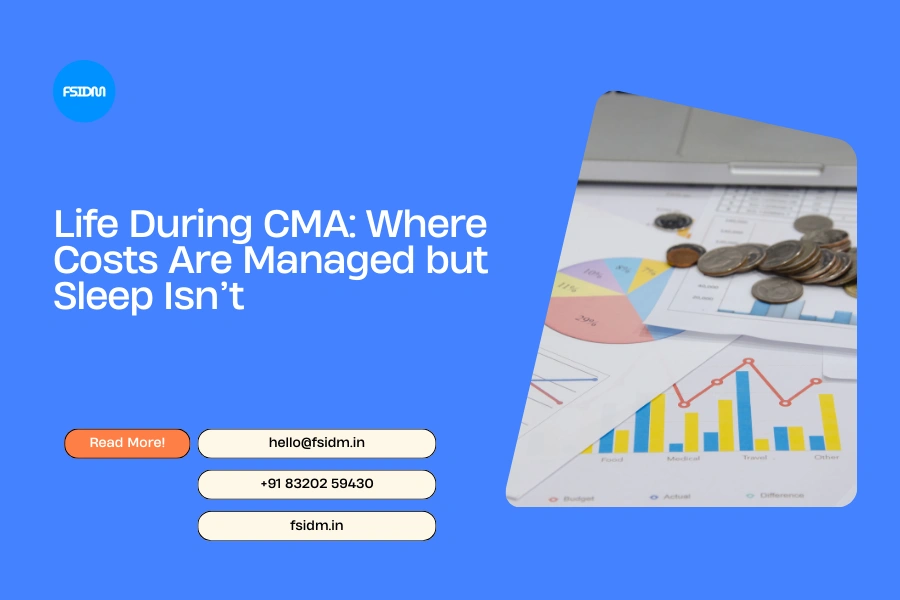
Life During CMA: Where Costs Are Managed but Sleep Isn’t
Hi hello, brainy budgeters, Excel ninjas, and all you future cost commanders! So, you’ve signed up for the glorious world of CMA. Welcome to the ride—it’s like being in a relationship with your calculator. One minute you’re solving standard costing sums, and the next, you’re wondering if “opportunity cost” also applies to your social life. “CMA isn’t just a course. It’s a full-time job, unpaid internship, and mental workout rolled into one.” 🧾 The CMA Syllabus: More Concepts Than A Startup Pitch Deck Let’s talk syllabus. Or should we say syllabus zilla? From: Cost Accounting, Financial Accounting, Taxation, Strategic Management, To Operation Management… Each subject comes with its own way of saying: “You thought this would be easy?” There’s enough theory to open a law school, and enough practical sums to kill your calculator batteries thrice over. 📅 The CMA Routine: Wake, Study, Panic, Repeat CMA student life is basically a loop: Wake up early to study. Study a little, scroll Instagram more. Panic. Study again while promising yourself you’ll sleep “just after this chapter.” Repeat this process for months, until the exam dates are announced. Then the panic is no longer casual—it’s official. 🧠 Exams: Not For The Weak-Hearted (Or Light Sleepers) CMA exams are legendary. Not because they’re impossible, but because they’re unpredictable. You revise 10 chapters, they ask questions from the 11th. And the remaining 90 marks feel like they were written by aliens fluent in accounting jargon. There’s also the post-exam analysis ritual: “Did you write that format?” “Bro, I used FIFO instead of LIFO… am I gone?” “Result kab aayega?” (And then checking pass percentages every alternate day.) 💼 Practical Training: Welcome to Reality Once you step into the practical training world, the theory makes a bit more sense—and the workload makes a bit less sense. Expect: Preparing cost sheets, Budget reports, Internal audits, And of course, endless Excel sheets that test both your patience and eyesight. Your seniors will expect you to know everything—even the shortcuts in Tally they haven’t used themselves. 💬 Misunderstood Much? “CMA? Is that like CA?” Explaining what CMA is becomes a full-time side hustle: “Oh, you’re doing CA?” “No aunty, it’s CMA.” “Beta, sab same hi hai na?” No, it’s not the same. CMAs are the backbone of financial planning, internal costing, and strategic management in companies. But don’t worry, you’ll get your revenge one day when people start calling you “Sir/Ma’am” in the boardroom. 📊 Skills You Gain (Besides the Obvious) Let’s be honest. CMA is not just about solving numericals: You’ll become a pro at budgeting your time (and your snacks). Learn how to think like a CFO. Discover patience at a spiritual level (especially with long theory questions). And you’ll develop ninja-level Excel skills—CTRL+Z is basically your best friend. 🎯 Conclusion: Not Easy, But Definitely Worth It Life during CMA is demanding, but it builds something rare—clarity. You’ll understand how businesses survive, scale, and struggle. You’ll learn discipline, data, and decision-making. And most importantly, you’ll earn a degree that makes you stand tall in any corporate setup. “You don’t just become a CMA. You evolve—into the one who finds value where others only see numbers.”

Life During CS: Laws, Letters & Late-Night Case Laws
Hi hello, future corporate commanders, compliance crusaders, and boardroom bosses! So, you chose CS—Company Secretary. People think you’re training to be someone’s assistant (ouch), but you and I both know you’re diving deep into a sea of secretarial standards, legal drafts, and mind-boggling sections of the Companies Act that most people will never dare to read. “CS is not just a course—it’s a survival manual for corporate chaos, disguised as a syllabus.” 📚 The Syllabus: Like a Legal Thriller, But With Less Action Let’s get this straight: the CS syllabus is no joke. Whether it’s: Company Law, Securities Laws, Economic and Commercial Laws, Governance, Risk, and Compliance… …it’s all exciting in theory and exhausting in practice. The size of your study material can double as gym weights. There’s a special kind of joy in memorizing sections and sub-sections that make you feel like you’re preparing for a courtroom showdown—except the opponent is ICAI’s cousin: ICSI. 📄 Drafting Documents Like a Boss (In Training) Every CS student eventually becomes a part-time lawyer and full-time drafter. You’ll write: Board resolutions, Notices, Minutes, Compliance letters… …with such flair that your keyboard starts asking for a salary. By the end of CS Executive, you’ll start thinking in legal language: Whereas the student being mentally exhausted, therefore the brain refuses to cooperate… 📅 Exams: More Pressure Than a Shareholder Meeting Let’s not sugarcoat it—CS exams are a rollercoaster. You prepare for three months. You panic for three weeks. You write like a lawyer under oath for three hours. And then you wait three nervous months for the result. Bonus: Everyone asks “kitne marks chahiye pass hone ke?” as if the cut-off is a family secret. 🧑🏫 Training Time: Hello, Practical World Once you get into CS training, welcome to the corporate jungle! From ROC filings to board meeting setups, your real learning begins here. Expect: Proofreading long drafts till your eyes blur, Learning what MCA does beyond just crashing at 11:59 PM, And being the go-to person for all things “compliance-related”. Also, your Excel skills better be as strong as your chai addiction. Because there will be spreadsheets. 🧠 Misconceptions: No, You’re Not a PA Tell someone you’re studying CS, and you might hear: “Oh, computer science?” “So… you take dictation?” “Like a PA, right?” No. No. And absolutely no. CS students manage legal frameworks, boardroom governance, and corporate affairs—basically everything that keeps businesses legally safe. But sure, smile politely and move on. You’ll prove it later. 📝 What CS Really Teaches You Beyond books and sections, you learn: Precision: You’ll never misplace a comma in a legal doc again. Patience: Especially while waiting for results or MCA logins to load. Presence of Mind: Because last-minute changes are a given. Professionalism: Even if your soul is tired, your draft will be perfect. 🎓 Conclusion: Signed, Sealed, (Soon to be) Certified CS isn’t easy. It’s long. It tests your endurance, your willpower, and sometimes your eyesight. But it’s also empowering. You’re not just becoming an expert in law and compliance—you’re learning to be the backbone of corporate governance. “Company Secretary may sound like a title. But it’s actually a journey—of law, logic, and loads of learning.”

Life During CA: Tallying Life One Trial Balance at a Time
Hi hello, future financial wizards, ledger lovers, and tax law troubleshooters! If you’re a CA student—or know one—you already understand that “free time” is a mythical concept. You’re not just studying for an exam. You’re preparing for The Exam—an event so intense that it can turn chilled-out teens into caffeine-fueled night owls with permanent spectacles and trust issues. “Becoming a CA isn’t about cracking numbers—it’s about not cracking under pressure.” 📘 The CA Curriculum: More Paper Than a Printing Press The CA journey is divided into Foundation, Intermediate, and Final—but it might as well be called: Sleepless, Stressed, and Spiritually Broken (but still trying). From taxation and audit to costing and law, every subject feels like it has its own planet. And the syllabus? Let’s just say, it’s the only thing heavier than the textbooks themselves. 🧾 Articleship: Real Work, Unreal Expectations Welcome to the magical world of Articleship—a 3-year internship where: You may be asked to find errors in a 2-lakh-row Excel file. You’ll visit client sites that are harder to locate than Wi-Fi in a village. And you’ll be expected to know GST, Income Tax, TDS, and HR policies… all before lunch. You’ll get corporate exposure, free tea, and occasional trauma from audit seniors who treat deadlines like kabaddi matches. 🧠 The Myth of Work-Life Balance “Yaar, let’s meet this weekend”—said no CA student ever. Between morning office, evening coaching, late-night revisions, and surprise ICAI announcements, finding time for yourself is as rare as spotting a debit with no credit. Birthday parties? Skipped. Netflix? Only if it’s a GST webinar. Sleep? What’s that? 📉 Exam Season: The Real Demonetization CA exams come twice a year, but the panic lasts all year. These exams are not just hard—they’re emotionally character-building. Common CA exam traits: You know 80%, they ask the remaining 20%. You revise five times, but still feel like it’s not enough. The pass percentage is so low, you start calculating your probability like it’s a stats problem. And let’s not forget the post-result ritual: checking pass percentages and refreshing the ICAI site like it’s a cricket score. 📊 The Toolkit of a CA Student Here’s what every CA student learns to master: Excel (with keyboard shortcuts faster than light), Calculator (like it’s an extension of your hand), Patience (for ICAI announcements), And the art of saying “I’m fine” when your soul has left your body after the 3rd mock test. 👨💼 What CA Actually Teaches You (Beyond Accounts) Sure, you’ll become a master of numbers. But you’ll also: Develop Sherlock-level observation skills during audit season. Learn how to explain Section 44ADA to someone who still doesn’t know what PAN stands for. Handle pressure better than most pressure cookers. And one day, you’ll hear “Sir/Ma’am, please verify my books” and feel a tear roll down your cheek—from pride. 🎓 Closing Statement: Signed, Balanced & Audited Life during CA is tough. It’s long. It’s filled with uncertainty. But it also molds you into something more than a professional—it makes you a problem-solver, a resilient learner, and yes, a human calculator. “You don’t just pass CA. You audit every part of your life, fix the errors, and still show up smiling—even if it’s just to match one last closing balance.”