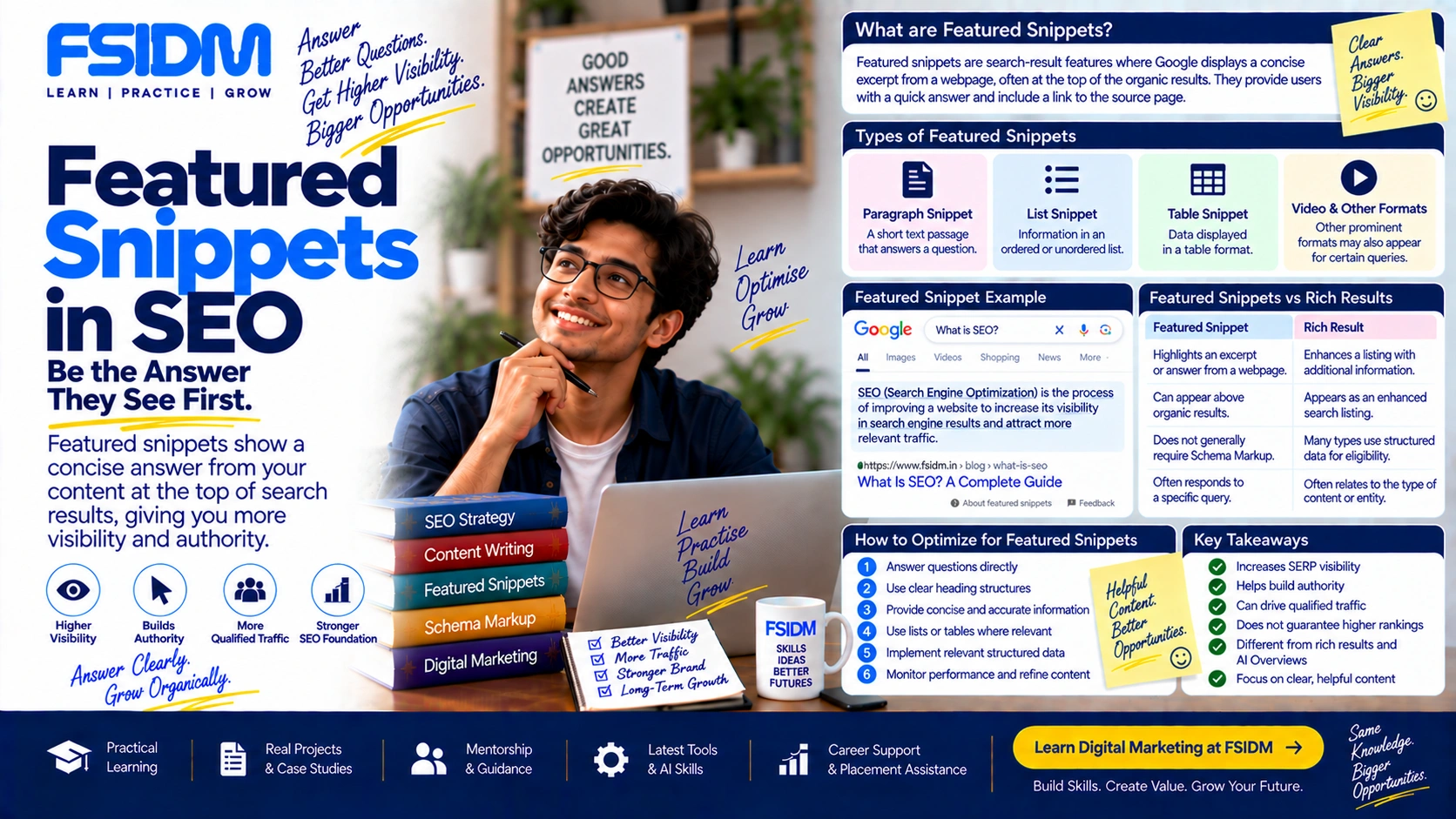
Featured snippets are search-result features where Google displays a concise excerpt from a webpage prominently at the top of the organic results, often above the traditional blue links. They are designed to provide users with a quick answer or useful information directly on the search results page.
A featured snippet can appear as a paragraph, list, table, or other supported format depending on the query and the content Google selects. The source page is usually linked alongside the displayed answer, giving users an option to visit the website for more information.
Featured snippets are different from rich results. Rich results enhance a search listing with structured information, while a featured snippet generally extracts and highlights an answer or section from a webpage to address a specific search query.
What Is a Featured Snippet?
A featured snippet is a prominent organic search-result format that presents information extracted from a webpage in response to a user’s query.
For example, if someone searches “What is canonicalization?”, Google may select a concise definition from a relevant webpage and display it prominently in the search results.
The featured content can appear before the traditional organic listings, although the exact search-result layout can vary by query, device, location, and Google’s systems.
Types of Featured Snippets
1. Paragraph Snippet
A paragraph snippet displays a short text passage that directly answers a question or explains a concept.
This format is common for queries such as “What is SEO?” or “What is crawl budget?” where a concise definition can satisfy the immediate information need.
2. List Snippet
A list snippet presents information in an ordered or unordered list.
It can be useful for queries involving steps, rankings, processes, or multiple items, such as “how to perform keyword research” or “types of SEO.”
3. Table Snippet
A table snippet displays information in a tabular format. Google may extract a relevant table or structured comparison from a webpage when it is useful for the query.
4. Video and Other Formats
Google can also display other prominent search-result formats, including video-related results. These should not all be treated as traditional featured snippets, because Google uses several different search-result features and presentation systems.
How Do Featured Snippets Work?
The process can be simplified as follows:
- User searches for a query.
- Google identifies relevant webpages.
- Google analyzes the content and context.
- Its systems may select a concise passage or section that directly addresses the query.
- The selected content may be displayed as a featured snippet.
There is no guaranteed method for making Google display a particular passage as a featured snippet. Google’s systems make the final selection.
Why Are Featured Snippets Important for SEO?
1. Increased SERP Visibility
Featured snippets can give a webpage prominent visibility on the search results page, potentially placing the source above traditional organic listings.
2. Stronger Answer Visibility
A well-structured answer can communicate the key point of a page before a user visits the website.
3. Potential Click Opportunities
Users can click through to the source page for additional information. However, featured snippets do not guarantee higher click-through rates, and the effect can vary considerably by query.
4. Supports Answer-Oriented Content
Optimizing content for clear questions and direct answers can encourage better information architecture and make pages easier for both users and search systems to understand.
Featured Snippets vs Rich Results
| Featured Snippet | Rich Result |
|---|---|
| Usually highlights an excerpt or answer from a webpage. | Enhances a search listing with additional eligible information or visual elements. |
| Can appear prominently above traditional organic results. | Appears as an enhanced form of an eligible search listing. |
| Does not generally require Schema Markup. | Many supported rich-result types use structured data for eligibility. |
| Often responds directly to a specific query. | Often relates to the type of content or entity represented by the page. |
Featured Snippets vs AI Overviews
Featured snippets and AI Overviews are also different search features.
A featured snippet generally highlights a passage from a single webpage as a prominent answer. An AI Overview is an AI-generated response that can synthesize information from multiple sources and provide links to supporting webpages when Google’s system chooses to show one.
Because search-result layouts continue to evolve, the exact appearance and availability of these features can change over time.
How to Optimize for Featured Snippets
1. Answer Questions Directly
Identify relevant questions your audience asks and provide concise, accurate answers near the beginning of the relevant section.
2. Use Clear Heading Structure
Organize content with descriptive headings that clearly indicate the question or topic being addressed.
3. Keep Definitions Concise
For definition-based queries, provide a clear explanation before expanding into examples, details, and practical advice.
4. Use Lists for Processes
If a topic involves steps, organize them using ordered or unordered lists. Clear formatting makes the information easier to understand and can make it easier for search systems to interpret.
5. Use Tables for Comparisons
When users need to compare concepts, products, methods, or metrics, use genuinely useful tables rather than forcing information into a table simply for SEO.
6. Cover the Topic Comprehensively
Do not write a page consisting only of short answers. Provide sufficient context, examples, explanations, and related information to satisfy the broader search intent.
7. Match Search Intent
Understand whether the user wants a definition, process, comparison, list, recommendation, or another type of answer and structure the content accordingly.
Featured Snippet Optimization Example
Suppose the target query is “What is internal linking?”.
A weak page may begin with several paragraphs of generic introduction before explaining the term. A better structure could start with a concise definition:
Internal linking is the practice of linking one page on a website to another page on the same website.
The page can then expand with benefits, examples, best practices, common mistakes, and implementation guidance.
This structure helps users find the answer quickly while still providing comprehensive information.
Do You Need Schema Markup for Featured Snippets?
No. Featured snippets generally do not require Schema Markup. Google can select content for a featured snippet based on its understanding of the webpage and query.
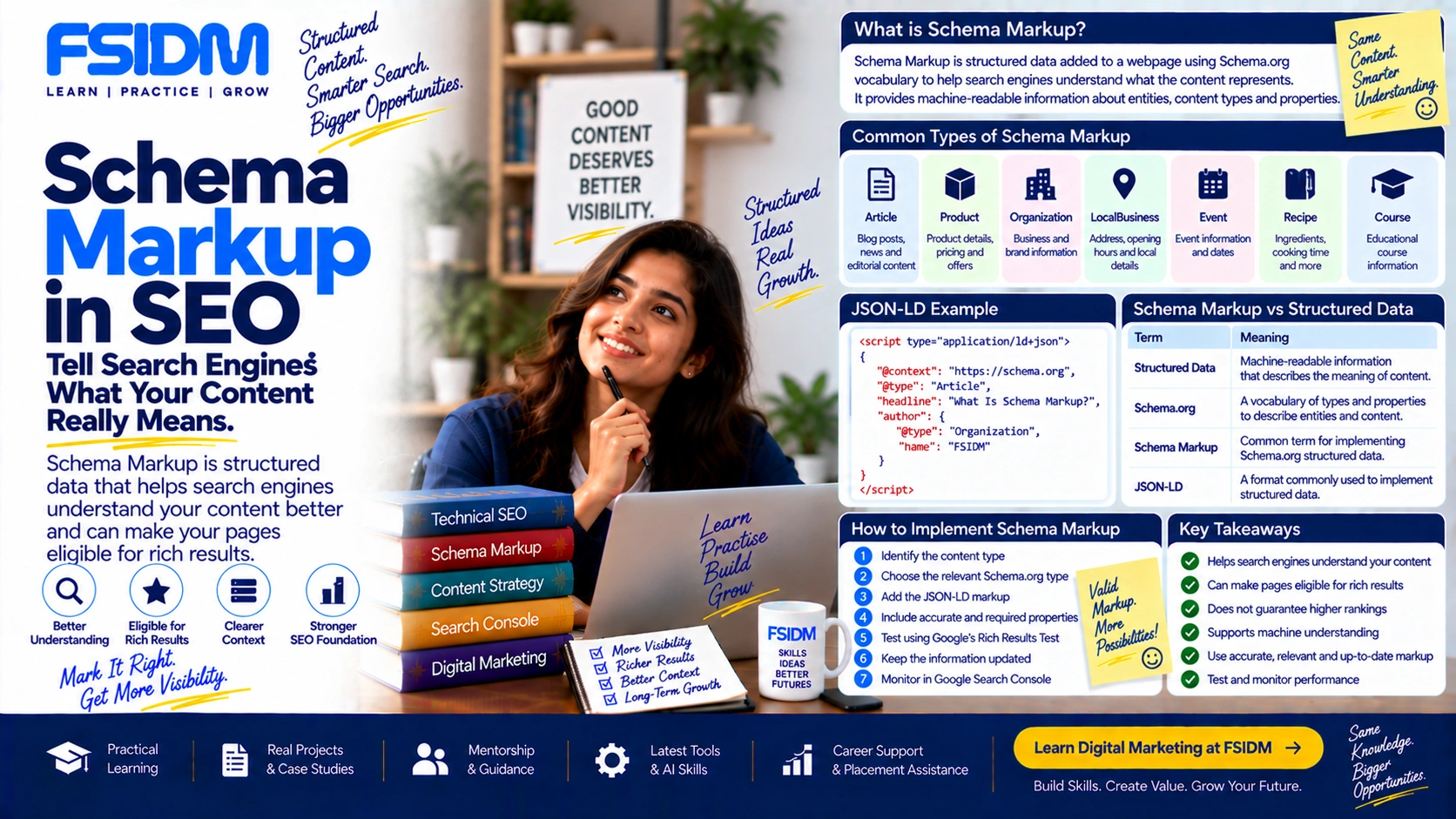
Schema Markup serves a different purpose: it provides machine-readable information about content and entities and can support eligibility for certain rich-result features.
How to Find Featured Snippet Opportunities
- Research question-based keywords: Find queries that require definitions, processes, comparisons, or concise answers.
- Analyze the SERP: Check whether a featured snippet currently appears and what format Google uses.
- Study the intent: Understand exactly what information users expect.
- Improve answer structure: Provide a concise direct answer followed by deeper supporting content.
- Monitor changes: Search features can change, so regularly review important queries.
Common Featured Snippet Mistakes
- Assuming every question has a featured snippet opportunity.
- Writing extremely short content solely to target a snippet.
- Ignoring the broader search intent after providing the initial answer.
- Using unnatural keyword repetition.
- Creating lists or tables that do not genuinely improve readability.
- Assuming Schema Markup is required for a featured snippet.
- Promising that a page will win or retain a featured snippet after optimization.
- Confusing featured snippets with AI Overviews or rich results.
FAQs About Featured Snippets
What are featured snippets in simple words?
Featured snippets are prominent organic search-result answers where Google displays a relevant excerpt from a webpage to help answer a user’s query directly.
Are featured snippets still important for SEO?
They can be valuable for visibility and answer-oriented search experiences, but their appearance and impact vary by query, device, and Google’s evolving search-result systems.
How do I get a featured snippet?
There is no guaranteed method. Create accurate, useful content that directly addresses relevant queries, use clear structure, match search intent, and format information appropriately for the question.
Does Schema Markup help get featured snippets?
Schema Markup is not generally required for featured snippets. Featured snippets are primarily selected from Google’s understanding of webpage content and query relevance.
Are featured snippets the same as rich results?
No. Featured snippets highlight content from a webpage as a prominent answer, while rich results enhance eligible search listings with additional information or visual elements.
Are featured snippets guaranteed to stay once you win them?
No. Google’s search results can change as algorithms, queries, competitors, content, and user needs change. A page can gain or lose a featured snippet over time.
Interview Question
What are featured snippets, and how can an SEO professional optimize content for them?
A strong answer should explain that featured snippets are prominent organic search-result formats that display an excerpt from a webpage. Mention direct answers, clear headings, lists, tables, search intent, and comprehensive content. Also explain that Google ultimately decides which page receives the feature.
Interview Tip
Don’t say “put the answer in 40–50 words and Google will give you the snippet.” There is no guaranteed word-count formula. Focus on clear answers, useful formatting, relevance, and satisfying search intent.
Learn SEO Practically with FSIDM
Featured snippets are an important part of understanding modern SERPs and answer-focused SEO. Learning how to structure content around real user questions can help SEO professionals create pages that are useful to both people and search systems.
At FSIDM, digital marketing and SEO are approached with a practical, industry-focused mindset, helping learners understand modern SEO concepts and how they are applied to real websites.