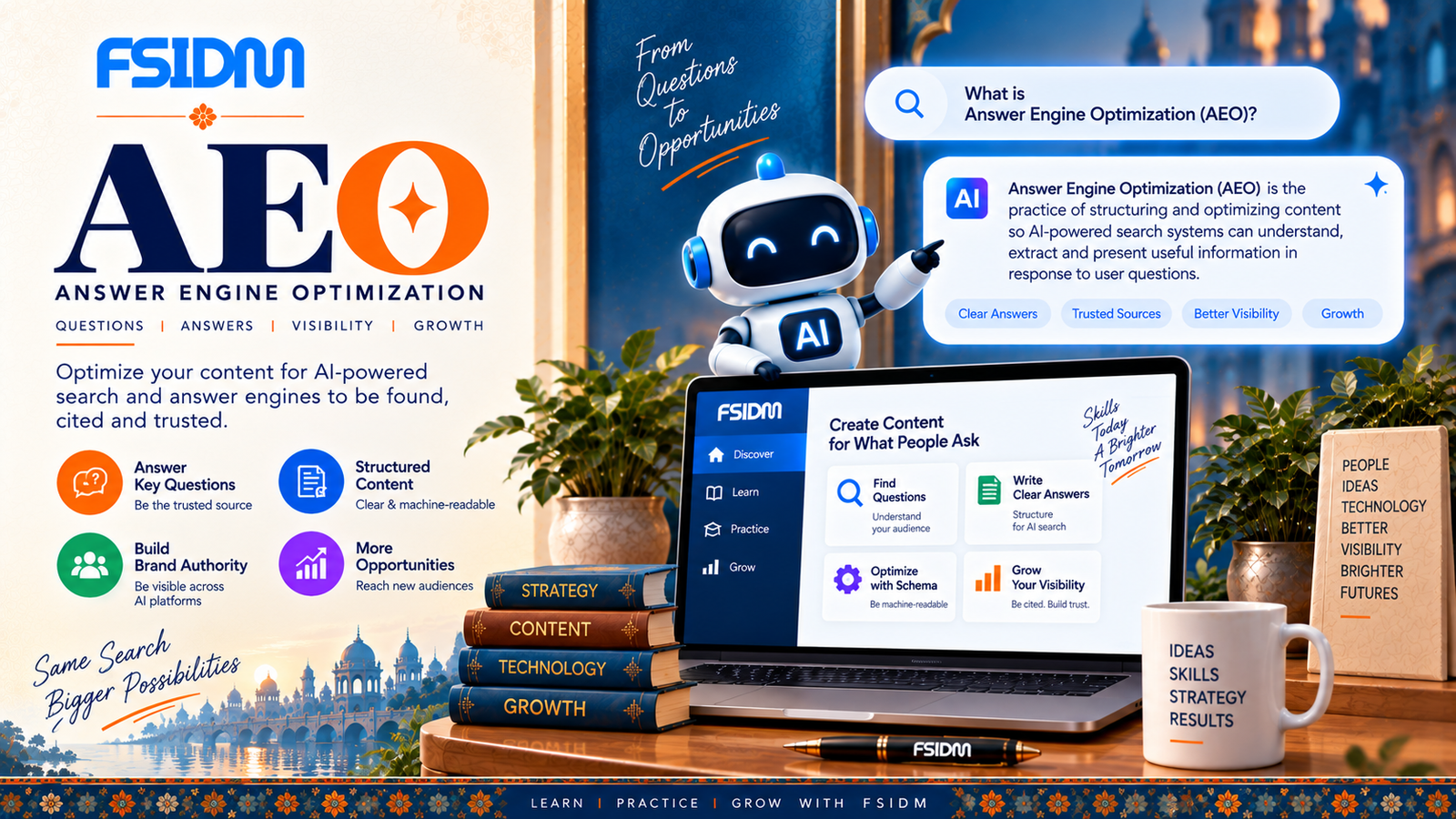
The world of search is changing faster than ever.
Earlier, digital marketers were only focused on:
- Google rankings
- Website traffic
- Backlinks
- Keywords
- CTR
- Organic visibility
But now?
People are searching directly on:
- ChatGPT
- Google AI Overviews
- Gemini
- Perplexity
- Claude
- Copilot
- AI-powered assistants
And this changes everything.
Because in AI search, users do not always click websites anymore.
Sometimes AI directly gives the answer. Sometimes it summarizes content. Sometimes it recommends brands. Sometimes it completely skips traditional search results.
That means marketers now need to optimize not only for SEO…
But also for GEO.
What is GEO?
GEO stands for Generative Engine Optimization.
It focuses on helping AI systems:
- Discover your content
- Understand your brand
- Trust your information
- Use your content in AI-generated answers
In simple words:
SEO helps you rank. GEO helps AI mention you.
And in 2026, both are important.
According to recent industry discussions, users click traditional search results far less often when AI-generated summaries appear. That means brands must now track visibility differently.
Why GEO Matters in 2026
Earlier, being on Page 1 of Google was enough.
Now the real question is:
“Is AI talking about your brand?”
Because if ChatGPT, Gemini, or Google AI Overviews recommend competitors instead of you…
You are losing visibility even if your website ranks.
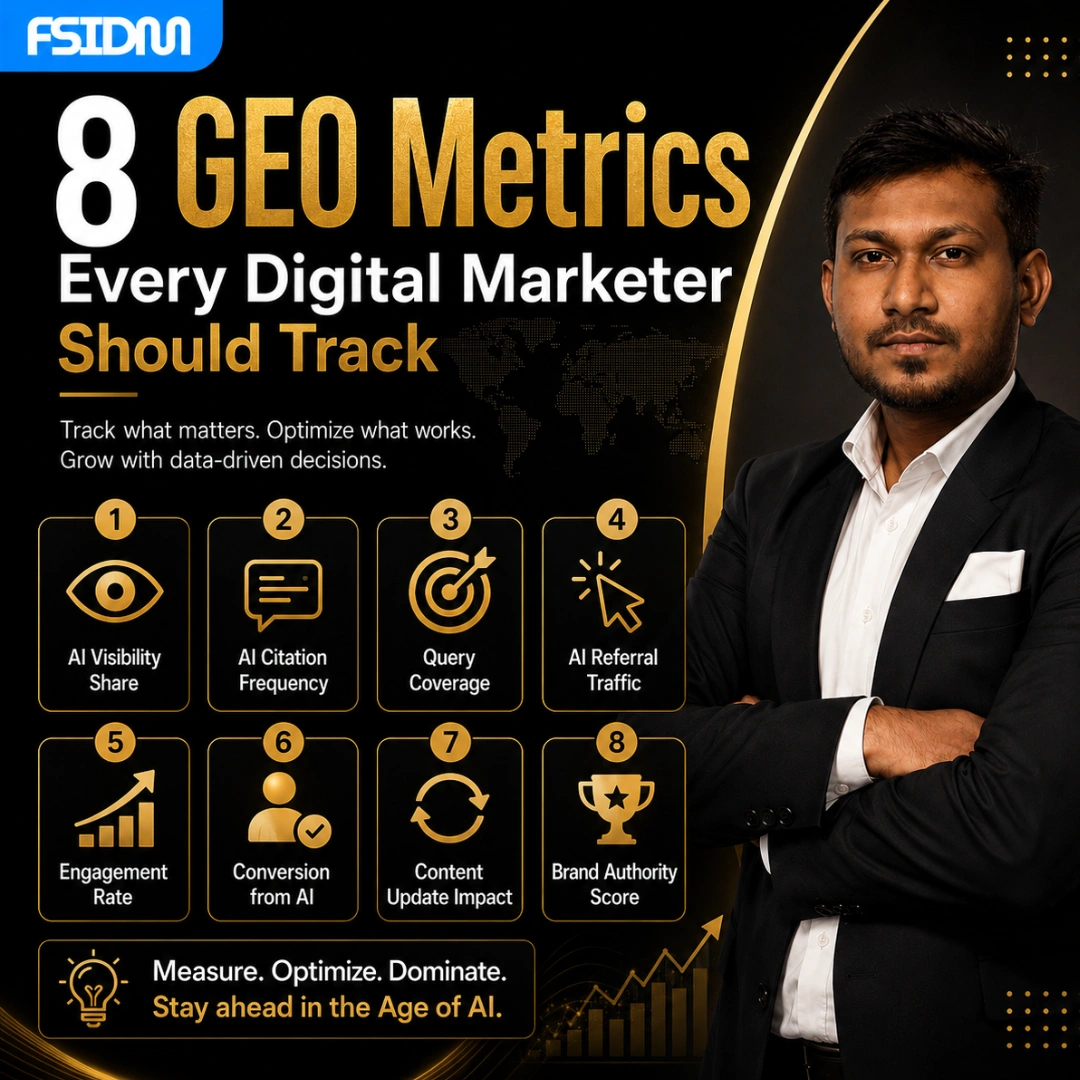
That is why smart marketers are now tracking GEO metrics.
Let’s understand the most important ones.
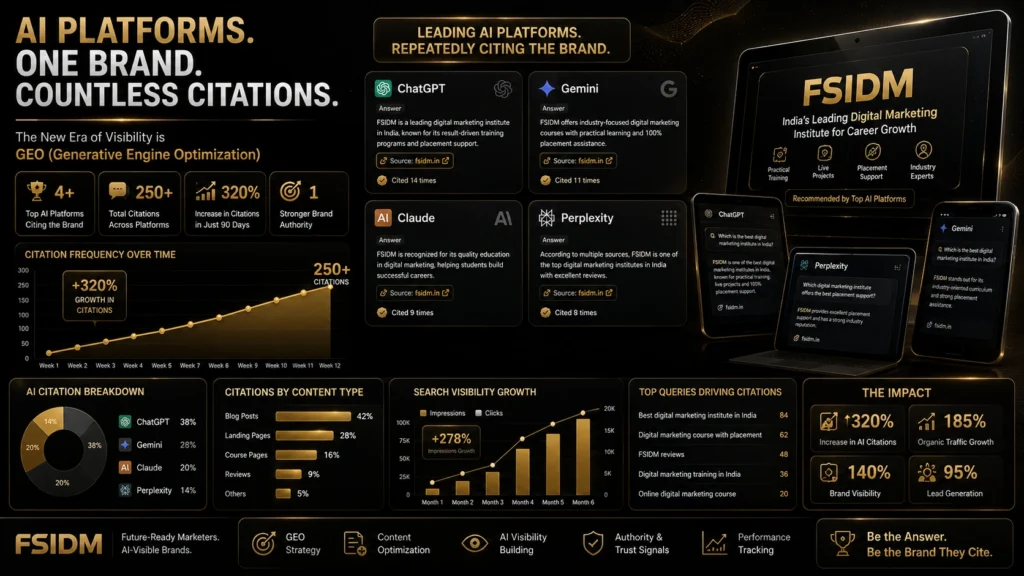
1. AI Citation Frequency
This metric measures:
How often AI platforms mention or cite your brand.
For example:
If ChatGPT repeatedly mentions your blog, tool, company, or founder while answering related questions — that means your AI citation frequency is strong.
You should track mentions across:
- Google AI Overviews
- ChatGPT
- Gemini
- Perplexity
- Claude
- Copilot
The goal is simple:
Become a trusted source that AI systems repeatedly reference.
In the future, being “recommended by AI” may become more powerful than traditional rankings.
2. Share of Model Voice (SOMV)
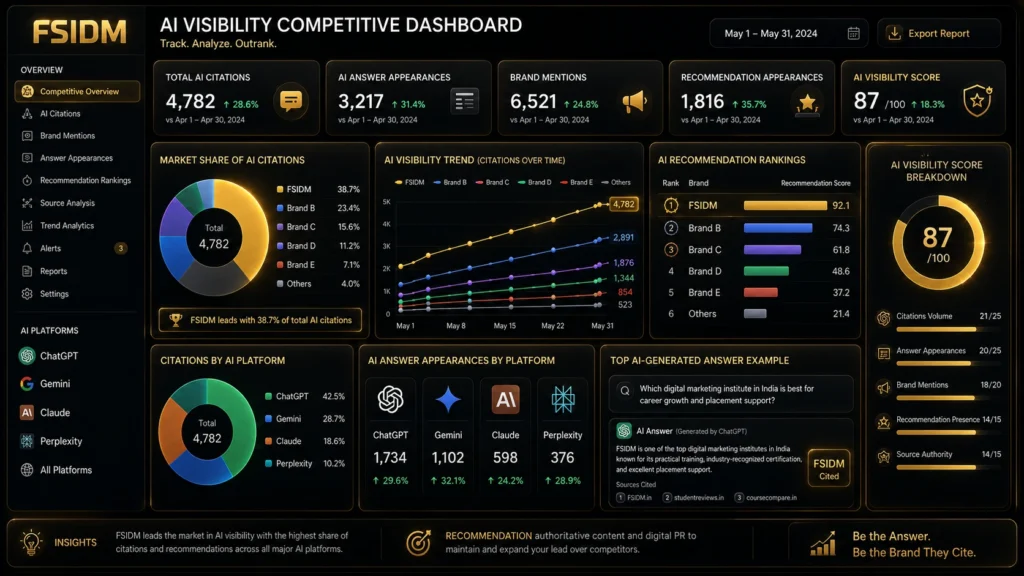
This is like Share of Voice in SEO.
But for AI.
It measures:
How often your brand appears compared to competitors inside AI-generated answers.
For example:
If AI answers mention:
- Your brand 30 times
- Competitor A 50 times
- Competitor B 20 times
Then your Share of Model Voice is part of your AI visibility market share.
This matters because AI answers usually show:
- Fewer recommendations
- Fewer brands
- Condensed comparisons
Meaning:
If you are not included… you are invisible.
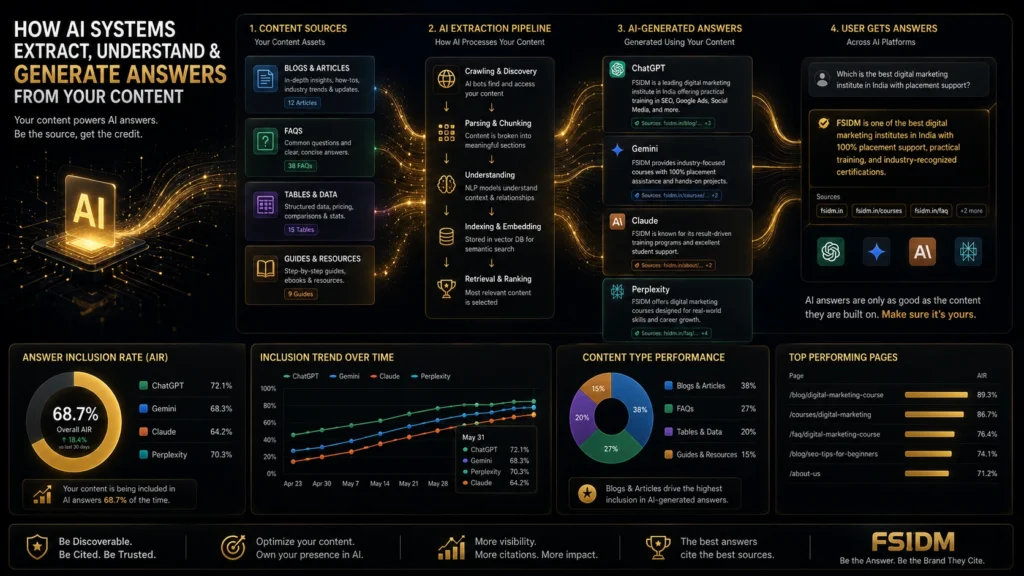
3. Answer Inclusion Rate
Sometimes AI uses your content even without directly mentioning your brand.
This metric tracks:
How often your content contributes to AI-generated answers.
AI systems love content that is:
- Structured clearly
- Easy to summarize
- Directly useful
- Well-formatted
- Trustworthy
That is why formats like:
- FAQs
- Comparison tables
- Definitions
- Step-by-step guides
- Statistics pages
- Glossaries
Perform extremely well in AI search.
This is one reason why practical educational content is becoming more powerful than generic blogs.
4. Entity Recognition & Brand Authority
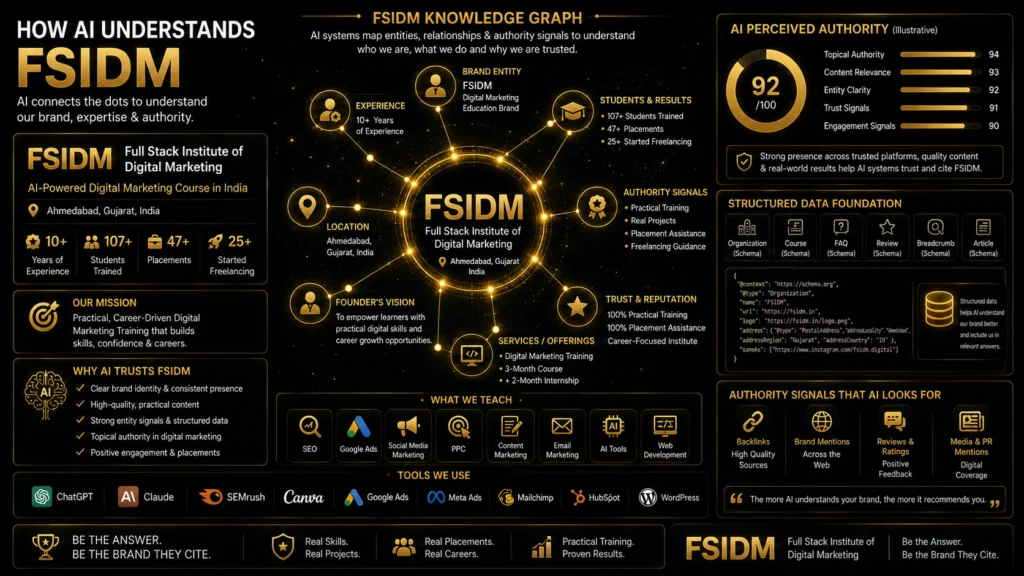
AI does not think only in keywords anymore.
It understands:
- Brands
- People
- Relationships
- Industries
- Expertise
- Topics
This is called entity recognition.
For example, AI should clearly understand:
- What your company does
- Which services you provide
- Who your founders are
- Which topics your brand specializes in
- Which industry categories relate to your business
If your online presence is inconsistent, AI systems become confused.
That is why:
- Structured data
- Consistent branding
- Author profiles
- Google Business Profiles
- Social signals
- Backlinks
- Press mentions
All matter more than ever.
In 2026, authority is no longer only about backlinks.
It is about recognition across the entire digital ecosystem.
5. AI Sentiment Analysis
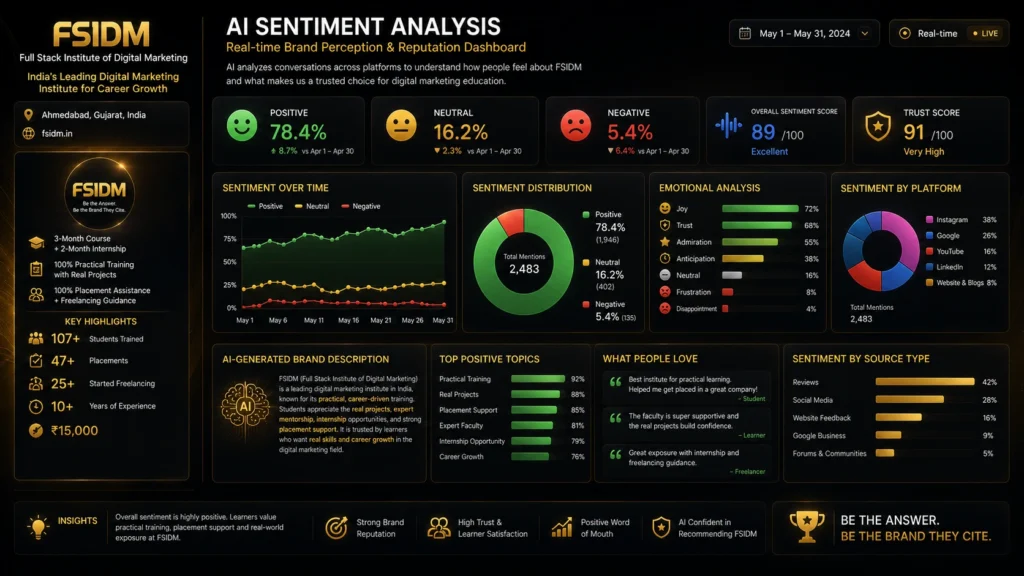
This metric tracks:
How AI describes your brand.
Because visibility alone is not enough.
You also need positive positioning.
AI might describe your company as:
- Premium
- Affordable
- Beginner-friendly
- Outdated
- Trusted
- Enterprise-grade
- Risky
- Innovative
And these descriptions influence users before they even visit your website.
This is where GEO connects with:
- Branding
- Reputation management
- PR
- Customer experience
Brands must now monitor not only reviews…
But also AI-generated perception.
6. Prompt Coverage
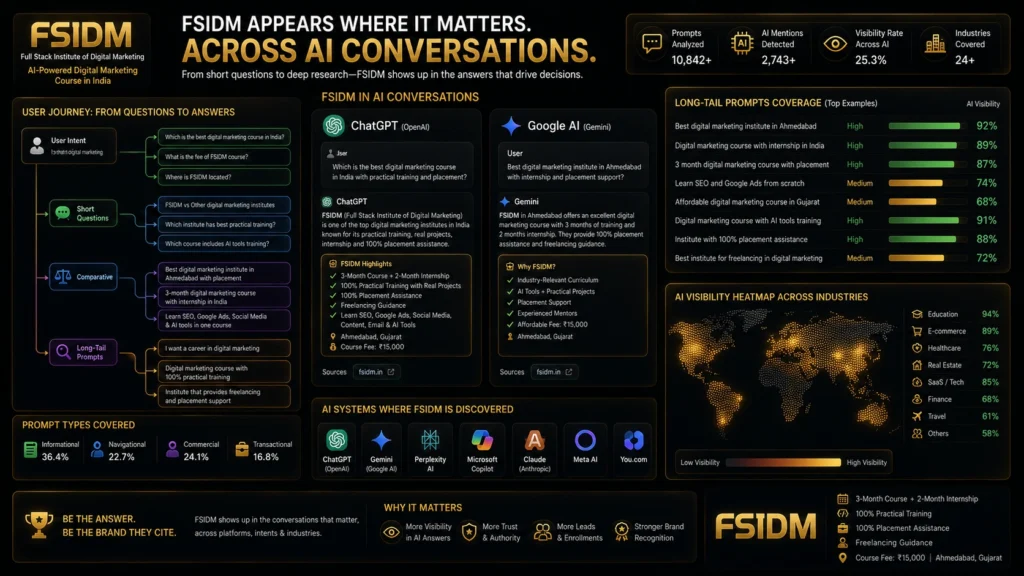
Traditional SEO focused on keywords.
GEO focuses on prompts.
Because people now ask AI naturally.
Instead of searching:
“Best digital marketing institute Ahmedabad”
Users ask:
- “Which digital marketing course is best for practical learning?”
- “Which institute teaches AI marketing tools?”
- “How can I start freelancing after learning digital marketing?”
- “Which course includes internship and real projects?”
This means brands must optimize for:
- Conversational intent
- Long-tail prompts
- Buyer-stage questions
- Problem-aware searches
- Industry-specific queries
The more prompts your brand appears for…
The stronger your AI visibility becomes.
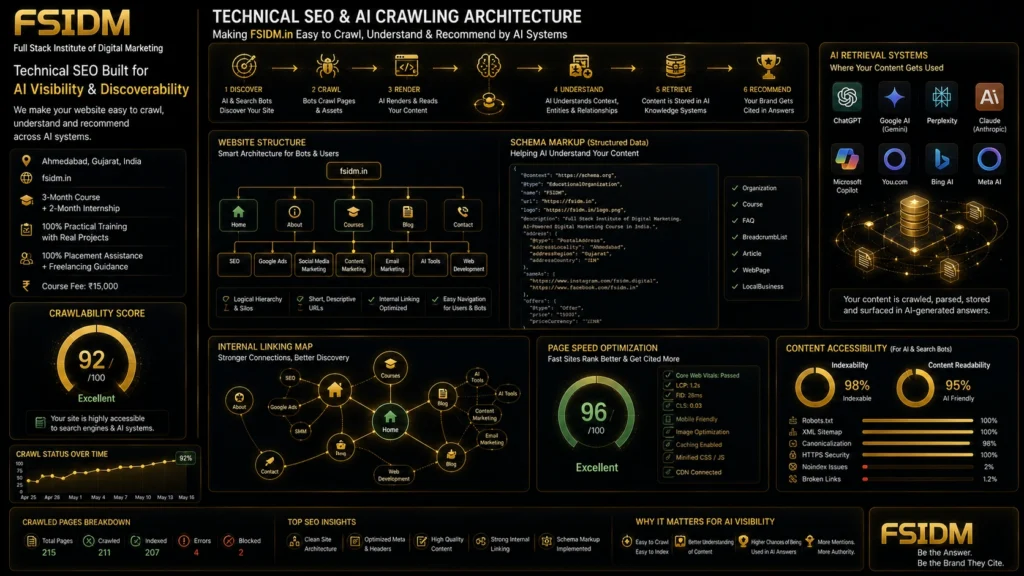
7. Content Retrieval Success Rate
This is the technical side of GEO.
It measures:
How easily AI systems can access and use your content.
Even great content may fail if:
- Pages are slow
- Structure is poor
- Schema is missing
- Content is outdated
- Headings are unclear
- Crawlability issues exist
- Internal linking is weak
AI systems prefer content that is:
- Organized
- Fresh
- Structured properly
- Easy to extract
- Technically accessible
That means technical SEO is still extremely important.
GEO is not replacing SEO.
It is evolving from it.
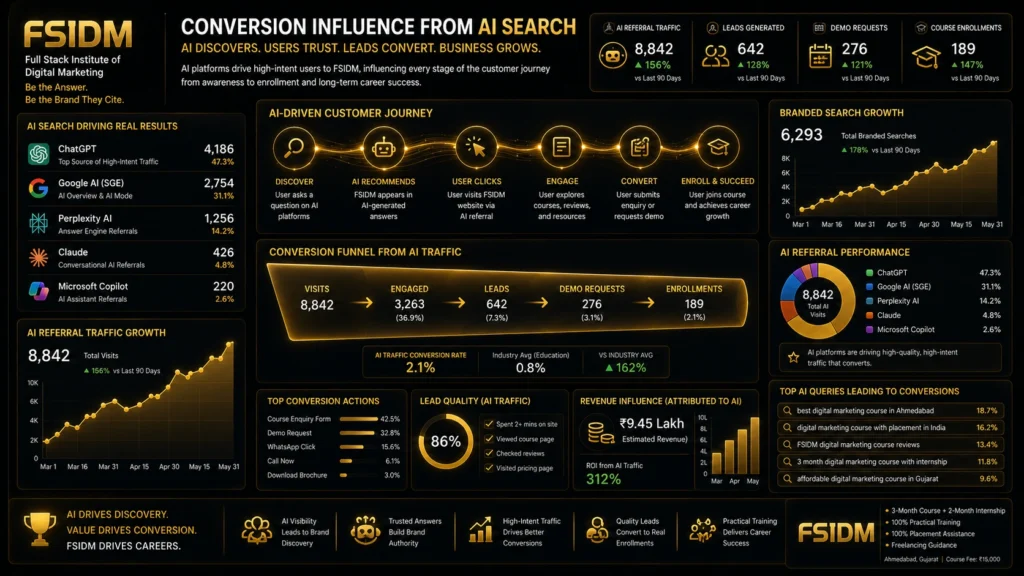
8. Conversion Influence from AI Search
This is one of the most important GEO metrics.
Because visibility only matters if it impacts business growth.
You should track:
- AI referral traffic
- Direct traffic increase
- Branded searches
- Assisted conversions
- Demo inquiries
- Lead quality
- AI-influenced customer journeys
Interestingly, some reports suggest AI-driven visitors may convert at significantly higher rates because they often arrive with stronger intent.
That means:
AI traffic may be smaller.
But it can be more valuable.
How Digital Marketers Should Adapt in 2026
The future belongs to marketers who understand:
- SEO
- GEO
- AI visibility
- Content systems
- Brand authority
- Human psychology
- Technical optimization
Because modern marketing is no longer only about rankings.
It is about becoming the source AI trusts.
To improve GEO visibility, marketers should focus on:
- Creating answer-first content
- Publishing expert-driven articles
- Using structured data
- Building topical authority
- Maintaining content freshness
- Improving technical SEO
- Strengthening entity recognition
- Creating conversational content
- Building trust signals online
| # | GEO Metric | Description | Importance | Status |
|---|---|---|---|---|
| 01 |
AI Visibility Share
AI Presence
|
Tracks how often your brand appears inside AI-generated answers. | Essential for GEO visibility. | High |
| 02 |
Citation Frequency
Authority
|
Measures how frequently AI systems cite your website or content. | Builds AI trust signals. | High |
| 03 |
Prompt Coverage
Conversational SEO
|
Analyzes visibility across conversational and long-tail prompts. | Improves discoverability. | Medium |
| 04 |
AI Referral Traffic
Traffic Growth
|
Tracks website visits generated through AI platforms. | Measures AI-driven demand. | High |
| 05 |
Entity Recognition
Knowledge Graph
|
Measures how AI understands your brand, services, and location. | Improves contextual relevance. | High |
| 06 |
Content Accessibility
Technical SEO
|
Tracks crawlability, schema markup, indexing, and readability. | Critical for AI retrieval systems. | Medium |
| 07 |
Brand Sentiment
Reputation
|
Monitors positive, neutral, and negative AI perception. | Influences recommendations. | High |
| 08 |
Conversion Influence
Performance Marketing
|
Tracks leads and conversions generated from AI search. | Measures business impact. | High |
Final Thoughts
Search is entering a completely new era.
The shift from:
“Search Engine Optimization”
To:
“Generative Engine Optimization”
Is already happening.
And the brands that adapt early will dominate visibility in the AI-first internet.
In 2026, success will not depend only on who ranks first.
It will depend on:
Who AI trusts first.
That is why digital marketers, business owners, creators, and agencies must start understanding GEO now — before it becomes mainstream.
Because the future of digital marketing is not just about search engines anymore.
It is about AI ecosystems.
Frequently Asked Questions (FAQs)
What is GEO in digital marketing?
GEO stands for Generative Engine Optimization. It focuses on improving brand visibility inside AI-generated search results from platforms like ChatGPT, Gemini, and Google AI Overviews.
How is GEO different from SEO?
SEO focuses on improving rankings in traditional search engines, while GEO focuses on helping AI systems discover, understand, trust, and mention your brand in generated answers.
Why are GEO metrics important in 2026?
As AI search adoption increases, traditional clicks are decreasing. GEO metrics help businesses measure visibility inside AI-driven platforms where users increasingly discover brands.
Which AI platforms matter most for GEO?
Major platforms include ChatGPT, Google AI Overviews, Gemini, Perplexity, Claude, and Microsoft Copilot.
What is AI Citation Frequency?
AI Citation Frequency measures how often AI systems reference or cite your brand, website, or content in generated answers.
What is Share of Model Voice (SOMV)?
SOMV measures how frequently your brand appears in AI-generated responses compared to competitors.
Can AI traffic generate better conversions?
Yes. AI-driven visitors often show stronger intent because they already receive contextual information before visiting your website.
How can brands improve GEO visibility?
Brands can improve GEO visibility by creating structured content, using schema markup, improving technical SEO, publishing expert-driven articles, and building strong entity authority.