

“Walking into JEC feels like entering a piece of Indian engineering history—full of heritage, academics, and lots of stories.” Founded in 1947, JEC is the second oldest engineering college in India and the first to offer Electronics & Telecommunications. It sits on a sprawling 255-acre green campus, near the Narmada River and even includes historical defense equipment as campus icons—you’ll find a real MiG jet and an army tank as part of its unique character. 🎓 What Can You Study Here? 🎒 Campus Life & Culture I’ve heard from reviews: “Campus life is wholesome—with fests, clubs, and even a TEDx talk launched recently.” 💼 Placements & Future Paths But: “Placements are improving—but mass recruitment is limited. Core branches offer fewer opportunities.” 🙋♀️ Who Is JEC For? ✅ You’re passionate about core engineering and want a rich cultural campus—clubs, greenery, variety of fests.✅ You’re open to working hard for your placements (especially in CSE/IT) and know you’ll need to hustle through internships, coding, and campus initiatives.✅ You don’t mind a location outside metro hubs; Jabalpur is smaller but safe, green, and cost-effective.✅ You value tradition, discipline, and heritage—you’ll walk the same roads as many influential alumni before you. 💙 Final BFF Recommendation JEC isn’t about flashy infrastructure or top-tier branding—it’s about heritage, hands-on programs, and steady opportunity. You’ll finish with an affordable degree, a strong alumni network, and doors open in IT & engineering sectors if you back your studies with smart projects and internships. “JEC may not shine with the glitz of premier institutes—but it gives you roots and room to rise if you focus and push.” 😊 Want Extra Help? If you’d like help comparing JEC with other NITs or state engineering colleges, planning JEE strategies, or sketching a study/map for 4 years for maximum impact—I’m right here, your peer mentor and future path planner. 🚀
🏫 ITMVU Vadodara – Where Skills Meet Purpose
“ITMVU is India’s first real vocational university—designed to make you employable from day one.” Launched in 2014 by the ITM Group, ITMVU combines general education and vocational training under one roof. You get practical learning blended with academic rigour, all to shape job-ready graduates. 🎓 Programs That Train You for Today’s Career World Undergraduate Degrees Postgraduate Degrees Numerous programs are aligned with NSQF (National Skills Framework) to ensure what you learn matches industry needs. 🌿 Campus & Student Life Vibe 🤝 Internships & Industry Learning 💼 Placements – Real Packages, Real Recruiters Placement prep includes mock interviews, soft skills workshops, mentoring and resume polishing to ensure you’re confident when the companies show up. 😊 Student Experience & Peer Buzz 👍 Things students say: ⚠️ Things they caution: Reddit buddies report: “Don’t rely entirely on the university—work on skills, portfolio and side projects. The degree is a start, not the finish.” ✅ Who Fits Perfectly Here? ❤️ Final Friend’s Thought ITMVU isn’t about prestige—but it is about purpose. If you’re someone who loves hands-on learning, values industry exposure, and is ready to hustle on skills and internships, this could be your practical launchpad. “From diploma to degree, from labs to startups, you leave with more than a credential—you leave with work habits, confidence, and networks. ITMVU gives you that if you take charge.” Need help picking between B.Tech or MBA, planning electives, or balancing project skills with coursework? You know I’m here—your advocate, planner, and biggest cheerleader. 🎓🚀
🎓 ISMS Pune – Your Launchpad for Real Corporate Learning
“Here, you’re not just doing an MBA—you’re gearing up to step into the corporate world with confidence.” ISMS Pune offers PGDM, MBA (international), MBA triple-certification, and a unique Sports Business Management program. Think dual specializations in fields like Marketing, Finance, Operations, HR, Business Analytics, International Business, or Sports Management—all designed for hands-on, practical learning. 📘 Course Structure & Fees The programs are AICTE-approved, partnered with Edexcel UK, and affiliated with Pune University for international tracks. 🏫 Campus Vibes & Facilities Chic, modern, and child-of-Pune, ISMS has: It’s mid-sized—planned to feel personal yet professional. Think connected community, supportive classrooms, and plenty of college-time comfort. 💼 Placements & Internships Here’s the real deal: If you’re proactive, clear on your specialization path, and learn fast, you can make this placement ecosystem work in your favor. 🏆 Student Experience & Authentic Feedback What students say: “Faculty and campus life are supportive. Placements average out at 6–7 LPA, with top performers crossing ₹12–14 LPA. Infrastructure is neat, academics value-for-money.” What others warn: “Infrastructure felt smaller, campus tucked away, placements not guaranteed high if you’re average—some reviews suggest weighing brand value and ROI carefully.” In other words—high credit for action-takers, cap placed by expectation-managers. ✅ Who This Fits Perfectly 💡 Final Bestie Note ISMS Pune may not be in the top-tier brand league—but it’s structure, sector-focused, and opportunity-rich when you’re the kind of student who jumps in, networks, and pushes beyond. “Not just an MBA: an experience that asks you to try, engage, and launch—on your terms.” So, want help choosing between PGDM and the triple-cert MBA? Wondering how to prep for GDPI or analyze which dual combo suits you best? I’m here for you—campus coach, career cheerleader, always. 💬✨
🎓 ISB&M Pune (Nande) – Where Career-Driven Meets Real Exposure
Founded in 2000, ISB&M Pune’s Nande campus offers a full-time AICTE‑approved PGDM with dual specialization in key areas like Marketing, Finance, HR, Business Analytics, Supply Chain (only for engineering grads), and Media & Communication. It’s built to prep you for real business scenarios, internships, and brand roles. 📘 Course Structure & Learning Style 💸 Fees & Scholarships 🏫 Campus Life & Culture 🚀 Placements & Internships Final Placements Summer Internships 🎯 Who Should Seriously Consider It? ✅ You want strong exposure in analytics, marketing, or media-oriented business roles✅ You thrive in a smaller cohort with targeted learning and networking✅ You’re okay with a campus off the main city but near Pune’s growing business belt✅ You value experiential learning, live projects, and early corporate readiness 💬 From the Virtual Block: Student Voices (Fair & Real) Some reviews online share mixed opinions: Forums like Reddit reflect thoughtful debate from peers about fit and value—definitely worth considering. 💡 Best-Friend Takeaway ISB&M Pune Nande isn’t about flashy facades—it’s about purposeful programs, early exposure, and self-driven growth. If you go in curious, engaged, and proactive, you’ll walk out as someone recruiters respect and want. “You don’t just study here. You build confidence. Make connections. And start your career with a story, not just a degree.” So… ready to pick specialization pairs, want help prepping for GDPI, or weighing this against colleges like IIM Indore or TAPMI? You know I’ve got your back—always here with insight, plan, and pep talk! 🚀✨
🎓 ISB&M Kolkata – Where You Learn to Hustle Smart and Dream Bigger
“You’re not just choosing a college; you’re choosing your tribe, your future vibe, and the version of yourself you’re about to unlock.” International School of Business & Media, Kolkata (lovingly called ISB&M) is for those who want more than a classroom degree—it’s for students hungry to dive into the real business world, confident speakers, aspiring marketers, finance geeks, data lovers, or creative brand builders. Located in Budge Budge (yes, a bit away from the city chaos), this campus may not have skyscrapers—but it definitely builds futures. 📘 Courses That Pack a Punch PGDM – 2 Years (Full-Time, Dual Specialization) Pick any two: This isn’t textbook theory—it’s projects, presentations, fieldwork, and loads of corporate-style grooming. 🎯 Bonus: Weekly corporate guest lectures, soft-skill labs, business communication drills, and placement workshops start early. Like, no time wasted. 💸 Fees & Scholarships 🌱 Campus Life – Cozy, Focused, Community-Driven ISB&M Kolkata’s campus isn’t the glitzy type—but it’s loaded with heart: The best part? You won’t get lost in a crowd. It’s more personal, more present, more you. 🧠 Clubs & Culture If you’re into it, there’s a club for it: Every week, something’s happening—fests, workshops, campaigns, mini-conferences. It’s not just good for your Insta story, but for your resume too. 💼 Placements – The Real Game Let’s talk about the thing that really matters: Internships are paid, relevant, and often turn into pre-placement offers (PPOs) if you impress. 🎯 Is ISB&M Kolkata Right for You? ✅ You want a business school that gives you both knowledge and exposure ✅ You don’t need the “big-name-IIM” tag, but want solid ROI✅ You’re ready to hustle, build your network, and make the most of resources ✅ You prefer a tight, career-focused student community✅ You value practical learning > just lectures ❤️ Best-Friend Verdict ISB&M Kolkata isn’t for everyone—and that’s what makes it special. It’s perfect for students who are curious, courageous, and care more about becoming job-ready than just holding a degree. You’ll graduate: “It’s not just a PGDM—it’s a confidence-building, opportunity-grabbing, life-shaping experience.” So if your heart beats for branding, your brain lights up at Excel, or your dream is to speak in boardrooms or TEDx stages—ISB&M might just be your place.
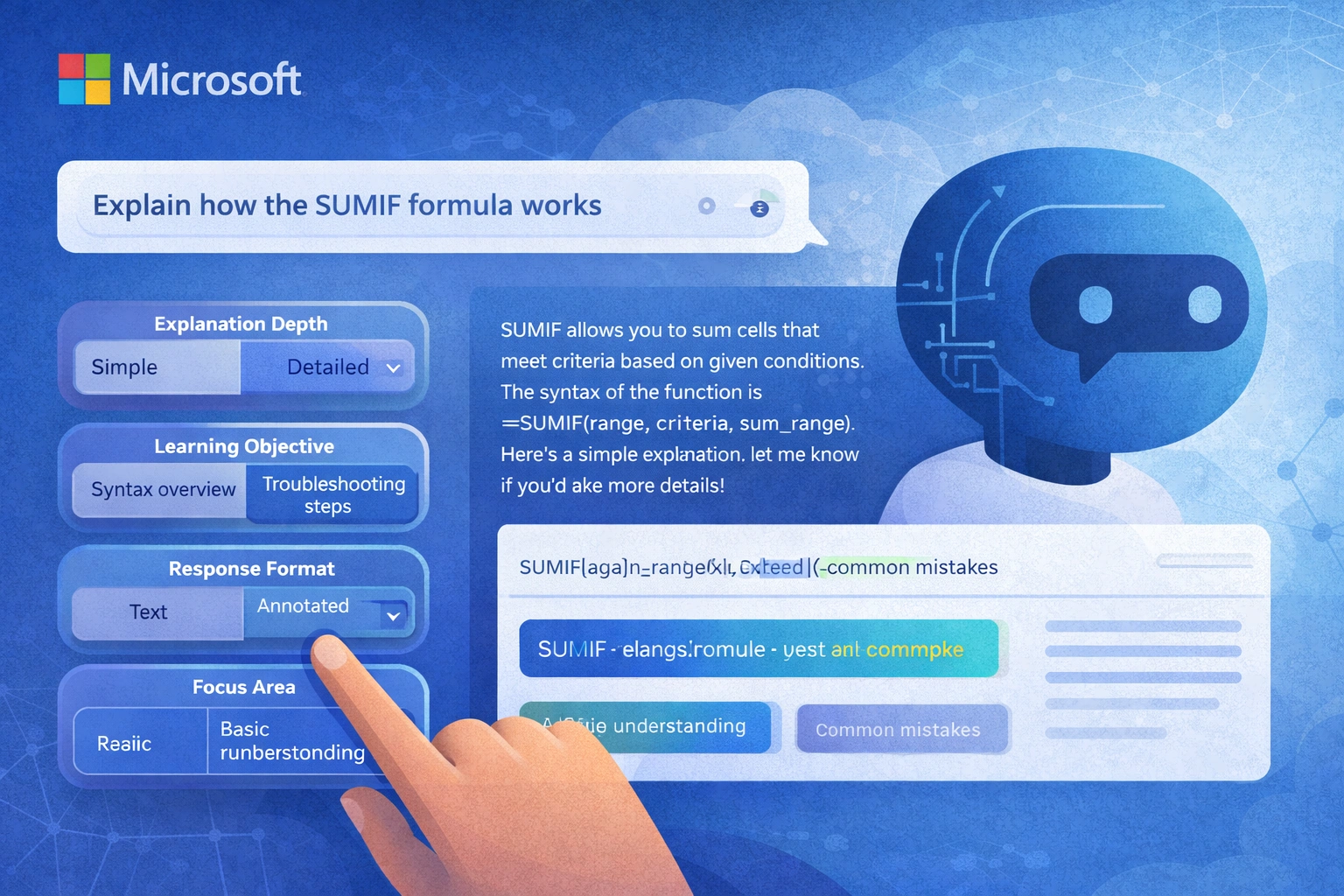
Microsoft Introduces “Promptions” to Improve AI Prompt Accuracy
Microsoft has introduced Promptions, a user interface framework designed to reduce inefficiencies caused by unclear or ineffective AI prompts. The system aims to improve how users interact with large language models by replacing repeated trial-and-error prompting with structured, selectable options. Promptions is released as an open-source framework and is intended to standardise AI interactions across enterprise environments. Why Traditional AI Prompts Often Fail Many AI interactions rely on open-ended natural language prompts. When responses do not meet expectations, users typically rephrase the request multiple times, creating a repetitive feedback loop. This process can: For knowledge workers, the effort involved in crafting precise prompts often outweighs the value of the response itself. The Comprehension Gap in AI Usage A significant portion of enterprise AI usage involves explanation and understanding, not content generation. For example, a single spreadsheet formula may require: Traditional chat interfaces struggle to capture this variation in intent. Users must manually specify context, depth, tone, and format, often through long and carefully worded prompts. Microsoft identifies this mismatch between user intent and AI interpretation as a core limitation of current AI interfaces. How Promptions Works Promptions functions as a middleware layer between the user and the AI model. Instead of relying solely on typed instructions, the system dynamically presents selectable options based on: These options may include: Users select the relevant options rather than repeatedly rewriting prompts. Dynamic Controls vs Static Prompts Microsoft researchers tested Promptions by comparing traditional static prompt controls with dynamic option-based interfaces. Observed Benefits: By presenting structured options, the system encourages users to clarify their objectives before generating a response. Observed Challenges: This highlights a trade-off between flexibility and usability. Promptions Architecture Overview Promptions consists of two primary components: Option Module Chat Module The system is stateless, meaning it does not store data between sessions. This simplifies implementation and reduces data governance and security concerns. Moving from Prompt Writing to Prompt Selection Promptions shifts AI interaction from prompt engineering to prompt selection. This approach offers: Rather than relying on individual skill in prompt writing, organisations can guide AI usage through interface design. Implementation Considerations While Promptions can improve consistency and efficiency, it is not a complete solution on its own. Key considerations include: Microsoft positions Promptions as a design pattern to be tested within internal platforms rather than a universal fix for all AI prompt issues. Summary Promptions addresses a common limitation of AI systems: the gap between user intent and AI interpretation. By introducing structured, dynamic interface controls, Microsoft aims to reduce prompt inefficiency and improve reliability in AI-driven workflows. The framework reflects a broader shift toward guided AI interactions that prioritise clarity, consistency, and usability in enterprise environments. Frequently Asked Questions What are Promptions? Promptions are a UI framework that combines prompts with selectable options to improve AI response accuracy. Why did Microsoft create Promptions? To reduce inefficiencies caused by unclear prompts and repeated trial-and-error interactions with AI systems. How is Promptions different from prompt engineering? Instead of writing long prompts, users select predefined options that clarify intent and response requirements. Does Promptions store user data? No. The framework is stateless and does not retain data between sessions. Is Promptions open source? Yes. Microsoft has released Promptions as an open-source tool. Who is Promptions designed for? Primarily for enterprise users, developers, and teams building internal AI tools.
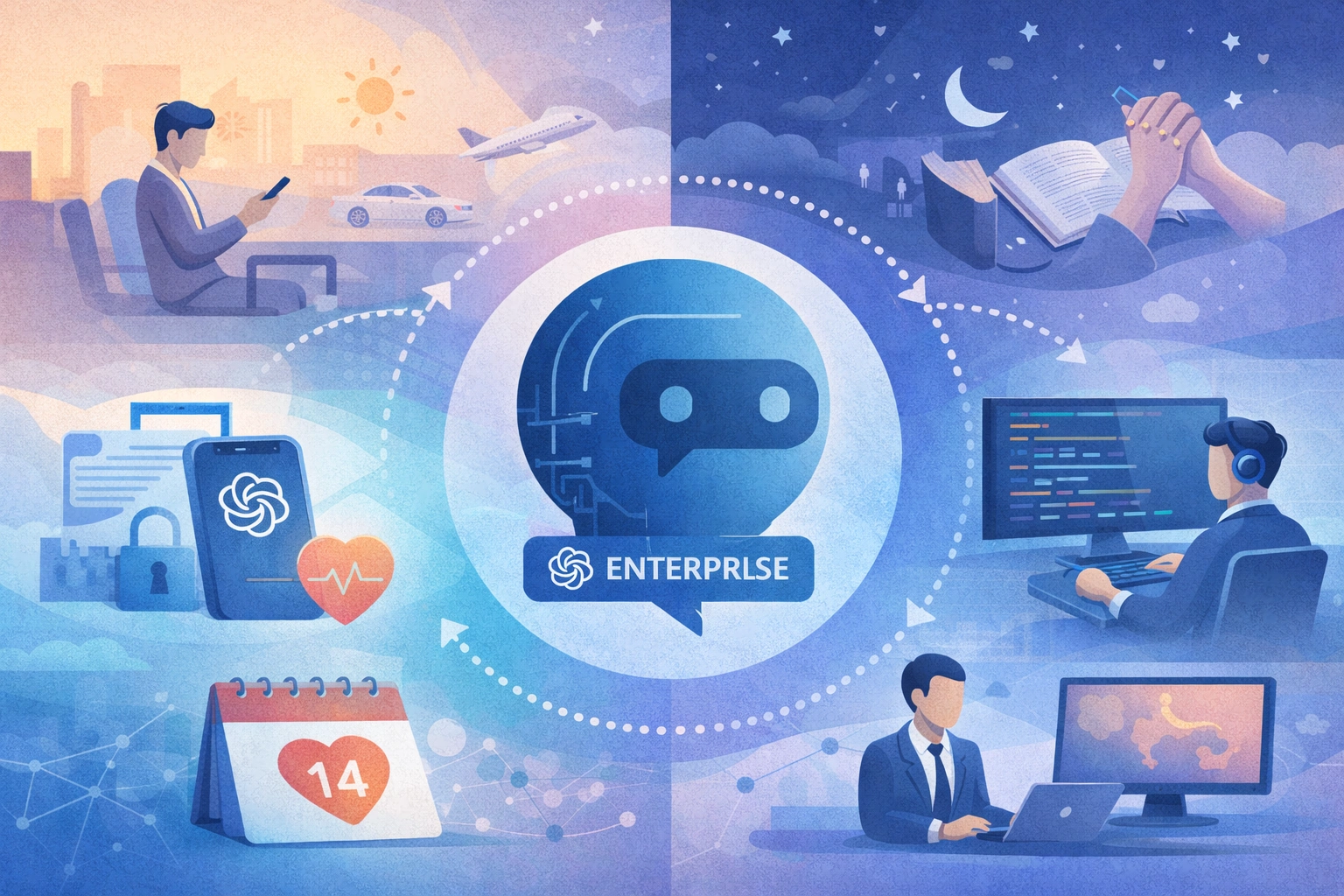
Microsoft Copilot Usage Analysis Reveals Distinct Time-Based AI Use Patterns
Microsoft has released a usage analysis of its Copilot AI assistant, examining 37.5 million anonymised conversations to understand how and when users engage with AI. The findings highlight clear time-based patterns in user behaviour, showing that AI usage aligns closely with daily routines, emotional states, and cultural events. The research, published on December 10 by the Microsoft AI (MAI) research team, provides insight into how users rely on AI for practical planning, personal advice, health management, and reflective questions. Early Morning Hours See an Increase in Philosophy and Religion Queries The analysis found that religion and philosophy-related conversations rise during early morning hours, particularly late at night and before dawn. These queries differ from daytime usage, which tends to focus on task-oriented activities. The pattern suggests that users turn to AI for reflective or existential questions during quieter hours, when external distractions are minimal. This behaviour indicates that AI assistants are being used not only for productivity but also for personal contemplation. Travel Queries Peak During Commuting Hours In contrast to late-night philosophical topics, travel-related conversations peak during typical commuting times. Users appear to use AI assistants to: These interactions often occur during transit periods, reflecting practical planning behaviour during active hours of the day. Health Topics Dominate Mobile AI Usage Health-related conversations ranked as the most frequent topic on mobile devices across all months analysed in 2025. Key characteristics of mobile health usage include: The data suggests that users view mobile devices as more personal, making them the preferred medium for health-related discussions with AI assistants. Clear Weekday and Weekend Divide in Programming and Gaming The study identified a distinct weekly cycle in AI usage related to programming and gaming. Although both topics were equally popular overall, users tended to separate them by day, indicating a structured division between work-related and leisure activities. Valentine’s Day Drives Relationship-Related Queries February showed a notable increase in relationship-focused conversations, with a clear spike on Valentine’s Day. During this period, users also increased engagement with: The timing suggests that AI assistants are used as private support tools during emotionally significant events and social milestones. Shift from Information Search to Advice-Seeking While traditional information search remains the most common use of Copilot, the analysis revealed a growing trend toward advice-seeking behaviour. Users increasingly consult AI for: This shift indicates a change in how users perceive AI assistants, moving from information retrieval tools toward advisory systems. Privacy-Focused Research Methodology Microsoft emphasised that user privacy was preserved throughout the analysis. Key privacy measures included: The system focused on identifying topic and intent rather than specific user details. Implications for AI Assistant Development Understanding how users interact with AI across time and context helps inform feature development and system design. Key insights include: These findings support the development of AI assistants that align more closely with real-world human behaviour patterns. Summary Microsoft’s Copilot usage analysis demonstrates that AI engagement follows predictable human rhythms. Users rely on AI for practical tasks during active hours, personal health support throughout the day, and reflective or emotional guidance during quieter moments. The data suggests that AI assistants are becoming embedded into daily life, serving multiple roles depending on time, context, and user needs. Frequently Asked Questions What did Microsoft analyse in this study? Microsoft analysed 37.5 million anonymised Copilot conversations to understand usage patterns by time, topic, and device. When do users ask philosophical or religious questions? These topics increase during late-night and early morning hours. What is the most common AI use on mobile devices? Health-related conversations consistently rank highest on mobile platforms. How does AI usage differ between weekdays and weekends? Programming-related queries increase during weekdays, while gaming-related conversations peak on weekends. Does Copilot usage include personal advice? Yes. The study shows a growing trend of users seeking advice on relationships and personal decisions. How does Microsoft protect user privacy in this analysis? Only anonymised conversation summaries were analysed, without accessing full content or identifying individual users.
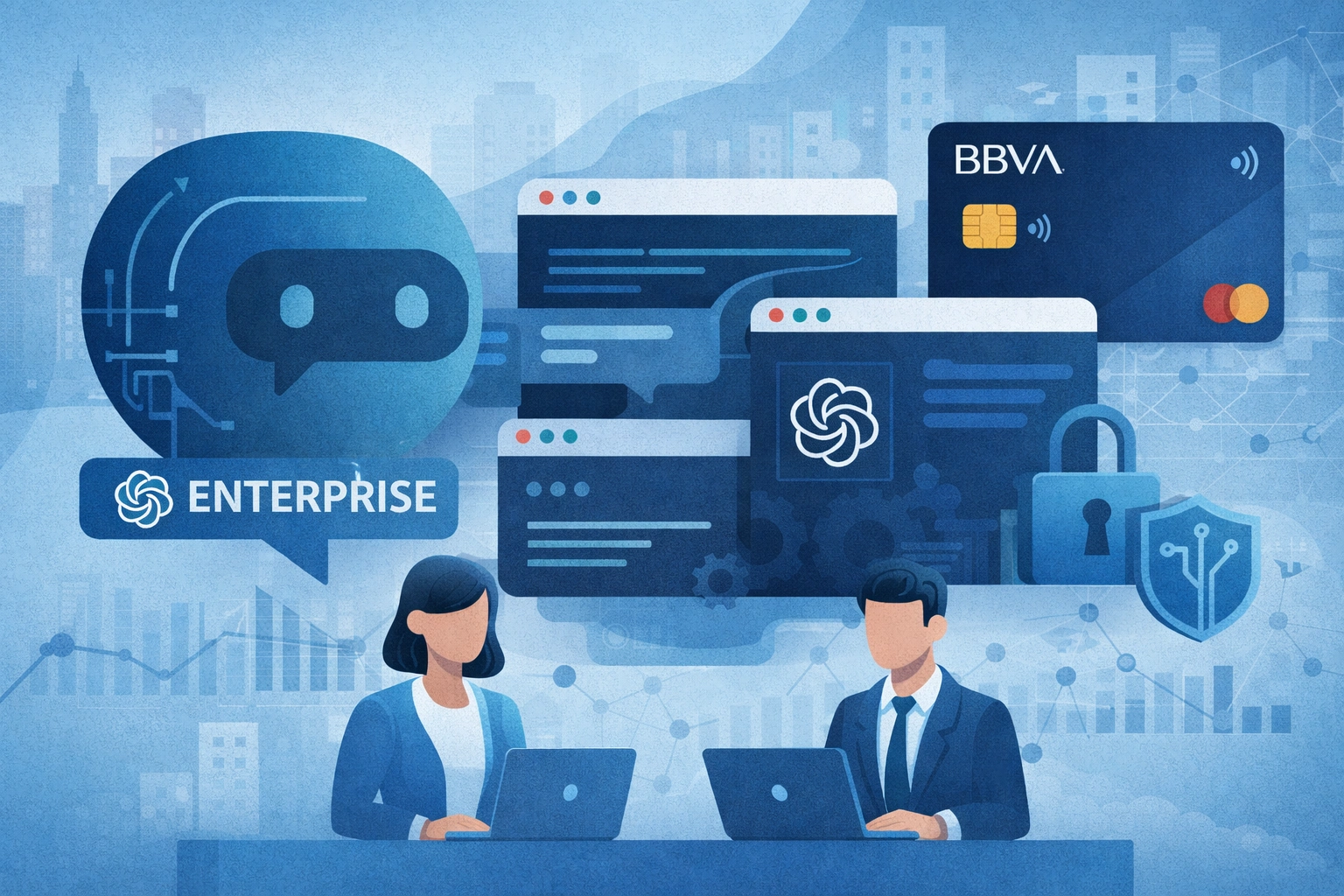
BBVA Integrates ChatGPT Enterprise into Core Banking Workflows
BBVA has embedded artificial intelligence into its core banking operations by deploying ChatGPT Enterprise across the organisation. The initiative focuses on improving operational efficiency, risk analysis, and employee productivity while maintaining compliance with strict regulatory and data protection standards. Rather than experimenting with isolated AI tools, BBVA has integrated AI directly into its internal workflows, positioning it as part of the bank’s operational infrastructure. AI Adoption in Banking Focuses on Measurable Value In the banking sector, the primary challenge of generative AI is not adoption but practical value creation. BBVA addressed this by prioritising validated use cases and controlled scaling. The bank began working with OpenAI in May 2024, initially rolling out access to approximately 3,300 employees. This pilot phase was used to: Following positive results, BBVA expanded access to more than 11,000 employees, making it one of the largest enterprise AI deployments in the financial industry. Productivity Impact of ChatGPT Enterprise The intermediate deployment phase provided measurable outcomes: These custom tools were developed to support administrative, analytical, and collaborative tasks, demonstrating that effective AI usage often emerges from employee-driven initiatives rather than centrally mandated solutions. How ChatGPT Is Used in Banking Operations The integration of ChatGPT Enterprise extends beyond general productivity support. Key Operational Areas Include: Risk analysis, in particular, is a resource-intensive function in banking. AI integration enables faster data processing, improved consistency, and better support for decision-making workflows. Security and Governance in a Regulated Environment Deploying AI in banking requires strict compliance with data protection and regulatory frameworks. BBVA’s enterprise deployment includes: These controls ensure that sensitive client data remains protected while employees benefit from AI-assisted workflows. Structured AI Adoption and Workforce Enablement To support effective usage, BBVA and OpenAI are collaborating on: This approach addresses a common enterprise challenge where tools are deployed without adequate training or operational alignment. AI in Customer-Facing Banking Services BBVA has also applied AI to customer interactions. The bank currently operates Blue, a virtual assistant built on OpenAI models that allows customers to manage accounts and cards using natural language. Future plans include deeper integration that enables customers to interact with banking services directly through AI-driven interfaces. To support this transition, BBVA has established a dedicated team working with OpenAI’s product and research units to accelerate AI integration across both internal and customer-facing systems. Moving Toward an AI-Native Banking Model The deployment reflects a broader shift toward AI-native banking, where artificial intelligence is embedded into: Rather than functioning as an add-on, AI becomes part of how banking services are delivered and managed. Key Takeaways Frequently Asked Questions What is ChatGPT Enterprise? ChatGPT Enterprise is a version of ChatGPT designed for organisations, offering enhanced security, privacy controls, and administrative features. Why is BBVA using ChatGPT Enterprise? BBVA is using ChatGPT Enterprise to improve efficiency in internal workflows, risk analysis, software development, and employee support while maintaining regulatory compliance. How many employees are using AI at BBVA? BBVA expanded AI access from an initial pilot of 3,300 users to more than 11,000 employees. How does BBVA ensure data security? The deployment includes enterprise-grade security, privacy protections, and controlled integration with internal systems to protect sensitive data. Is AI being used for customer services at BBVA? Yes. BBVA uses an AI-powered virtual assistant for customer interactions and plans further AI integration into client-facing banking services.
Institute of Technology, Nirma University, Ahmedabad
🏛️ Why ITNU Feels Different Founded in 1995, ITNU is Nirma University’s proud engineering arm. It’s prestigious, progressive, and part of a NAAC A+ campus that stretches across 115 acres of greenery and buzzing labs. Ranked between 100–150 nationally by NIRF, it’s widely respected among self-financed colleges in India. The institute is known for cutting-edge engineering and has deep strengths in AI, robotics, and data science—powered by facilities like a Param Shavak supercomputer. 🎓 Programs That Shape You 🛠️ B.Tech (4 years) Core branches: CSE, IT, Electrical, Mechanical, Civil, Chemical, ECE, and Electronics & Instrumentation.All programs are NBA-accredited Tier-I. 🎓 Higher Degrees Offers M.Tech in various disciplines and a robust Ph.D. program—especially inviting for those who love research and want to innovate. 🌱 Campus Life That Feels Alive 💼 Placements & Professional Launchpad Check these real numbers from the 2024 placement drive: 💡 Why This Might Be Your Place ✅ You want a blend of solid academics and real-world exposure.✅ You’re aiming to join sectors like IT, software, consulting, or core engineering.✅ You’re drawn to research—especially in AI, data science, infrastructure tech, or robotics.✅ You value a campus that’s disciplined, progressive, and full of fresh energy. ❤️ Final Bestie Takeaway ITNU isn’t all flash—it’s substance, serious learning, and future-focused professional development. It’s the place where you don’t just master code or circuits; you build something bigger—purpose, connections, and capabilities. If your dream is to lead innovation or create impact in tech, this could be your home. “You step in curious and leave as someone capable of building what comes next—smart, empathetic, and world-ready.”

AI in 2026: The Shift from Experimental Models to Autonomous Systems
Artificial intelligence is entering a new phase. After several years of experimentation with generative models and chat-based tools, 2026 is expected to mark the rise of autonomous AI systems—systems designed to act, decide, and execute workflows with limited human involvement. This shift represents a fundamental change in how AI is designed, deployed, and measured across industries. From Generative AI to Autonomous AI Generative AI has primarily focused on producing content, summarising information, and assisting users through conversational interfaces. While effective, these systems still require continuous human prompts and supervision. By 2026, the emphasis is moving toward agentic AI, also known as autonomous AI systems. These systems are capable of: The goal is not interaction, but execution. Autonomous AI in Industrial and Enterprise Environments Early Adoption Areas Industries with complex operations are leading adoption, including: In these environments, autonomous AI enables: Rather than focusing on infrastructure scale alone, organisations are embedding intelligence directly into operational workflows. Multi-Agent Systems and Collaborative AI To manage complex processes, enterprises are increasingly using multi-agent systems (MAS). These systems consist of multiple AI agents working together, where each agent performs a specific role such as planning, execution, monitoring, or validation. This architecture allows AI to handle sophisticated workflows, but it also introduces new challenges related to coordination, reliability, and oversight. Security and Governance Challenges As AI systems gain autonomy, security priorities shift. Key Risks Include: As a result, organisations are focusing on: AI governance frameworks are becoming essential to ensure safe and compliant deployment. Energy Efficiency Becomes a Core Metric One of the most significant constraints on AI scalability is no longer access to models, but energy availability. Key considerations include: By 2026, energy efficiency is expected to become a primary performance indicator for enterprise AI systems, influencing both cost management and sustainability strategies. Declining ROI of Generic AI Tools General-purpose AI tools without domain-specific knowledge or proprietary data are facing increasing scrutiny. Organisations are measuring outcomes based on: The strongest returns are expected in sectors where AI is embedded directly into high-value processes rather than consumer-facing interfaces. The Evolution of Software Applications Traditional software applications are also changing. Instead of permanent, fixed-function apps, AI systems are enabling: This approach reduces software bloat but requires strong governance to ensure reliability, accuracy, and accountability. Changes in Data Storage and Usage AI-generated data volumes are increasing rapidly, but storage capacity is finite. Emerging trends include: Data management strategies are shifting toward relevance and accuracy rather than accumulation. AI Monitoring AI Systems To manage scale and complexity, organisations are deploying specialised AI agents responsible for: This approach allows human teams to focus on oversight and strategy rather than manual enforcement. Sovereignty and Infrastructure Control Data sovereignty remains a critical consideration, particularly in regulated regions. Organisations are prioritising: Open-source technologies are playing an increasing role by enabling transparency and flexibility in AI deployment. The Human Dimension of Autonomous AI As AI becomes more autonomous, understanding human behaviour becomes more important. Future systems are expected to incorporate: This enables AI to support collaboration, conflict detection, and decision-making in organisational environments. Summary By 2026, AI is moving beyond experimentation toward autonomy. Competitive advantage will depend less on access to large models and more on: Autonomous AI represents a structural shift in how technology supports business operations. Frequently Asked Questions (FAQ) What is autonomous AI? Autonomous AI refers to systems that can plan, decide, and execute tasks independently without continuous human input. How is autonomous AI different from generative AI? Generative AI focuses on content creation and assistance, while autonomous AI focuses on execution and workflow management. Why is energy efficiency important for AI? AI systems require significant computational resources, making energy availability and efficiency key constraints for scalability. Which industries benefit most from autonomous AI? Industries with complex operations such as manufacturing, telecom, logistics, and energy see the highest impact. Will traditional software apps disappear? Fixed apps may decline in favour of temporary, task-specific AI-generated modules, though governance remains essential.