Branded keywords are search phrases that include the name of a specific company, brand, product, or service. They are used by people who already have some awareness of a business and are searching for information, products, services, pages, or resources associated with that brand.
Examples include Asana pricing, Netflix login, Nike Air Max, or Starbucks menu Ahmedabad. Compared with generic searches, branded queries usually provide a stronger signal that the searcher already has a relationship with or awareness of the brand.
What Are Branded Keywords in SEO?
A branded keyword contains a recognizable brand or branded product term. The query may include only the brand name or combine it with another word that describes what the user wants.
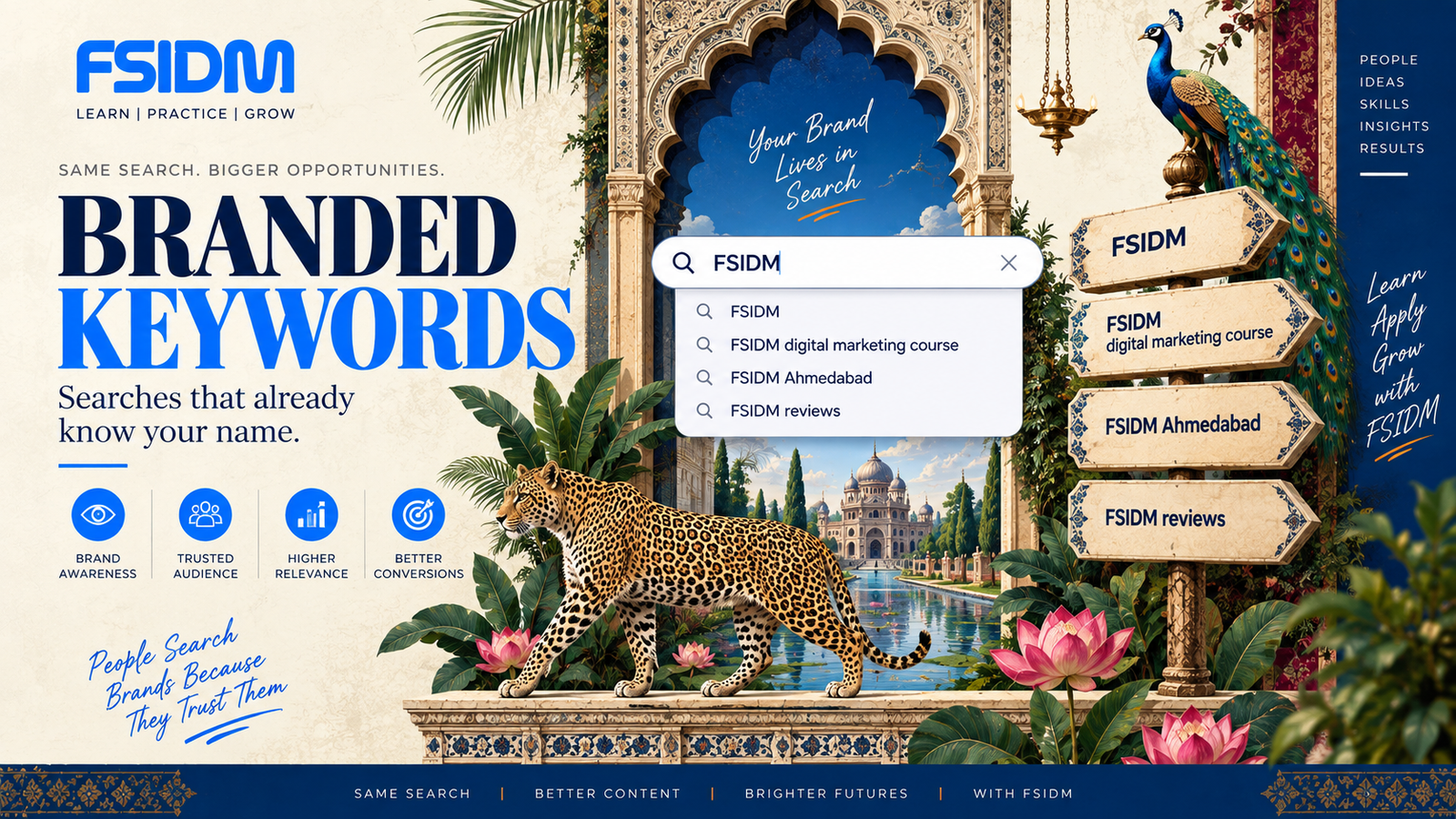
For example, FSIDM could be a branded search, while FSIDM digital marketing course, FSIDM Ahmedabad, or FSIDM reviews are branded queries with additional intent signals.
Branded keywords can have navigational, informational, commercial, or transactional intent, depending on the query.
Characteristics of Branded Keywords
1. Strong Brand Awareness Signal
A person searching specifically for a brand name already knows, or has encountered, that brand. Growth in branded search demand can therefore be one useful indicator of increasing brand awareness, although it should be interpreted alongside other marketing and traffic data.
2. Often Stronger Intent
Branded queries can indicate that a user is further along in their journey. For example, searches such as brand pricing, brand login, brand reviews, or brand contact communicate a more specific need than the brand name alone.
However, not every branded search is transactional. Someone searching for a brand’s history, news, reviews, or customer support may have informational or navigational intent.
3. Valuable Search Real Estate
Businesses should pay attention to what appears when people search for their brand. The results page may include the company’s website, business profile, social profiles, review platforms, news coverage, videos, and other third-party pages.
4. Competitor Advertising Can Appear
Depending on advertising policies and the market, competitors may bid on branded search terms in paid search campaigns. This makes monitoring branded search results useful for understanding the paid and organic landscape around a brand.
Examples of Branded vs. Non-Branded Keywords
| Non-Branded Keyword | Branded Keyword |
|---|---|
| running shoes | Nike Air Max |
| project management software | Asana pricing |
| how to stream movies | Netflix login |
| coffee shop near me | Starbucks menu Ahmedabad |
| digital marketing course | FSIDM digital marketing course |
Branded vs. Non-Branded Keywords
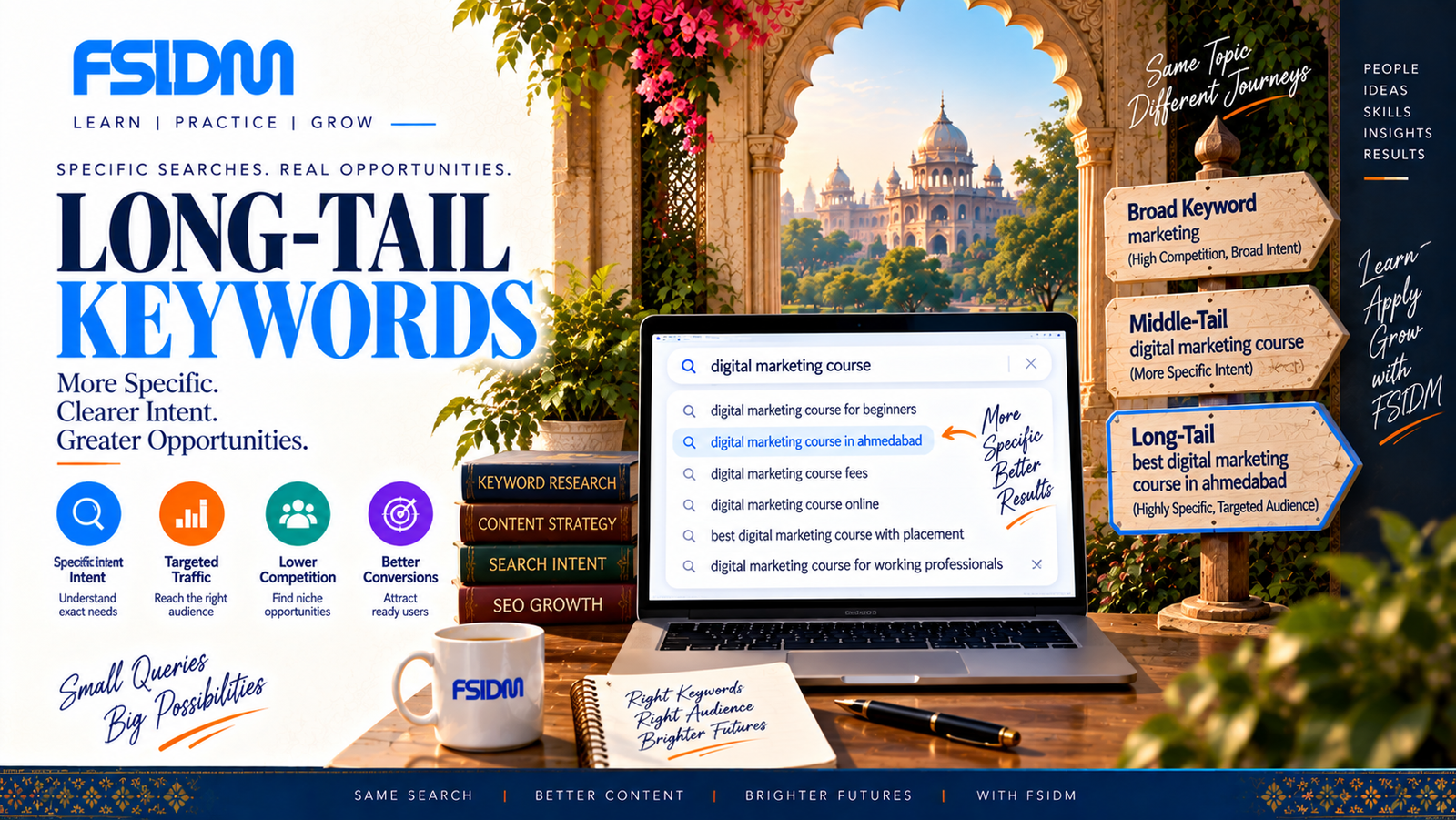
Non-branded keywords are generic searches that do not mention a particular company or brand, such as best budget laptops or digital marketing course in Ahmedabad.
Non-branded searches are especially important for customer acquisition because they can expose a business to people who are researching a product or service without having a specific brand in mind.
Branded and non-branded keywords therefore serve different strategic purposes. Branded search can help a business understand demand from people already familiar with the brand, while non-branded search can create opportunities to reach new audiences.
Why Track Branded Keywords?
1. Measure Brand Search Demand
Monitoring branded search volume over time can provide a useful signal of whether more people are actively searching for your brand. It should be combined with other awareness indicators rather than treated as a standalone measure of brand performance.
2. Protect Your Branded Search Presence
Regularly reviewing branded SERPs can reveal whether important pages, business information, reviews, social profiles, and other brand assets are appearing as expected.
3. Understand Customer Needs
Branded queries often contain modifiers that reveal what existing or prospective customers want. Searches such as brand reviews, brand pricing, brand contact, and brand customer service can highlight information gaps that deserve dedicated pages or clearer website navigation.
4. Identify Paid Search Competition
Monitoring branded queries can help businesses understand when paid advertisements appear alongside their organic listings and assess how competitors are positioning themselves around brand-related searches.
Common Types of Branded Keywords
- Brand-only: The brand name by itself, such as “FSIDM”.
- Brand + product: A brand combined with a product or service.
- Brand + location: A brand combined with a city or area.
- Brand + pricing: Queries about fees, pricing, or plans.
- Brand + reviews: Queries looking for reputation or customer feedback.
- Brand + support: Queries related to contact, login, returns, support, or other customer-service needs.
How to Build a Branded Keyword Strategy
- List your brand terms: Include your company name, product names, service names, abbreviations, and important branded variations.
- Add intent modifiers: Look for searches containing terms such as pricing, reviews, login, contact, location, course, or support.
- Monitor branded SERPs: Review what users see for important brand-related queries.
- Optimize important pages: Make sure navigation, contact, product, service, pricing, and support information is easy to find.
- Track branded and non-branded performance separately: This helps distinguish demand from existing brand awareness from discovery among new audiences.
- Review trends: Look for changes in branded search demand and the questions or modifiers appearing around the brand.
Branded Keywords and Local SEO
Branded keywords become especially useful in local search when users combine a business name with a location or service. Queries such as Starbucks menu Ahmedabad or FSIDM Ahmedabad can provide stronger geographic context.
Businesses should ensure that their website, business profile, location information, contact details, reviews, and other relevant brand assets provide consistent information across important search surfaces.
Common Branded Keyword Mistakes
- Assuming every branded query has transactional intent.
- Ignoring branded search because the business already ranks well for its name.
- Focusing only on the brand name and ignoring important modifiers.
- Failing to monitor third-party pages and review results appearing for branded searches.
- Measuring branded search growth without considering other marketing and demand-generation activity.
- Ignoring non-branded keywords that are necessary for reaching new audiences.
FAQs About Branded Keywords
What is a branded keyword?
A branded keyword is a search phrase that contains the name of a company, brand, branded product, or branded service.
What is an example of a branded keyword?
Examples include Nike Air Max, Asana pricing, Netflix login, and FSIDM digital marketing course.
What is the difference between branded and non-branded keywords?
Branded keywords mention a specific brand, while non-branded keywords are generic searches that do not identify a particular company. Both are important, but they support different stages of the search journey.
Do branded keywords always have high conversion rates?
No. Branded queries can indicate strong awareness or intent, but the actual intent varies. A user searching for brand news may not be ready to buy, while a user searching for brand pricing may be much closer to conversion.
Why should businesses track branded keywords?
Tracking them can help businesses understand brand search demand, monitor the branded SERP, identify customer questions, evaluate competitors in paid search, and improve the customer experience.
Can competitors bid on branded keywords?
Competitors may bid on brand-related terms in paid search where permitted by applicable advertising policies and trademark rules. Monitoring the SERP can help businesses understand whether this is happening in their market.
Interview Question
What are branded keywords, and why are they important in SEO?
Branded keywords contain a company’s, product’s, or service’s brand name. They are important because they can reveal brand awareness and existing demand, provide insight into customer needs, and help businesses monitor and optimize their branded search presence.
Interview Tip
A strong answer should distinguish branded search from non-branded acquisition. Mention that branded queries can have different intents and that businesses should monitor not only rankings, but also the overall branded SERP experience.
Learn Practical SEO with FSIDM
At FSIDM, digital marketing and SEO are approached from a practical, industry-focused perspective. Understanding branded and non-branded search helps marketers build strategies that balance brand demand, customer acquisition, and search visibility.