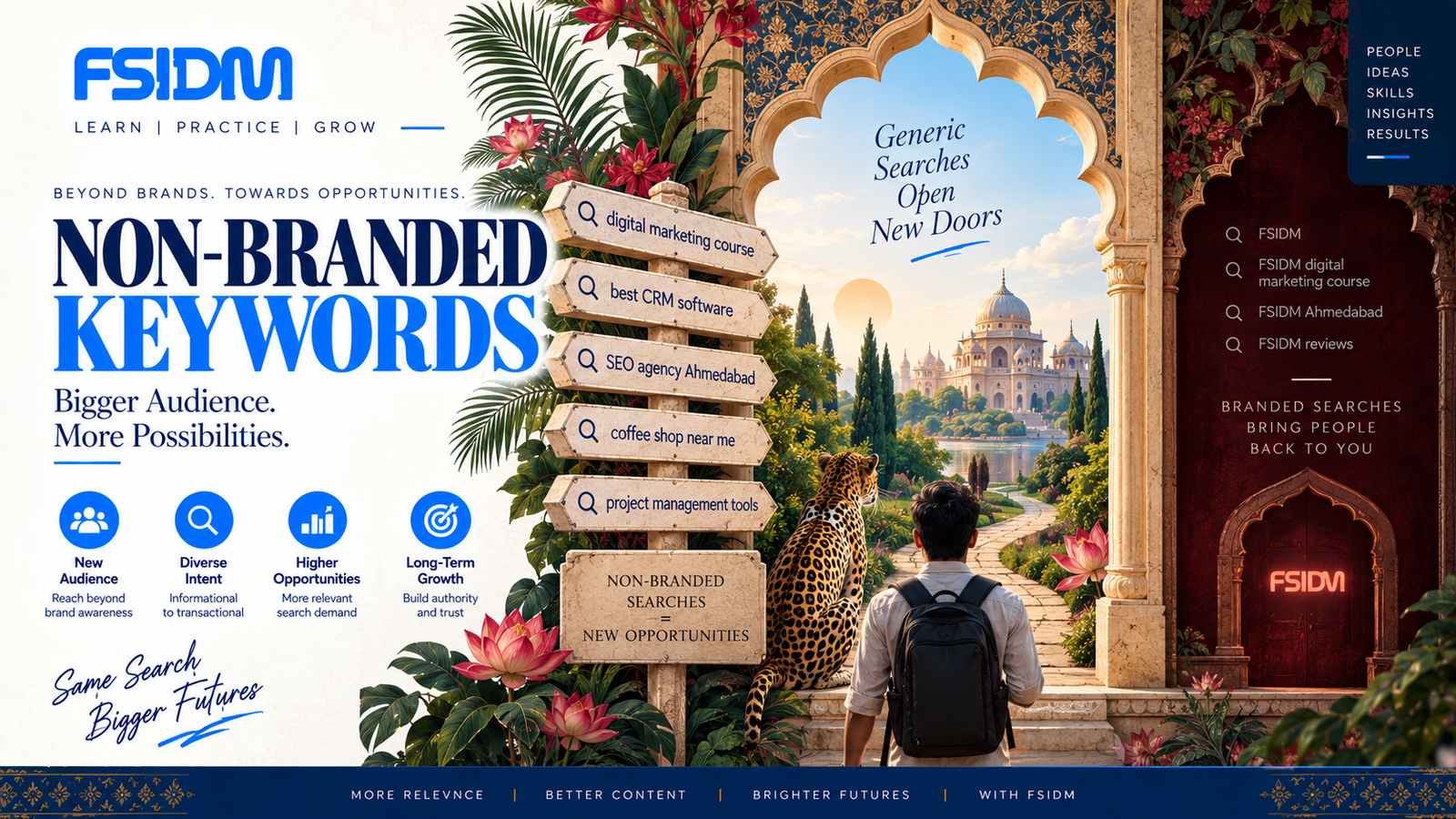
Non-branded keywords are generic search phrases that do not contain the name of a specific company, brand, or branded product. They describe products, services, problems, questions, or topics without identifying a particular business.
Examples include project management software, best CRM software, digital marketing course, and coffee shop near me. These searches can be particularly valuable for businesses trying to reach people who are researching a solution without having already chosen a specific brand.
What Are Non-Branded Keywords in SEO?
A non-branded keyword is a search query that does not explicitly mention your brand or another specific brand. It can represent almost any stage of the search journey, from learning about a problem to comparing solutions or taking a purchase-related action.
For example, how to improve local SEO is an informational non-branded query, while SEO agency Ahmedabad is a non-branded commercial/local query. Neither query identifies a particular company.
Key Characteristics of Non-Branded Keywords
1. They Reach Beyond Existing Brand Awareness
Non-branded searches can help businesses reach users who are searching for a category, solution, product, or answer rather than specifically looking for the business by name.
This makes non-branded visibility an important part of customer acquisition, although not every non-branded search represents a new customer.
2. Search Intent Can Vary
Non-branded keywords can represent different types of search intent:
- Informational: “how to fix a leaky faucet”
- Commercial investigation: “best CRM software for small business”
- Transactional: “buy running shoes online”
- Local: “painless dental clinic near me”
Understanding the intent behind the query is essential when deciding which page or content format should target it.
3. Competition Can Be Strong
Popular non-branded keywords can attract competition from many businesses, publishers, marketplaces, directories, and established websites. However, competition varies significantly from one query to another.
4. They Offer Discovery Opportunities
When a person searches for a generic solution rather than a specific brand, there is an opportunity for relevant businesses to enter the consideration set. Effective non-branded SEO can therefore contribute to brand discovery and demand generation.
Examples: Non-Branded vs. Branded Keywords
| Non-Branded Keyword | Branded Keyword |
|---|---|
| project management software | Asana |
| accounting tool for small business | QuickBooks pricing |
| dental clinic near me | Clove Dental Ahmedabad hours |
| how to treat dry skin in winter | CeraVe moisturizing cream |
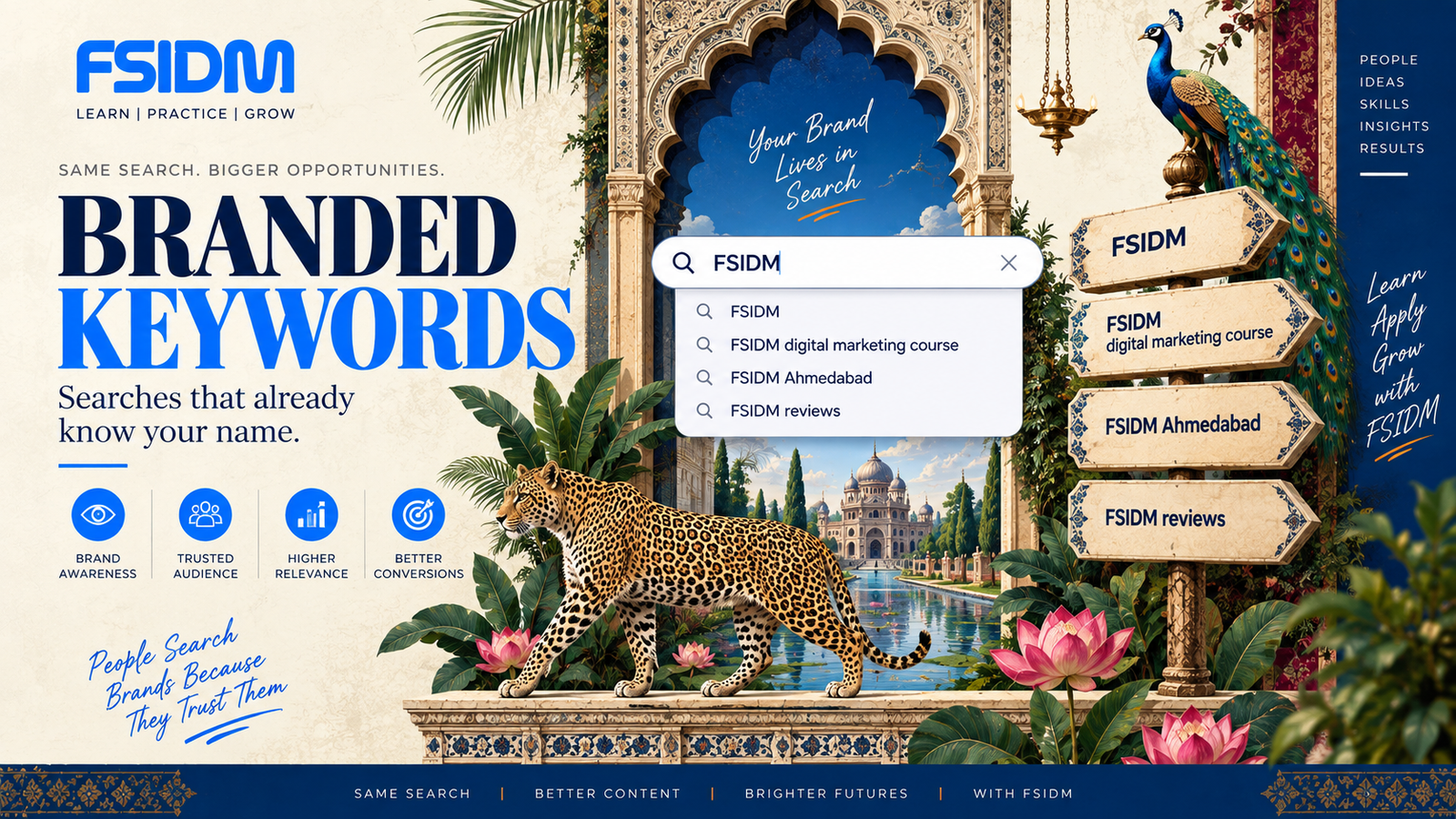
| digital marketing course | FSIDM digital marketing course |
Why Non-Branded Keywords Matter for Growth
If a business focuses only on branded searches, much of its search visibility may come from people who already know the business. Non-branded SEO creates additional opportunities to reach people while they are researching a problem, category, product, or service.
For example, an accounting software company could create useful content around how to calculate small business taxes. A searcher may not know the company’s product yet, but a high-quality answer can introduce the business at an early stage of the customer journey.
The goal is not simply to rank for as many generic keywords as possible. The strongest strategy prioritizes relevance, search intent, business value, and the ability to genuinely satisfy the searcher.
Non-Branded Keywords Across the Search Funnel
| Stage | Example Non-Branded Query | Potential Content |
|---|---|---|
| Awareness | what is email marketing | Educational guide |
| Problem Research | how to improve email open rates | How-to article |
| Consideration | best email marketing tools | Comparison / buyer guide |
| Action | email marketing software pricing | Product or service page |
How to Build a Non-Branded Keyword Strategy
- Identify customer problems: List the questions, challenges, needs, and goals your target audience has before choosing a brand.
- Research category terms: Identify broad product, service, and topic keywords relevant to your business.
- Find specific queries: Expand broad terms into more focused long-tail searches.
- Map keywords to intent: Determine whether each query requires an educational article, service page, product page, comparison, or local landing page.
- Analyze the SERP: Study the pages, formats, and search features currently appearing for important queries.
- Prioritize opportunities: Evaluate relevance, search demand, competition, business value, and your ability to create a genuinely useful result.
- Measure separately: Track non-branded organic performance independently from branded search to understand discovery and acquisition more clearly.
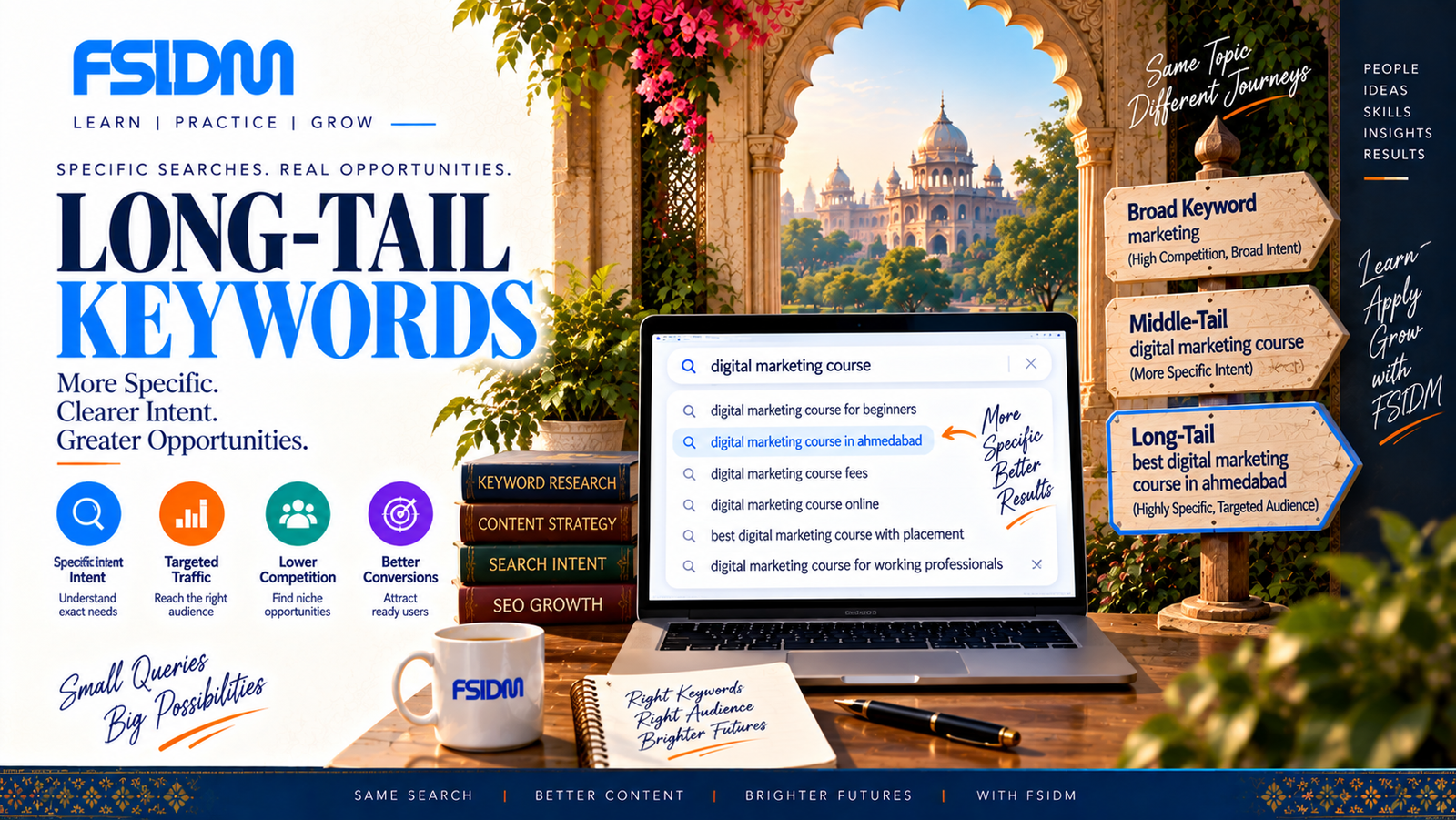
Why Long-Tail Non-Branded Keywords Can Be Useful
Broad non-branded terms such as shoes or CRM can be extremely competitive and ambiguous. More specific searches can provide clearer context about the user’s needs.
For example, breathable running shoes for flat feet tells a retailer considerably more about the searcher’s requirement than shoes. This makes it possible to develop a page specifically designed around that need.
However, long-tail does not automatically mean low competition or high conversion. Each keyword should be evaluated based on its actual SERP, intent, demand, and business relevance.
Common Non-Branded Keyword Mistakes
- Targeting keywords solely because they have high search volume.
- Ignoring search intent and creating the wrong type of page.
- Assuming every non-branded keyword represents a potential customer.
- Focusing only on broad keywords while ignoring specific searches.
- Creating thin pages for every minor keyword variation.
- Ignoring branded search while trying to grow non-branded visibility.
FAQs About Non-Branded Keywords
What is a non-branded keyword?
A non-branded keyword is a generic search phrase that does not contain a specific company’s, brand’s, or branded product’s name.
What is an example of a non-branded keyword?
Examples include project management software, digital marketing course, best CRM software, and dental clinic near me.
What is the difference between branded and non-branded keywords?
Branded keywords contain a specific brand name, while non-branded keywords describe a product, service, problem, or topic without identifying a particular brand.
Are non-branded keywords more competitive?
They can be, particularly for popular generic terms, because many businesses and websites may compete for the same search demand. Competition varies significantly by query and industry.
Are non-branded keywords only informational?
No. They can have informational, commercial, transactional, navigational, or local intent depending on the query.
Why are non-branded keywords important for SEO?
They can help businesses reach people searching for a category, problem, product, or service without already searching for the business by name, creating opportunities for discovery and customer acquisition.
Interview Question
What are non-branded keywords, and why are they important for SEO?
Non-branded keywords are generic searches that do not mention a particular brand. They are important because they can help businesses reach users who are researching products, services, problems, or solutions without having already selected a specific company.
Interview Tip
When answering, explain the difference between brand demand and discovery demand. Also mention that non-branded keywords can represent different search intents and should be mapped to the right content or landing-page experience.
Learn Practical SEO with FSIDM
At FSIDM, digital marketing and SEO are approached from a practical, industry-focused perspective. Understanding non-branded search helps marketers identify new audience opportunities, build content around customer needs, and develop search strategies beyond existing brand awareness.