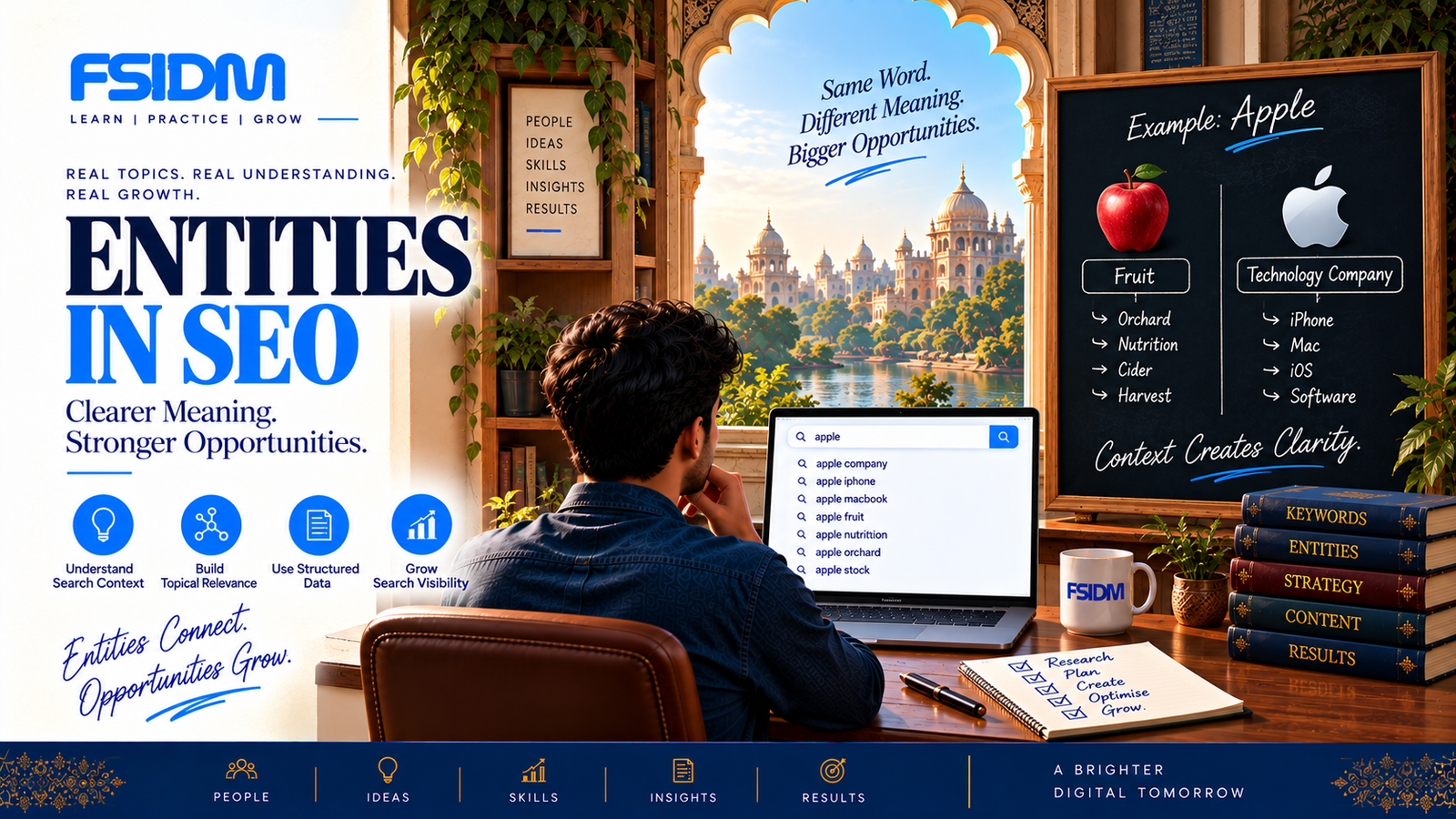
In SEO, an entity is a thing or concept that can be distinctly identified and understood, such as a person, organization, place, product, event, or subject.
Entities are important because modern search systems increasingly need to understand the meaning behind words, not simply match the exact text appearing in a search query or webpage.
For example, the word “Apple” can refer to a technology company or a fruit. The surrounding context and relationships with other concepts help establish which meaning is intended.
Keywords vs. Entities
A keyword is a word or phrase that users enter into a search engine. An entity represents the identifiable thing or concept that the text refers to.
| Keyword | Possible Entity / Meaning | Contextual Signals |
|---|---|---|
| Apple | Technology company | iPhone, Mac, iOS, software |
| Apple | Fruit | Orchard, nutrition, cider, harvest |
| Jaguar | Animal | Wildlife, habitat, predator, species |
| Jaguar | Automotive brand | Car, vehicle, luxury, model |
This distinction is useful because search engines can use contextual information to interpret what a query or webpage is actually about.
What Types of Entities Matter in SEO?
1. Organization and Brand Entities
Businesses, organizations, brands, institutions, and other identifiable organizations can function as entities. A business may also be associated with attributes such as its website, location, products, services, and other relevant relationships.
2. Person and Author Entities
People can be entities, including authors, experts, executives, creators, and other identifiable individuals. Clear author information and credible supporting information can help users and search systems understand who is responsible for content.
3. Product and Service Entities
Products, software, services, and specific offerings can represent distinct entities. Relevant attributes may include the product name, manufacturer, category, features, and relationships to the organization that provides it.
4. Place Entities
Cities, countries, landmarks, neighborhoods, offices, stores, and other locations can function as entities. Place entities are particularly relevant to Local SEO, where geographic relationships are central to search intent.
5. Topic and Concept Entities
Ideas, subjects, disciplines, technologies, processes, and other concepts can also be treated as entities. For example, search engine optimization, artificial intelligence, and keyword research represent identifiable concepts within their respective contexts.
How Search Engines Connect Entities
Search systems can represent relationships between entities as connected facts or associations. A simplified model is the Subject–Predicate–Object structure:
[Elon Musk] → (is associated with / leads) → [Tesla]
[Tesla] → (manufactures) → [Electric Vehicles]
[Electric Vehicle] → (uses) → [Battery Technology]
These relationships create a conceptual network in which entities are connected through attributes and associations. Search systems can use such relationships, along with many other signals, to understand queries and content.
This is one reason a search engine can sometimes answer a question even when the exact wording of the question does not appear verbatim on a webpage.
What Is Entity SEO?
Entity SEO is the practice of making important people, organizations, products, places, concepts, and relationships represented on a website clear and consistent.
The goal is not to create an “entity score” or force a page to mention a certain number of entities. Instead, entity-focused SEO aims to make the subject of a page, the organization behind it, and the relationships between relevant concepts easier to understand.
How to Strengthen Entity Signals
1. Use Structured Data Where Appropriate
Structured data can describe entities and their properties in a machine-readable format. Depending on the page, relevant Schema.org types may include Organization, Person, Product, LocalBusiness, Article, or other applicable types.
Structured data should accurately represent visible and relevant information. It does not guarantee rankings, Knowledge Panels, or AI-generated citations.
2. Create Clear Organization Information
Make important business information clear across the website. This can include the organization name, official website, contact information, locations, services, and other relevant details.
3. Build Comprehensive Topic Coverage
Instead of creating disconnected pages around isolated keywords, organize related content around meaningful topics and subtopics. A pillar page can provide broad coverage while supporting pages address specific aspects of the subject.
4. Use Meaningful Internal Links
Internal links help users and search engines navigate relationships between pages. Descriptive anchor text and logical site architecture can make those relationships clearer.
5. Maintain Consistent Information
Important business, author, product, and location information should be accurate and consistent across relevant website pages and legitimate external profiles. Consistency helps reduce ambiguity about the entity being represented.
Entities and Local SEO
Entity understanding is particularly useful in local search because a local business is connected to multiple entities and attributes: its business name, category, services, location, website, reviews, and geographic area.
For example, a digital marketing agency in Ahmedabad can be understood in relation to the organization itself, Ahmedabad as a place, digital marketing as a topic, and the services the agency provides.
This does not mean that simply adding city names or business entities repeatedly will improve rankings. The information should be accurate, useful, and naturally integrated.
Entities and Semantic SEO
Entities and semantic keywords are closely related concepts, but they are not identical.
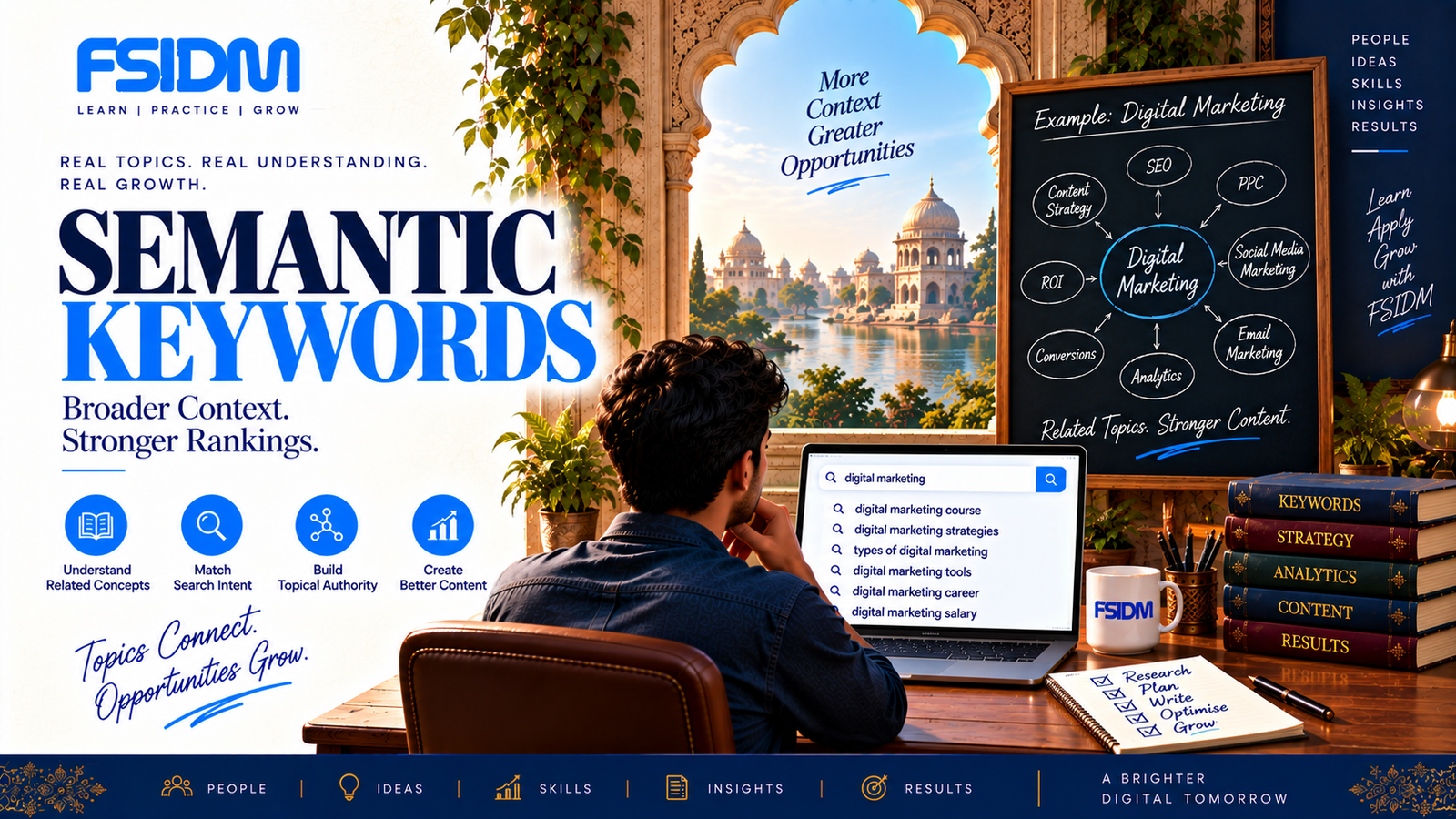
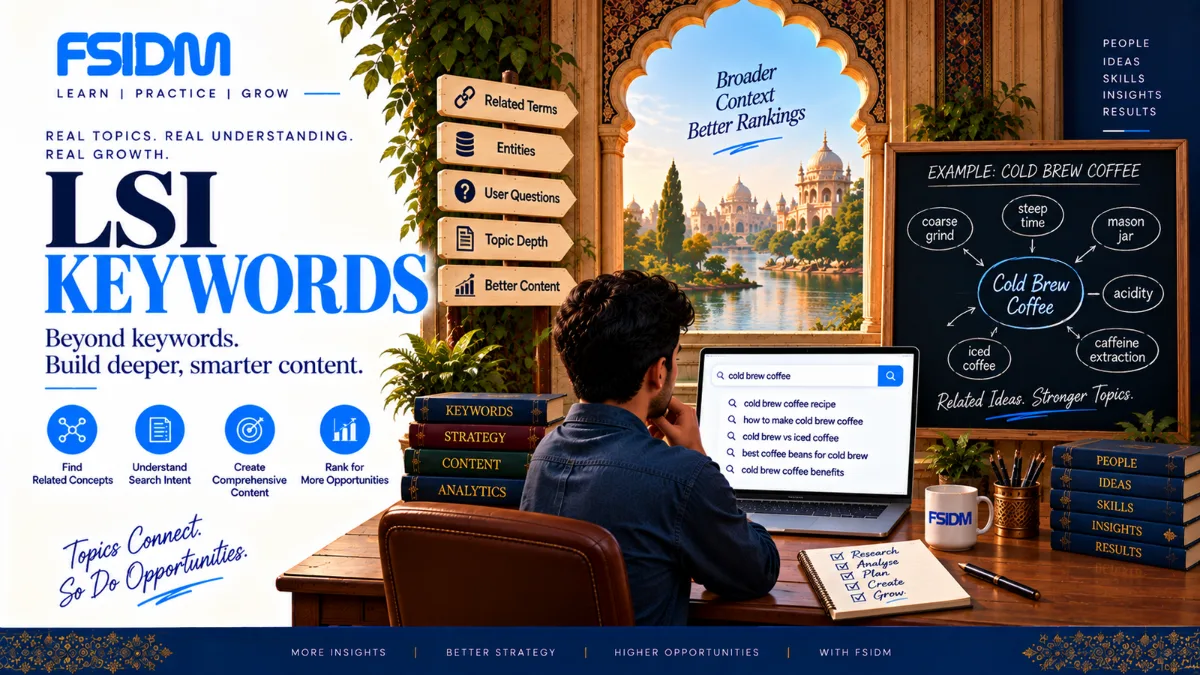
Semantic keywords are contextually related words and phrases. Entities represent identifiable things or concepts. A page can use semantic terminology to establish relationships between entities and explain a topic more clearly.
| Concept | Example |
|---|---|
| Primary Keyword | Digital Marketing |
| Entity | FSIDM |
| Place Entity | Ahmedabad |
| Topic Entities | SEO, PPC, Social Media Marketing |
| Related Semantic Terms | Search engine optimization, paid advertising, content strategy, analytics |
Common Entity SEO Mistakes
- Thinking entities are just keywords: Entities represent identifiable concepts, not merely strings of text.
- Adding entities unnaturally: Repeating names and concepts does not automatically strengthen entity understanding.
- Using inaccurate structured data: Schema should represent information that is accurate and relevant to the page.
- Assuming Schema guarantees visibility: Structured data can help communicate information but does not guarantee rich results, Knowledge Panels, rankings, or AI citations.
- Ignoring relationships: Entity-focused SEO is about understanding the connections between people, organizations, products, places, and topics—not just listing them.
- Creating thin topic pages: Entity optimization should support useful, comprehensive content rather than replace it.
FAQs About Entities in SEO
What is an entity in SEO?
An entity is a distinctly identifiable thing or concept, such as a person, organization, product, place, event, or subject, that search systems can associate with information and relationships.
What is the difference between a keyword and an entity?
A keyword is a text phrase used in a search query or content. An entity represents the underlying identifiable thing or concept that the text may refer to.
What is Entity SEO?
Entity SEO is an approach to making important entities, attributes, relationships, and topical context clear and consistent across a website.
Does Schema markup create an entity?
Schema markup can provide structured information about an entity, but adding Schema does not by itself create or establish an entity in a search engine’s systems.
Are entities important for Local SEO?
Yes. Local businesses, locations, services, and geographic relationships are important components of local search, making clear entity representation particularly useful for local businesses.
Can entities improve SEO rankings?
Clear entity and topical context can help search systems understand content and relationships, but there is no single entity optimization technique that guarantees higher rankings.
Interview Question
What is an entity in SEO, and how is it different from a keyword?
An entity is a distinctly identifiable thing or concept, such as a person, organization, product, place, or subject. A keyword is the text users search for. Entity-based understanding focuses on the meaning behind those words and the relationships between identifiable concepts.
Interview Tip
Use a simple example such as “Apple”. Explain that the same keyword can refer to different entities. Context such as iPhone and iOS points toward the technology company, while orchard and fruit point toward the food entity. This demonstrates the difference between matching words and understanding meaning.
Learn Practical SEO with FSIDM
At FSIDM, SEO is approached from a practical, industry-focused perspective. Understanding entities helps marketers think beyond individual keywords and build websites with clearer topics, relationships, structured information, and meaningful content.