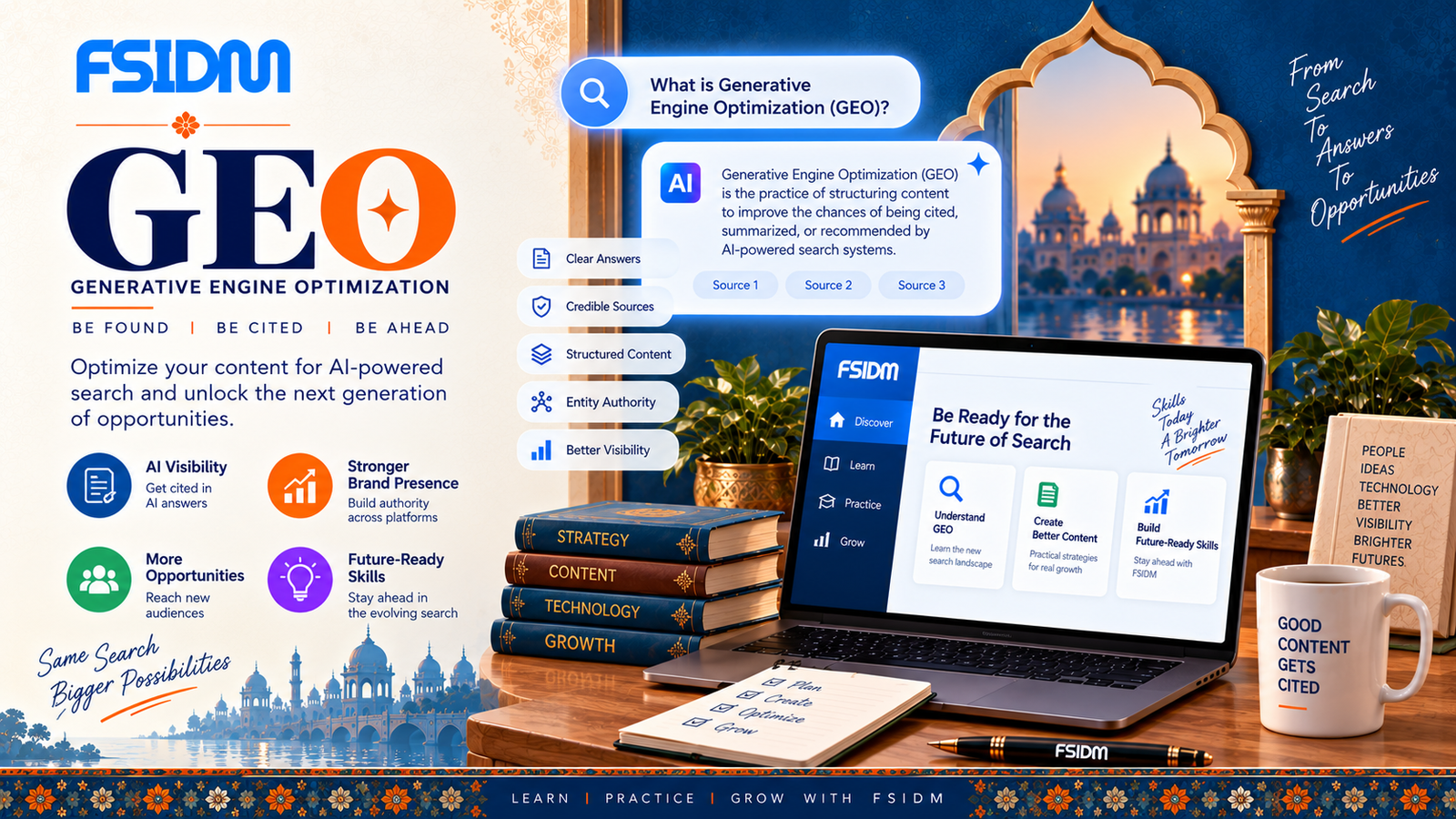
Generative Engine Optimization (GEO) is the practice of structuring digital content and managing a brand’s online presence to improve its chances of being cited, summarized, or recommended by AI-powered search and answer systems.
Traditional Search Engine Optimization (SEO) primarily focuses on improving visibility within organic search results. GEO focuses on visibility within AI-generated answers, where systems may select information from multiple sources to construct a response.
The Core Shift: SEO vs. GEO
SEO and GEO overlap in important ways, but they emphasize different search experiences.
| Feature | Traditional SEO | Generative Engine Optimization (GEO) |
|---|---|---|
| Primary Goal | Improve visibility and rankings in traditional organic search results. | Increase the likelihood of being cited, mentioned, or recommended in AI-generated answers. |
| Target System | Search engines and their crawling and ranking systems. | AI-powered search and answer systems using language models and retrieval systems. |
| Success Metric | Organic visibility, rankings, clicks, and traffic. | AI mentions, citations, visibility, and share of voice in generative responses. |
| Content Focus | Search intent, relevant keywords, useful content, links, and technical accessibility. | Clear answers, entity context, data-rich content, structured passages, and information that can be easily interpreted and referenced. |
How GEO Works
AI-powered search experiences can synthesize information from multiple sources rather than simply presenting a list of links. GEO therefore places greater emphasis on making important information clear, authoritative, well-structured, and easy to interpret.
This does not mean abandoning traditional SEO. Strong technical SEO, useful content, authority, and accessibility can continue to provide an important foundation for visibility across modern search experiences.
Key GEO Strategies
1. Incorporate Clear Data and Evidence
Use relevant statistics, specific numbers, original research, and credible expert information where appropriate. Clear evidence can make content more useful and easier for AI systems to interpret.
When using statistics or research claims, clearly identify their source and context rather than presenting unsupported numbers.
2. Write Conversational Q&A Content
Users increasingly ask search and AI systems questions in natural language. Creating concise question-and-answer sections can help address specific informational intents and make important answers easier to understand.
Long-tail and question-based topics can be particularly useful when they correspond to genuine user needs.
3. Build Entity Authority
AI systems need to understand entities such as businesses, people, products, organizations, and concepts. Consistent information about a brand across its website and reputable external sources can help strengthen entity understanding.
Publishing authoritative content consistently within a defined subject area can also help establish topical relevance.
4. Use Passage-Friendly Content Structures
Important information should be understandable at the section or passage level. Use descriptive headings, concise definitions, bullet points, numbered steps, comparison tables, and self-contained explanations so individual sections communicate their meaning clearly.
5. Prioritize Technical Accessibility
Content needs to be accessible to search crawlers and retrieval systems. A technically sound website with crawlable pages, accessible content, clear HTML structure, and sensible rendering practices provides a stronger foundation for search visibility.
6. Keep Important Content Fresh
For subjects where information changes frequently, regularly reviewing and updating content can improve its usefulness and accuracy. This is especially important for current statistics, product information, regulations, industry developments, and other time-sensitive topics.
GEO Content Structure Example
A GEO-friendly article can organize important information in a format that is easy for both people and machines to interpret:
- Direct definition: Answer the main question immediately.
- Context: Explain why the topic matters.
- Key facts: Present important information clearly.
- Step-by-step guidance: Break complex processes into understandable sections.
- Comparison tables: Make differences between concepts easy to interpret.
- FAQs: Address closely related user questions.
- Sources: Reference credible evidence where claims require support.
GEO and Traditional SEO Work Together
GEO should not be treated as a replacement for SEO. A website still needs a strong technical foundation, useful content, search-intent alignment, crawlability, and authority.
The difference is that modern search increasingly includes experiences where users receive synthesized answers rather than only traditional organic listings. GEO adds another layer of optimization focused on how a brand and its information can appear within these experiences.
GEO Checklist
- Answer important questions directly and clearly.
- Use descriptive headings and logical content sections.
- Include original data and credible evidence where available.
- Strengthen consistent brand and entity information.
- Create useful question-based content around genuine search intent.
- Use tables, lists, and concise passages where they improve comprehension.
- Maintain strong technical SEO and crawlability.
- Review time-sensitive information regularly.
- Monitor AI visibility and brand mentions where suitable measurement tools are available.
Common GEO Mistakes
- Thinking GEO replaces SEO: GEO and SEO address overlapping but different aspects of modern search.
- Writing only for machines: Content should remain useful and readable for real people.
- Publishing unsupported claims: AI visibility does not make inaccurate information valuable.
- Ignoring entity consistency: Conflicting brand information can make a business harder to understand.
- Focusing only on keywords: Generative search requires attention to context, entities, questions, and information quality.
GEO FAQs
What does GEO stand for in SEO?
In this context, GEO stands for Generative Engine Optimization. It refers to optimizing content and online presence for AI-powered search and answer experiences.
What is the difference between SEO and GEO?
SEO focuses primarily on visibility within traditional search results, while GEO focuses on increasing the likelihood that a brand or its content is surfaced, cited, or recommended within AI-generated answers.
Does GEO replace traditional SEO?
No. GEO complements traditional SEO. Technical SEO, useful content, authority, crawlability, and search-intent alignment remain important foundations.
How can a website improve GEO?
Start by creating clear, authoritative, well-structured content; answer relevant questions directly; provide useful evidence; maintain consistent entity information; and ensure the website is technically accessible.
Why are structured passages useful for GEO?
Clear sections, definitions, lists, and tables make information easier for people to understand and can also make individual pieces of information easier for retrieval and answer-generation systems to interpret.
Interview Question
What is Generative Engine Optimization, and how is it different from SEO?
Interview Tip
A strong answer is: GEO is the practice of optimizing content and a brand’s online presence for AI-generated search experiences, while traditional SEO primarily focuses on visibility in organic search results. GEO complements rather than replaces SEO.
Learn GEO and Modern SEO with FSIDM
Search is evolving from traditional results pages toward experiences that increasingly combine organic results with AI-generated answers. Understanding GEO alongside SEO can help digital marketers adapt their content and visibility strategies to this changing search environment.
FSIDM focuses on practical, industry-oriented digital marketing education, helping learners understand modern SEO, AI-powered marketing, and emerging search strategies through an application-focused approach.