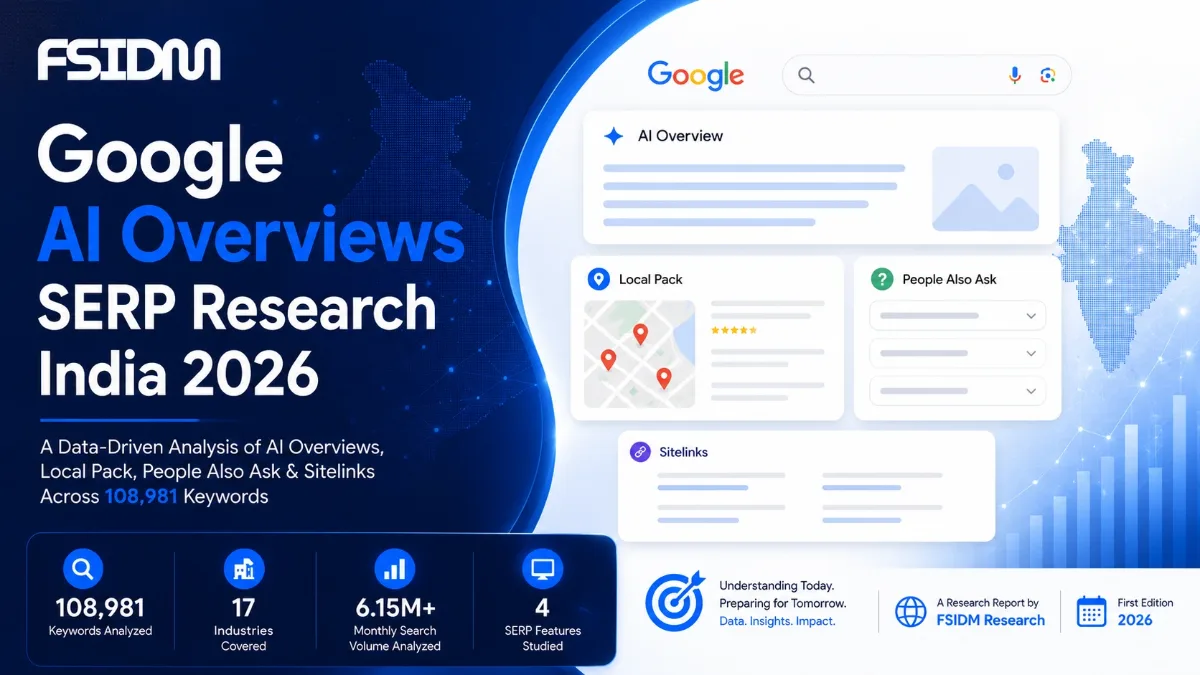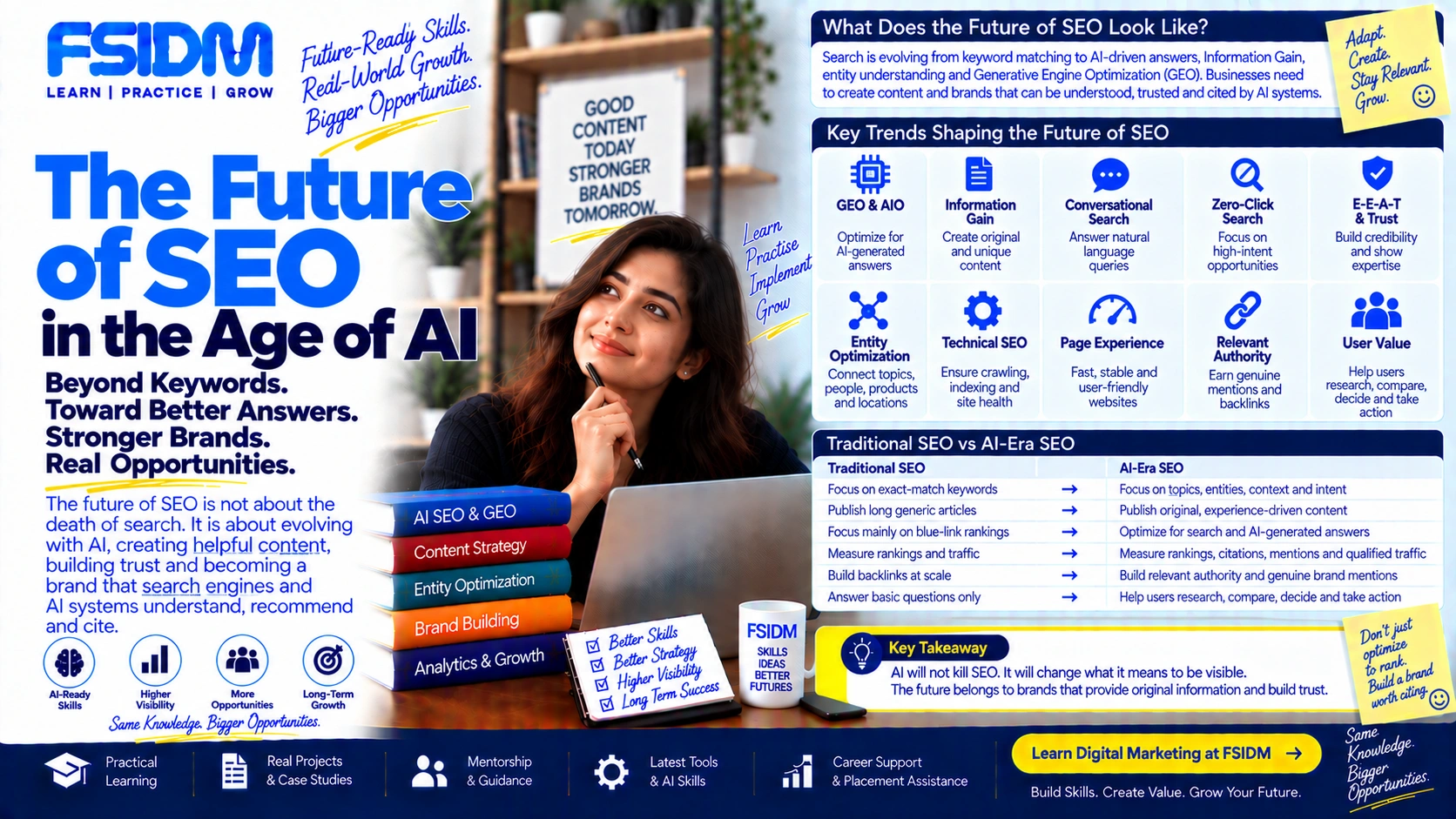
The future of SEO in the age of AI is not about the “death of search.” Instead, search is evolving from traditional keyword matching toward AI-driven answers, Information Gain, entity understanding, and Generative Engine Optimization (GEO).
Search engines and AI platforms are increasingly becoming answer engines. Instead of simply displaying a list of blue links, they can understand a query, combine information from multiple sources, and provide a direct answer.
For businesses, this means SEO must evolve from simply ranking webpages to building content and brands that can be understood, trusted, surfaced, and cited by AI systems.
1. From Traditional SEO to GEO and AIO
Traditional SEO focuses heavily on visibility in search engine results pages. The next stage of search optimization also considers visibility inside AI-generated answers.
Generative Engine Optimization (GEO) focuses on improving the likelihood that a brand or webpage is referenced, summarized, or cited by generative search experiences.
This includes AI-powered search experiences such as Google AI Overviews, Google AI Mode, Microsoft Copilot, and Perplexity.
Content should therefore be structured clearly, use accurate information, establish entities, and make important facts easy for AI systems to understand.
2. The Rise of Information Gain
AI can generate generic summaries in seconds. This makes basic, repetitive content less valuable.
The future of SEO increasingly favors content that provides Information Gain—something genuinely useful or original that goes beyond simply repeating what already exists online.
Examples include:
- Original research and surveys
- First-hand experiences
- Proprietary data
- Original case studies
- Expert opinions
- Unique testing and experiments
- Original screenshots, examples, and visual evidence
The key question is simple: “What does this page provide that the existing search results do not?”
3. The Shift Toward Conversational Search
People are increasingly using natural language when interacting with AI-powered search systems.
Instead of searching for something broad like “best running shoes”, a user may ask:
“Recommend a trail running shoe for wide feet, under ₹10,000, that performs well on wet rocks.”
This creates opportunities around long-tail, conversational, and highly specific search queries.
SEO strategies should therefore focus not only on short keywords but also on the questions, problems, comparisons, and decisions users make during their buying journey.
4. The Growth of Zero-Click Search
AI-powered search can answer many informational questions directly within the search interface. As a result, users may not always need to click through to a website.
This creates a challenge for websites that depend heavily on basic informational traffic.
To adapt, businesses should focus on creating content that supports high-intent searches, deeper research, comparisons, tools, original resources, and commercial decisions.
The goal is not only to generate more clicks but to attract the right clicks from users who need something your business can actually provide.
5. E-E-A-T and Trust Become More Important
AI systems can generate convincing information even when the underlying information is incorrect. Because of this, credibility and trust become increasingly important.
Businesses should make it clear:
- Who created the content
- What experience the creator has
- Why the business is qualified to discuss the subject
- Where important claims and data come from
- How users can verify the business and its information
Strong E-E-A-T—Experience, Expertise, Authoritativeness, and Trustworthiness—can help establish credibility across traditional search and AI-powered discovery.
6. Entity Optimization Will Matter More
Search engines increasingly understand websites through entities, relationships, and context rather than isolated keywords.
Your business should be clearly connected to the topics, services, products, people, locations, and organizations it is associated with.
Consistent business information, structured data, clear author information, relevant mentions, and strong topical coverage can help search systems understand these relationships.
Traditional SEO vs. AI-Era SEO
| Traditional SEO | AI-Era SEO |
|---|---|
| Focus on exact-match keywords | Focus on topics, entities, context, and intent |
| Publish long generic articles | Publish original, experience-driven content |
| Focus mainly on blue-link rankings | Optimize for search and AI-generated answers |
| Measure rankings and traffic | Measure rankings, citations, mentions, visibility, and qualified traffic |
| Build backlinks at scale | Build relevant authority and genuine brand mentions |
| Answer basic questions only | Help users research, compare, decide, and take action |
How to Future-Proof Your SEO Strategy
- Create original content: Add first-hand experience, proprietary data, case studies, testing, and expert insights.
- Optimize for entities: Clearly define your business, people, products, services, locations, and relationships.
- Answer conversational queries: Cover specific questions and problems your audience asks AI systems.
- Improve content structure: Use clear headings, concise definitions, tables, lists, examples, and supporting evidence.
- Build brand authority: Earn relevant mentions, citations, reviews, backlinks, and recognition across trusted sources.
- Strengthen E-E-A-T: Show who is behind your content and demonstrate real-world expertise.
- Optimize beyond Google: Consider how your brand appears across AI-powered search and discovery platforms.
Will AI Replace SEO?
AI is changing SEO, but it does not make optimization irrelevant. Instead, it expands the number of places where businesses need to be discoverable.
Search engines still need websites, sources, data, experts, products, and businesses to provide information. The difference is that AI systems can now interpret and present that information in new ways.
The future SEO professional will therefore need to think beyond rankings and ask a broader question: “How can my brand become a trusted source that search engines and AI systems understand and recommend?”
Frequently Asked Questions About the Future of SEO
Will SEO disappear because of AI?
No. SEO is evolving rather than disappearing. Businesses still need to optimize their content, websites, entities, and authority so search engines and AI systems can discover and understand them.
What is GEO in SEO?
GEO stands for Generative Engine Optimization. It focuses on improving a brand’s visibility and likelihood of being referenced or cited in AI-generated search experiences.
What is Information Gain in SEO?
Information Gain refers to the unique value, knowledge, evidence, experience, or insights that your content adds beyond what is already available in existing search results.
Will keywords still matter in AI search?
Keywords will continue to provide useful context, but modern search increasingly considers meaning, entities, relationships, intent, and natural-language questions rather than relying only on exact keyword matching.
How can businesses prepare for AI search?
Businesses should create original content, strengthen E-E-A-T, build recognizable entities and brands, answer conversational questions, earn relevant mentions, and make their information easy for search and AI systems to understand.
Interview Question: What Is the Future of SEO in the Age of AI?
Answer: The future of SEO is moving from traditional keyword-focused optimization toward AI-friendly content, Information Gain, entity optimization, GEO, conversational search, strong E-E-A-T, and brand authority across both traditional search engines and AI-powered answer platforms.
Interview Tip
“AI will not kill SEO; it will change what it means to be visible. The future belongs to brands that provide original information, build trust, and become reliable sources for both search engines and AI systems.”
Learn SEO With FSIDM
The future of SEO is not about chasing every new AI platform. It is about building a website and brand that AI systems can understand, users can trust, and search engines have a reason to recommend.
Don’t just optimize to rank. Build a brand worth citing.
Explore FSIDM at fsidm.in.