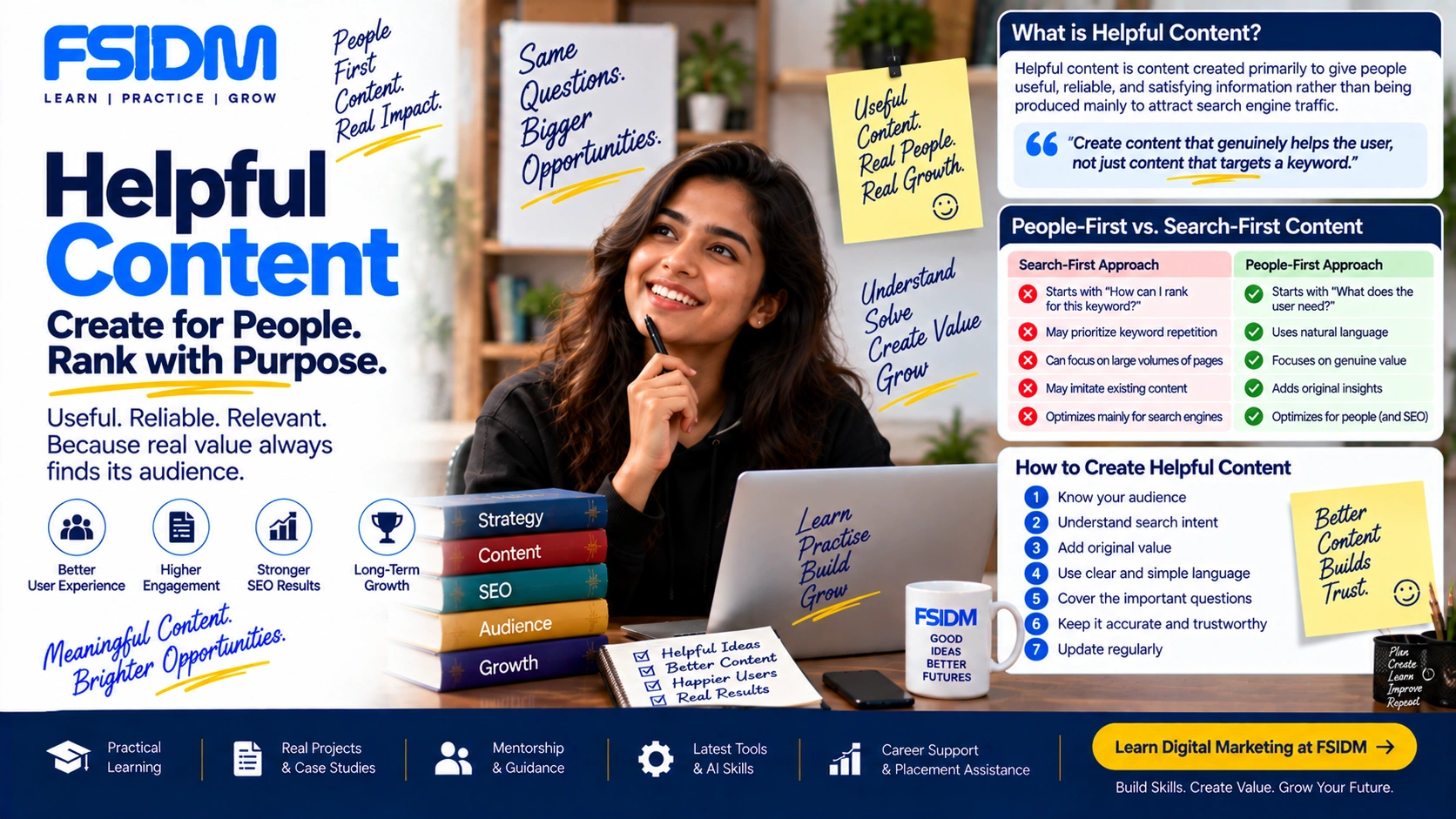
Helpful content is content created primarily to give people useful, reliable, and satisfying information rather than being produced mainly to attract search-engine traffic.
In SEO, helpful content should address the user’s actual need, demonstrate appropriate knowledge or experience, and provide information that is clear, original, accurate, and useful. It should leave the reader better informed or able to take the next step.
Google’s guidance has increasingly emphasized people-first content. This means SEO can still be part of content strategy, but the primary purpose should be serving the audience rather than manipulating search rankings.
What Makes Content Helpful?
Helpful content is not defined simply by word count, keyword density, or how many sections an article contains. Its usefulness depends on the topic, audience, purpose, and search intent.
1. It Satisfies the User’s Need
Before creating content, understand what the person is actually trying to accomplish. Someone searching “how to optimize a Google Business Profile” needs practical guidance, while someone searching “Google Business Profile meaning” primarily needs a clear explanation.
Helpful content addresses the purpose behind the query rather than simply repeating the words in it.
2. It Provides Original Value
Useful content should bring something meaningful to the discussion. This could include first-hand experience, original examples, analysis, case studies, research, processes, comparisons, or insights that help the reader.
3. It Demonstrates Appropriate Expertise
The creator should have appropriate knowledge or experience for the subject. For sensitive topics, particularly those involving health, finance, safety, or other major decisions, trustworthy expertise and sourcing become especially important.
4. It Is Easy to Understand
Helpful content should be organized logically and written in language appropriate for its audience. Clear headings, examples, tables, lists, and concise explanations can make complex subjects easier to understand.
5. It Is Trustworthy
Readers should be able to understand who created the content and why they should trust it. Depending on the topic, this may involve clear authorship, appropriate sourcing, transparent business information, accurate claims, and regularly maintained information.
People-First Content vs Search-First Content
| Search-First Approach | People-First Approach |
|---|---|
| Starts with “How can I rank for this keyword?” | Starts with “What does the user need?” |
| May prioritize keyword repetition | Uses natural language and relevant terminology |
| Can focus on producing large volumes of pages | Focuses on creating genuinely useful resources |
| May imitate existing search results | Adds original information, experience, or analysis |
| Optimizes primarily for search engines | Optimizes for people while making content accessible to search systems |
Helpful Content and Search Intent
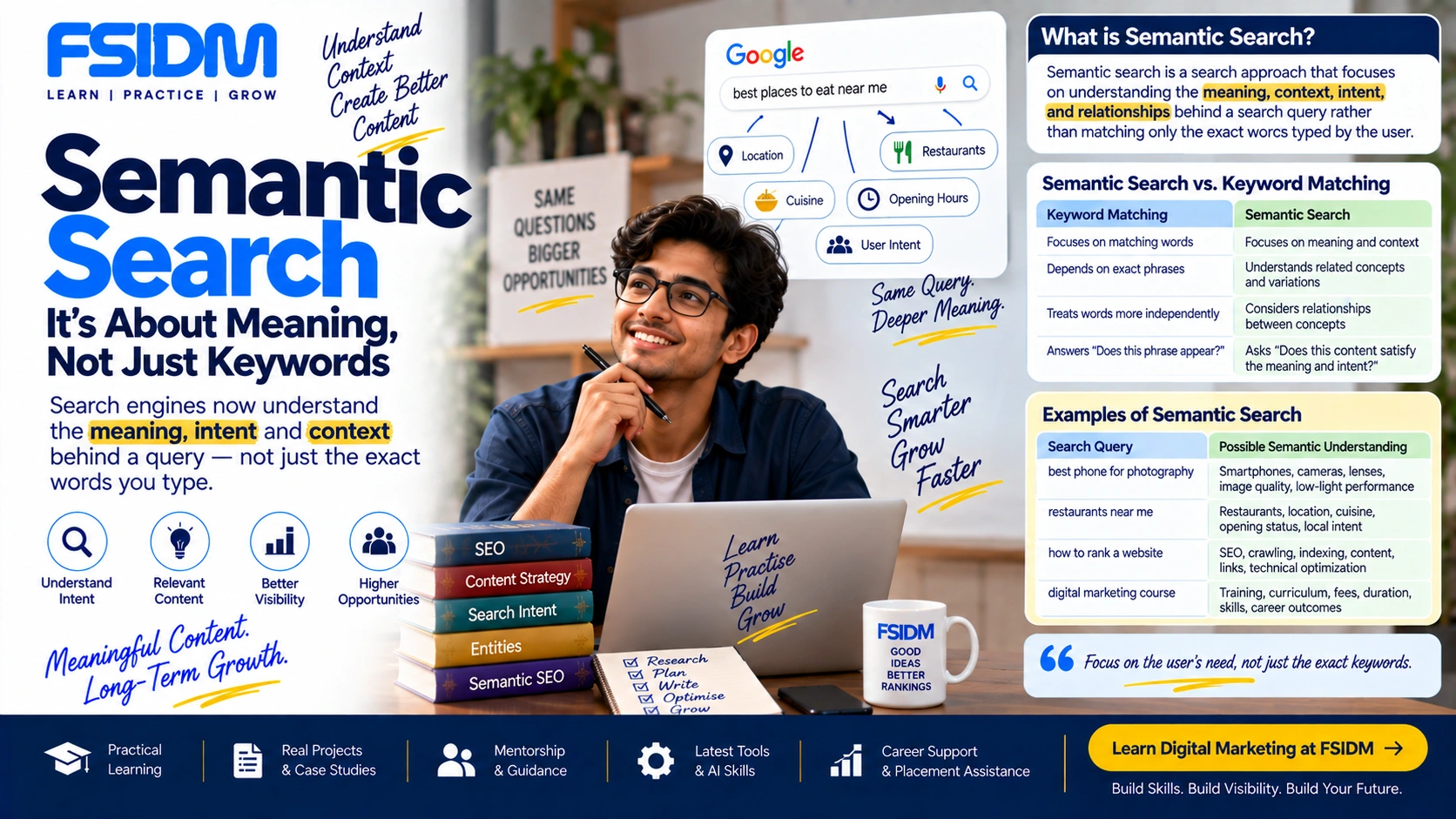
Search intent is one of the most important considerations when creating helpful content. A page can contain accurate information and still be unhelpful if it does not address what the searcher actually wants.
For example, consider the query “best digital marketing course in Ahmedabad.” A page that only defines digital marketing is unlikely to satisfy someone comparing courses. A more helpful resource could explain course curriculum, learning format, practical training, fees where available, prerequisites, and other decision-making factors.
The exact information needed depends on the query and audience.
Helpful Content and Originality
Originality does not necessarily mean that every sentence has to be completely new. It means the content should provide meaningful value rather than simply rewriting information already available elsewhere.
Original value can come from:
- First-hand experience
- Original research and data
- Case studies
- Practical examples
- Expert commentary
- Unique processes or frameworks
- Useful comparisons
- Lessons learned from real projects
Helpful Content and AI
AI can assist with research, outlining, editing, ideation, and other parts of content production. However, using AI does not automatically make content helpful or unhelpful.
The important question is whether the final content provides genuine value, is accurate, demonstrates appropriate expertise, and satisfies the user’s need. AI-assisted content should therefore be reviewed, fact-checked, edited, and improved where necessary.
How to Create Helpful Content
- Identify the audience: Know who the content is intended to help.
- Understand the search intent: Determine what the user wants to learn, solve, compare, or accomplish.
- Define the real question: Look beyond the exact keyword to understand the underlying need.
- Bring original value: Add experience, examples, research, analysis, or practical insights where appropriate.
- Answer the important questions: Cover the information necessary to satisfy the user’s need without adding irrelevant material.
- Use clear structure: Organize information with useful headings, lists, tables, examples, and concise explanations.
- Support important claims: Use trustworthy sources when evidence or attribution is necessary.
- Review accuracy: Check facts and update information that has become outdated.
- Improve the user experience: Make the content easy to read, navigate, and understand.
- Remove unnecessary sections: Do not make an article longer simply to appear comprehensive.
Helpful Content Example
| Less Helpful | More Helpful |
|---|---|
| “What Is SEO?” followed by generic definitions | A clear explanation with practical examples and related questions |
| Repeating “best SEO agency” throughout a page | Explaining how to evaluate an SEO agency and what questions to ask |
| Copying competitor topics without adding value | Adding original insights, examples, research, or experience |
| Writing 5,000 words regardless of the topic | Providing the appropriate amount of information needed to satisfy the user |
How to Check Whether Your Content Is Helpful
Before publishing, ask yourself:
- Does this content clearly satisfy the intended search intent?
- Would the reader find the information genuinely useful?
- Have I added original value rather than simply rewriting other pages?
- Is the information accurate and appropriately supported?
- Does the content demonstrate relevant experience or expertise?
- Can the reader easily find the answer or next step?
- Have I removed unnecessary information added only for SEO?
- Would I still publish this content if search engines did not exist?
Helpful Content and E-E-A-T
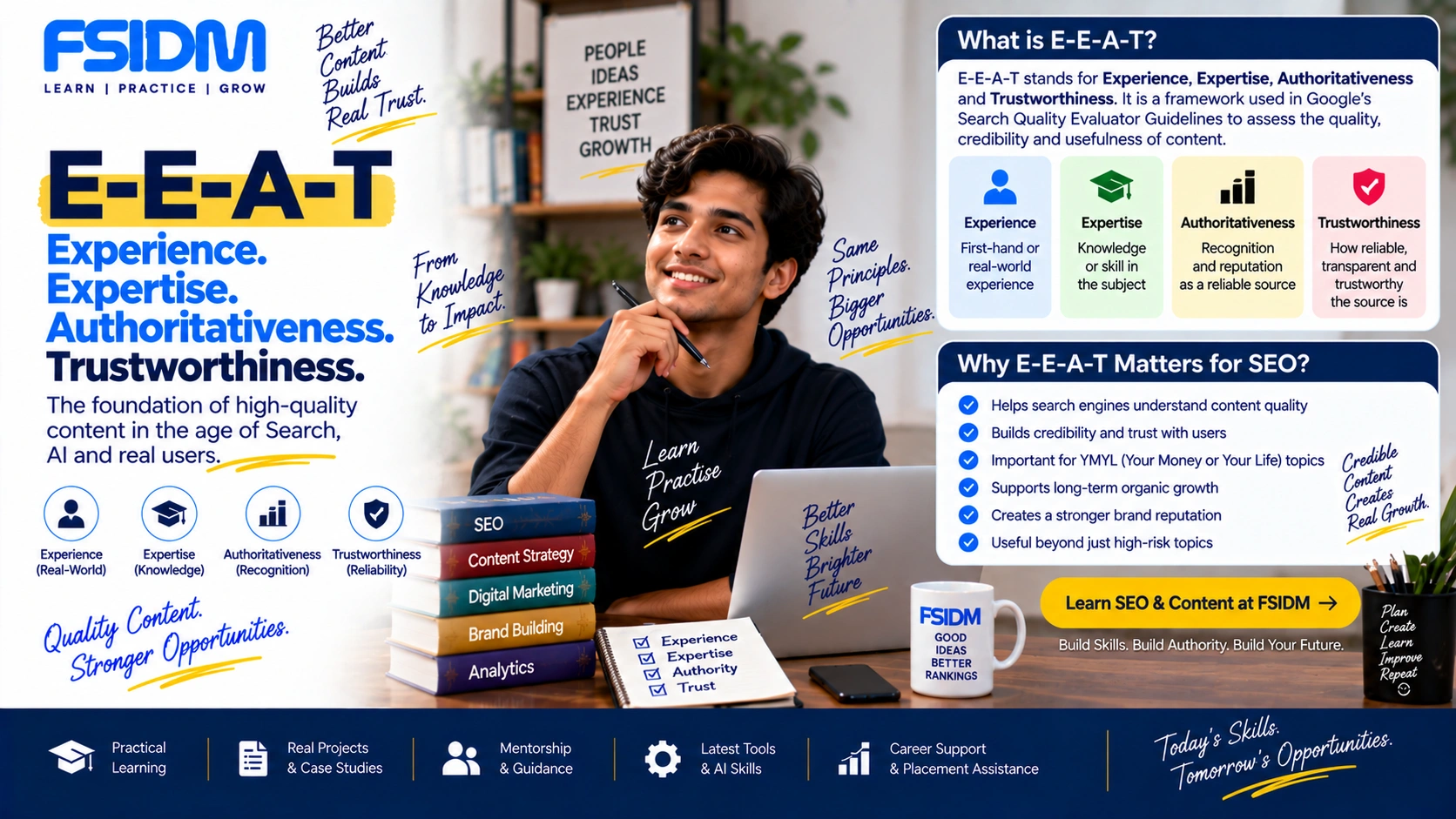
Helpful content and E-E-A-T are closely related but are not the same concept. Helpful content focuses on whether a resource genuinely serves the user’s needs. E-E-A-T provides a framework around experience, expertise, authoritativeness, and trustworthiness.
Strong content can demonstrate both: it can solve the user’s problem while also making its relevant experience, expertise, and credibility clear.
Common Helpful Content Mistakes
- Writing only for keywords: A keyword is not a substitute for understanding the user.
- Copying the top-ranking pages: Similarity to existing results does not create original value.
- Adding unnecessary length: More words do not automatically mean more helpfulness.
- Using AI without review: Automatically generated content can contain errors, repetition, or unsupported claims.
- Ignoring first-hand experience: Where experience matters, generic summaries may be less useful.
- Ignoring content maintenance: Outdated information can become misleading.
- Over-optimizing: Excessive keyword placement can reduce readability and usefulness.
FAQs About Helpful Content
What is helpful content in SEO?
Helpful content is information created primarily to serve people by providing useful, reliable, relevant, and satisfying answers to their needs.
Is helpful content a Google ranking factor?
Google has systems designed to surface helpful, reliable, people-first content. However, “helpful content” should not be treated as a single public numerical ranking score that marketers can directly optimize.
Does helpful content need to be long?
No. There is no universal ideal word count. The appropriate length depends on the topic, search intent, and amount of information needed to satisfy the user.
Can AI-generated content be helpful?
Yes, AI can be used as part of content production. What matters is the quality and usefulness of the final content, including accuracy, originality, appropriate expertise, and whether it genuinely satisfies the audience.
How is helpful content different from SEO content?
SEO content is a broad term for content created as part of an SEO strategy. Helpful content emphasizes creating genuinely useful, people-first resources rather than content produced primarily to manipulate search visibility.
Interview Question
What is helpful content in SEO?
Helpful content is people-first content created to genuinely satisfy a user’s need. It should be relevant to the search intent, provide original value where possible, demonstrate appropriate expertise, be accurate and trustworthy, and give the reader a clear and useful answer.
Interview Tip
Do not define helpful content as simply “long-form content with keywords.” Focus on people-first value, search intent, originality, accuracy, experience, expertise, and usefulness.
Learn Practical SEO with FSIDM
At FSIDM, SEO is approached with a practical, industry-focused mindset. Understanding helpful content helps marketers move beyond keyword-driven publishing and create resources that genuinely solve problems, answer questions, and provide value to their audience.