Black Hat SEO refers to search engine optimization practices that deliberately violate search engine guidelines in an attempt to manipulate rankings.
Instead of focusing primarily on providing value to users, Black Hat SEO attempts to exploit weaknesses or loopholes in search systems. Some tactics may produce short-term visibility gains, but they can create significant long-term risks, including ranking losses, manual actions, or removal of pages from search results.
Why Is Black Hat SEO Risky?
Search engines continuously work to identify and reduce the impact of manipulative techniques. When a website violates applicable spam policies, its search visibility can be negatively affected.
The risk is particularly high when a business builds its organic strategy around tactics designed primarily to manipulate ranking systems rather than improve the quality and usefulness of its website.
Common Black Hat SEO Techniques
1. Keyword Stuffing
Keyword stuffing involves excessively repeating keywords or phrases in webpage content, metadata, alt text, or other areas in an attempt to influence rankings.
For example, repeatedly inserting the same phrase into a paragraph even when it makes the content difficult to read provides little value to the user and can be considered manipulative.
2. Cloaking
Cloaking involves showing substantially different content or URLs to search engines and users. The purpose is generally to manipulate what search engines understand about a page compared with what visitors actually see.
3. Hidden Text and Links
Hidden text or links can involve techniques such as making text visually invisible, using extremely small text, or positioning content outside the visible page primarily to influence search engines.
When hidden elements are used deceptively for ranking manipulation, they fall into the category of practices that ethical SEO avoids.
4. Link Schemes and Private Blog Networks
Link schemes attempt to manipulate a site’s authority through artificial or manipulative links. One example is building or using networks of websites primarily to create links to another site.
Links are most valuable when they occur naturally because another website considers the referenced content useful or relevant.
5. Content Scraping and Low-Quality Automated Content
Content scraping involves copying content from other websites, while automated systems can also be used to generate large quantities of repetitive or low-value pages.
Automation itself is not inherently Black Hat SEO. The problem arises when automated content is produced primarily to manipulate search rankings and provides little or no additional value to users.
6. Fabricated Trust Signals
Creating false author credentials, fabricated expertise, fake reviews, or other misleading trust signals can give users an inaccurate impression of a website or organization.
Search optimization should represent genuine expertise and experience rather than manufacture credibility.
7. Doorway Pages
Doorway pages are pages created primarily to rank for particular search queries while offering little unique value and funneling users toward another destination.
Creating multiple near-duplicate pages solely to capture variations of keywords can produce a poor user experience and may conflict with search engine spam policies.
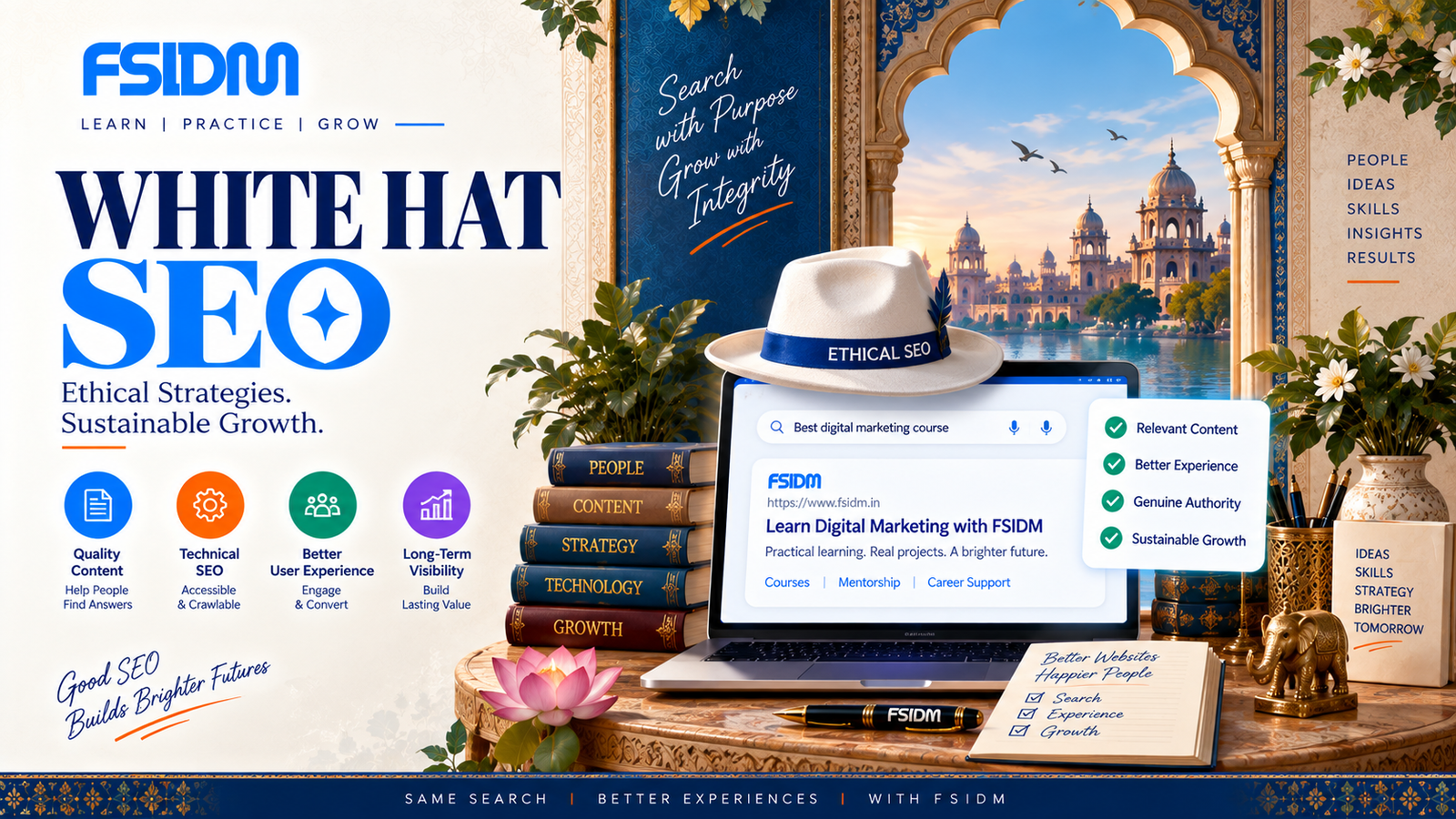
Black Hat SEO vs White Hat SEO
| Feature | Black Hat SEO | White Hat SEO |
|---|---|---|
| Guidelines | Uses tactics that violate or attempt to circumvent search engine guidelines. | Uses practices designed to align with search engine guidelines. |
| Primary Focus | Manipulating ranking systems. | Improving relevance, usefulness, accessibility, and user value. |
| Content Approach | May involve scraped, deceptive, repetitive, or low-value content. | Focuses on useful, original, relevant, and audience-focused content. |
| Time Horizon | Often targets short-term ranking opportunities. | Generally focuses on sustainable organic growth. |
| Risk | Higher risk of ranking loss or search-engine action. | Lower risk when practices consistently follow applicable guidelines. |
How Search Engines Fight Black Hat SEO
Search engines use automated systems, spam-detection technologies, machine learning, and manual reviews to identify attempts to manipulate search results.
These systems can evaluate patterns associated with spam, deceptive behavior, unnatural linking, low-quality content, and other forms of search manipulation. Search visibility can change when search engines detect or neutralize such tactics.
Rather than relying on the assumption that a particular Black Hat technique will remain undetected, sustainable SEO should focus on building a website that deserves to be visible because it provides useful information and a strong user experience.
How to Replace Black Hat Tactics with Ethical SEO
| Black Hat Approach | Better White Hat Alternative |
|---|---|
| Keyword stuffing | Use relevant keywords naturally while answering search intent. |
| Manipulative backlinks | Create valuable resources that can earn relevant references. |
| Cloaking | Provide consistent, accessible content to users and search engines. |
| Scraped content | Create original analysis, examples, research, and expert content. |
| Doorway pages | Create genuinely useful landing pages with unique value. |
| Fake credentials | Show authentic authorship, expertise, experience, and business information. |
Black Hat SEO Warning Signs
- Large amounts of automatically generated low-value pages.
- Unnatural keyword repetition.
- Links created primarily to manipulate rankings.
- Different content being served to crawlers and users.
- Hidden text or links used for search manipulation.
- Multiple pages targeting nearly identical queries without meaningful unique value.
- Fabricated reviews, credentials, or authority signals.
Common Black Hat SEO Mistakes
- Confusing automation with Black Hat SEO: Automation can be legitimate when it supports useful, high-quality work. The purpose and resulting content matter.
- Assuming quick rankings equal success: Short-term visibility does not necessarily produce sustainable organic growth.
- Buying links without understanding the risk: Links intended to manipulate rankings can violate search engine guidelines.
- Duplicating competitors: Copying or lightly rewriting existing content rarely creates a distinctive resource.
- Ignoring search-engine policies: SEO tactics should be evaluated against current applicable spam and quality guidelines.
Black Hat SEO FAQs
What does Black Hat SEO mean?
Black Hat SEO means using manipulative or deceptive SEO practices that violate or attempt to circumvent search engine guidelines in order to influence rankings.
Can Black Hat SEO improve rankings quickly?
Some manipulative techniques may produce short-term ranking improvements, but there is no guarantee, and the strategy carries substantially greater risk of losing visibility when search systems detect or neutralize the tactics.
What is the most common Black Hat SEO technique?
Common examples include keyword stuffing, manipulative link schemes, cloaking, hidden text, scraped content, and doorway pages.
Is AI-generated content automatically Black Hat SEO?
No. Using AI to assist with content does not automatically make a page Black Hat. The important considerations include the purpose, quality, originality, usefulness, and whether the content is being produced primarily to manipulate search rankings.
What is the difference between Black Hat and White Hat SEO?
Black Hat SEO attempts to manipulate search systems through tactics that violate or circumvent guidelines, while White Hat SEO focuses on useful content, technical accessibility, good user experience, and legitimate authority.
Can Black Hat SEO get a website removed from Google?
Violations of search spam policies can result in reduced visibility or manual actions, and in serious cases pages or sites may be removed from search results. The specific outcome depends on the nature and severity of the violation.
Interview Question
What is Black Hat SEO? Give some examples.
Interview Tip
A strong answer is: Black Hat SEO involves manipulative or deceptive techniques used to influence search rankings in violation of search engine guidelines. Examples include keyword stuffing, cloaking, hidden text, manipulative link schemes, scraped content, and doorway pages.
Learn Ethical SEO with FSIDM
Understanding Black Hat SEO is important because knowing what to avoid is just as valuable as knowing what to implement. Sustainable search visibility is built through useful content, sound technical SEO, strong user experience, relevant authority, and alignment with search-engine guidelines.
FSIDM focuses on practical, industry-oriented digital marketing education, helping learners understand SEO and modern digital marketing practices through an application-focused approach.