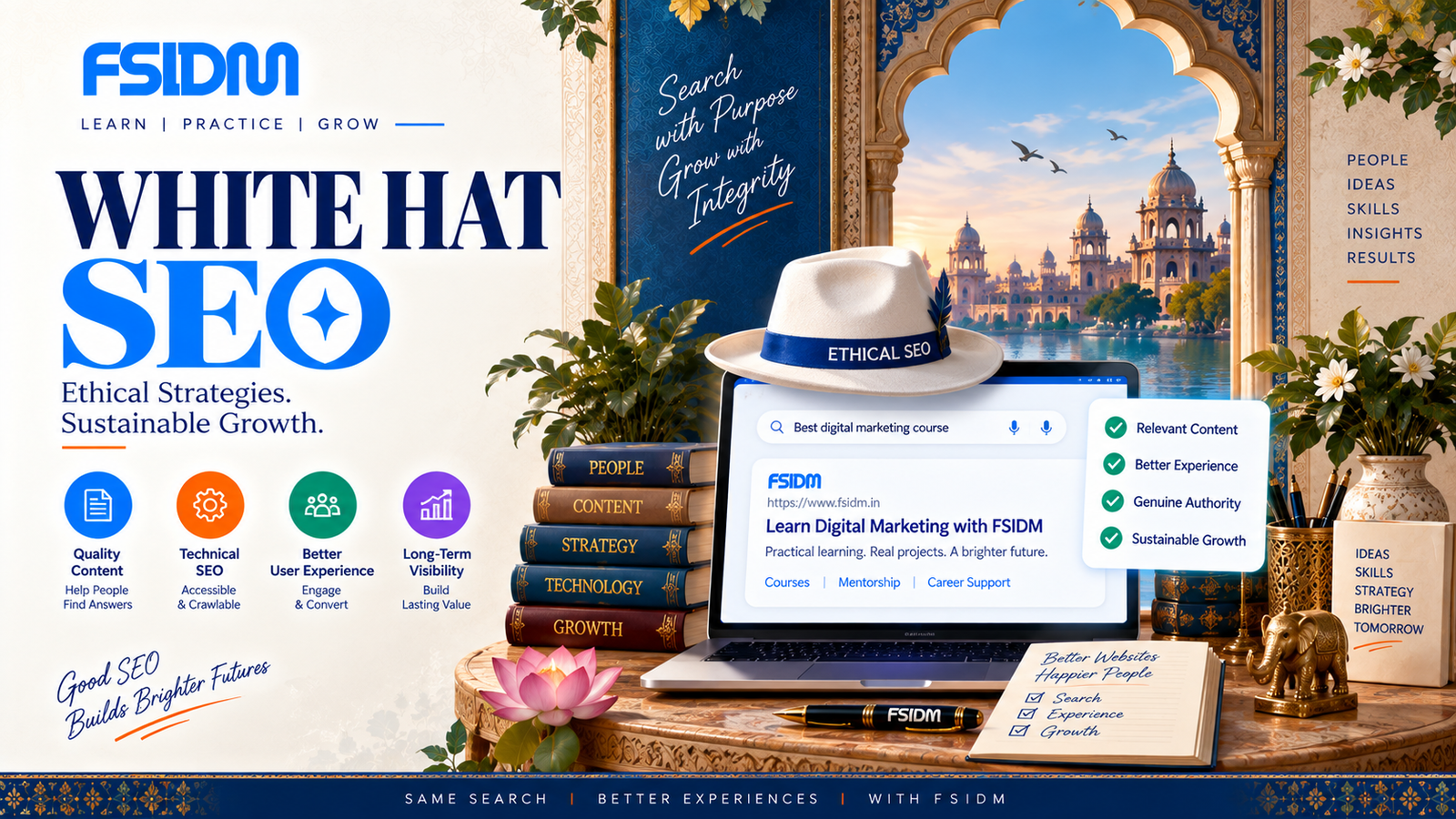
White Hat SEO refers to optimizing a website using ethical search-engine optimization practices that align with applicable search engine guidelines and focus on providing genuine value to users.
Instead of attempting to manipulate ranking systems through deceptive or abusive techniques, White Hat SEO focuses on useful content, technical accessibility, relevant optimization, good user experience, and legitimately earned authority.
The objective is to build sustainable search visibility by improving the website for both users and search engines.
White Hat vs. Grey Hat vs. Black Hat SEO
SEO tactics are often described using three broad categories based on their approach and level of risk.
| Feature | White Hat SEO | Grey Hat SEO | Black Hat SEO |
|---|---|---|---|
| Strategy | Uses practices designed to follow search engine guidelines. | Uses tactics that may operate in questionable or ambiguous areas. | Uses deceptive or manipulative tactics that violate search engine guidelines. |
| Focus | User value, quality, relevance, and sustainable growth. | Shortcuts or tactics intended to gain an advantage with varying levels of risk. | Manipulating search systems rather than improving genuine user value. |
| Risk | Lower risk when practices follow applicable guidelines. | Higher uncertainty and potential ranking risk. | High risk of search visibility loss or manual action when guideline violations are detected. |
| Approach | Long-term optimization. | Risk-based experimentation or shortcuts. | Aggressive manipulation of search systems. |
Core Pillars of White Hat SEO
1. Create Helpful, Original Content
White Hat SEO starts with content that genuinely serves the audience. Research the questions and problems your audience has, then create useful information that addresses those needs clearly and accurately.
Original research, examples, practical guides, expert insights, and comprehensive explanations can make content more valuable than pages created simply to target keywords.
2. Maintain Strong Technical SEO
Search engines need to be able to access and understand your website. A sound technical foundation can include a logical site architecture, appropriate XML sitemaps, properly configured robots.txt, accessible pages, useful internal links, and clean implementation.
Technical SEO should focus on helping both search engines and users navigate and understand the website rather than attempting to manipulate crawling or indexing.
3. Improve Website Performance and Mobile Usability
A website should provide a fast, stable, and usable experience across devices. Pay attention to factors such as page performance, responsive design, readable typography, interaction usability, and Core Web Vitals.
- Optimize appropriately sized images.
- Reduce unnecessary scripts and page resources.
- Improve loading performance.
- Minimize unexpected layout movement.
- Ensure important content works well on mobile devices.
4. Earn Relevant Links
Rather than acquiring links through manipulative schemes, White Hat SEO aims to earn references from relevant websites because the content is genuinely useful or noteworthy.
Original research, useful resources, data studies, tools, expert commentary, and compelling educational content can naturally attract references from other publishers.
5. Provide a Good User Experience
Visitors should be able to navigate the website easily and find the information they need without unnecessary friction.
- Use intuitive navigation.
- Make content easy to read and scan.
- Keep important information easy to locate.
- Avoid intrusive experiences that interfere with the user’s task.
- Make forms, menus, and interactive elements straightforward to use.
6. Optimize Keywords Naturally
Keyword research can help identify the language and topics users search for. Use relevant terms naturally in titles, headings, body content, URLs, and other appropriate locations.
The objective is not to repeat a keyword as many times as possible. The content should read naturally and satisfy the user’s underlying search intent.
Common Tactics Avoided by White Hat SEO
White Hat SEO avoids practices intended to deceive users or manipulate search engine systems.
Keyword Stuffing
Keyword stuffing involves excessive or unnatural repetition of keywords in an attempt to influence rankings. It can make content difficult to read and does not create a useful experience.
Manipulative Link Schemes
Acquiring links primarily to manipulate search rankings can violate search engine guidelines. White Hat SEO instead focuses on earning relevant and legitimate references.
Cloaking
Cloaking involves presenting different content or URLs to search engines and users in a way designed to deceive or manipulate search visibility. This is fundamentally inconsistent with an ethical SEO approach.
How to Build a White Hat SEO Strategy
- Research your audience: Understand their needs, questions, problems, and search behavior.
- Map search intent: Create pages that genuinely match what users expect from their queries.
- Build useful content: Provide original, accurate, and valuable information.
- Strengthen technical SEO: Make the website accessible, crawlable, indexable, and easy to navigate.
- Improve UX: Make the site fast, mobile-friendly, readable, and easy to use.
- Earn authority: Promote genuinely useful resources that relevant publishers may want to reference.
- Monitor performance: Track organic visibility, traffic, conversions, and technical health.
- Keep improving: Update content and resolve technical or usability issues as the website and audience evolve.
White Hat SEO Checklist
- Create content for people first.
- Match pages with genuine search intent.
- Use keywords naturally.
- Maintain a crawlable and accessible website.
- Use XML sitemaps appropriately.
- Configure robots.txt carefully.
- Optimize mobile usability and page performance.
- Earn relevant backlinks rather than relying on manipulative schemes.
- Maintain clear navigation and useful internal linking.
- Avoid deceptive techniques such as cloaking and keyword stuffing.
- Measure both search visibility and meaningful business outcomes.
Common White Hat SEO Mistakes
- Confusing White Hat SEO with slow SEO: Ethical SEO can produce results at different speeds depending on the website, competition, content, authority, and market.
- Creating content only for keywords: Keywords should inform content strategy, not replace useful information.
- Assuming every backlink is valuable: Relevance and legitimacy matter more than simply accumulating large numbers of links.
- Ignoring technical SEO: Excellent content can still underperform when important pages have accessibility, crawling, indexing, or usability problems.
- Using outdated SEO myths: White Hat SEO should be based on current search-engine guidance and evidence rather than rigid formulas.
White Hat SEO FAQs
What does White Hat SEO mean?
White Hat SEO means using ethical and guideline-aligned optimization practices to improve a website’s search visibility while focusing on genuine user value.
Is White Hat SEO safe?
Following search engine guidelines generally reduces the risk associated with manipulative SEO tactics. However, no SEO strategy can guarantee rankings or permanent traffic growth.
What is the difference between White Hat and Black Hat SEO?
White Hat SEO focuses on improving relevance, quality, accessibility, and user value, while Black Hat SEO uses tactics intended to manipulate search systems and may violate search engine guidelines.
Is buying backlinks White Hat SEO?
Buying links specifically to manipulate search rankings can violate search engine guidelines. White Hat SEO emphasizes earning legitimate, relevant references instead.
Is keyword optimization part of White Hat SEO?
Yes. Keyword research and optimization can be part of an ethical SEO strategy when keywords are incorporated naturally and the resulting content genuinely satisfies user intent.
Does White Hat SEO guarantee first-page rankings?
No. Ethical SEO improves a website’s foundations and search relevance, but rankings depend on many factors, including competition, content quality, authority, technical factors, and search-engine systems.
Interview Question
What is White Hat SEO, and how does it differ from Black Hat SEO?
Interview Tip
A strong answer is: White Hat SEO uses ethical, guideline-aligned techniques to improve search visibility by creating useful content, maintaining strong technical SEO, improving user experience, and earning legitimate authority. Black Hat SEO relies on manipulative or deceptive techniques intended to influence rankings.
Learn Ethical SEO with FSIDM
Sustainable SEO is built on more than rankings. It requires an understanding of search intent, content quality, technical SEO, user experience, authority, and how search engines evaluate websites.
FSIDM focuses on practical, industry-oriented digital marketing education, helping learners understand SEO and modern digital marketing through an application-focused approach.