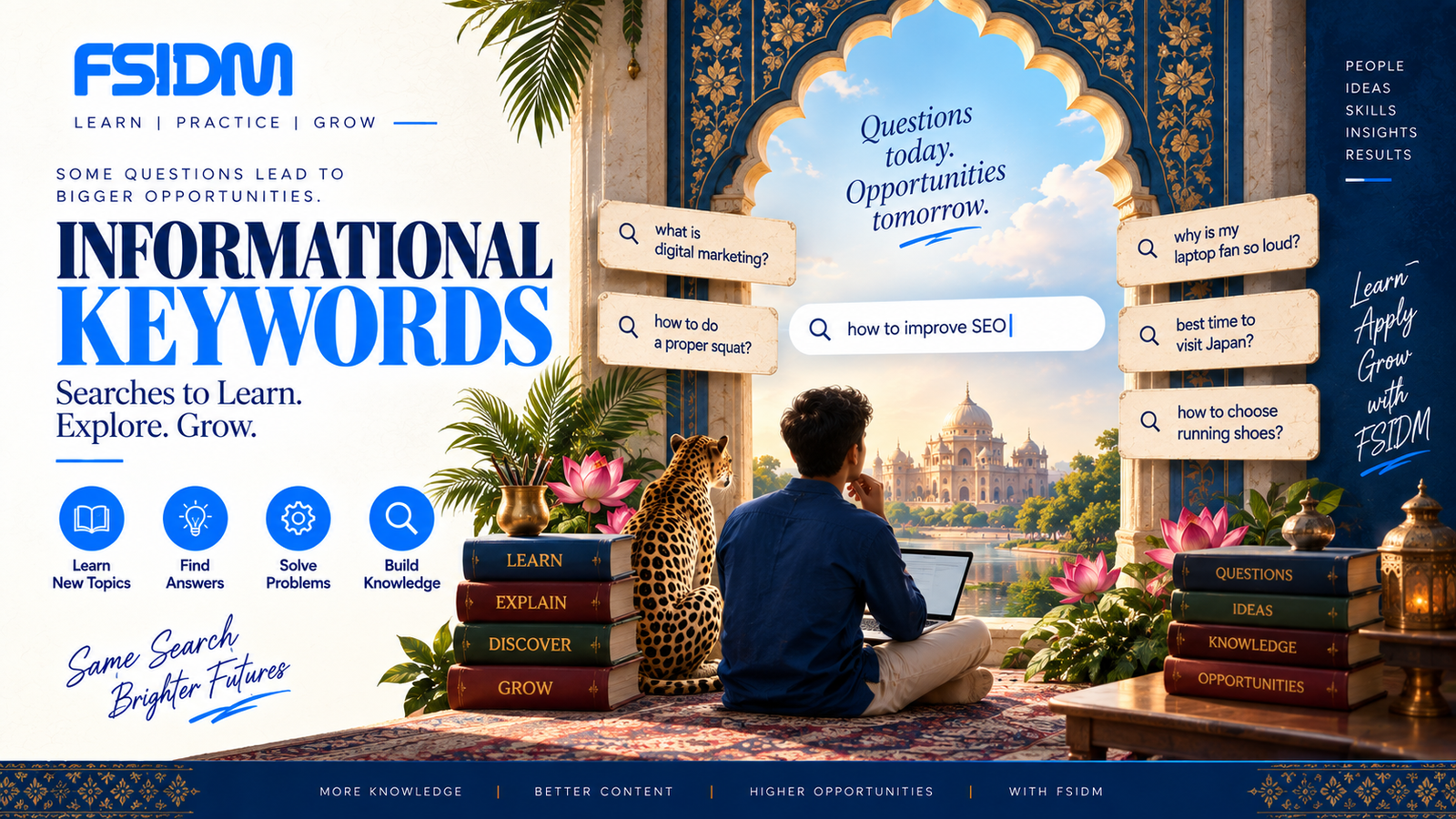
Informational keywords are search queries used by people who want to learn something, find an answer, understand a topic, or solve a problem. These searches are primarily focused on gaining information rather than immediately purchasing a product or service.
Examples include what is compound interest, how to do a proper squat, and why is my laptop fan so loud. Informational searches can occur at different stages of the customer journey, although they are commonly associated with early-stage research and awareness.
What Are Informational Keywords in SEO?
An informational keyword expresses a desire for knowledge, an explanation, instructions, facts, or a solution to a problem. The searcher may be trying to understand something for the first time, learn how to complete a task, troubleshoot an issue, or research a topic before making a decision.
Unlike a strongly transactional query such as buy running shoes online, an informational query such as how to choose running shoes primarily asks for guidance.
Common Informational Keyword Modifiers
Informational searches often contain words that signal a learning or problem-solving intent. Common patterns include:
- Questions: what is, how to, why, when, where, who
- Guides: guide, tutorial, tips, examples, ideas, checklist
- Knowledge: definition, facts, history, statistics, meaning
- Problem solving: how to fix, how to improve, reasons, causes, solutions
These modifiers are useful signals, but a keyword should always be evaluated in context because search intent cannot always be determined from a single word or phrase.
Examples of Informational Keywords
| Niche | Informational Keyword | What the User Wants |
|---|---|---|
| Fitness | how to do a proper squat | Instructions and technique guidance |
| Finance | what is compound interest | An explanation of a financial concept |
| Technology | why is my laptop fan so loud | Troubleshooting information |
| Travel | best time of year to visit Japan | Planning information and relevant considerations |
| SEO | what are informational keywords | A definition and practical explanation |
Why Informational Keywords Matter for SEO
1. Reach People During Research
Informational searches allow businesses and publishers to reach people while they are learning about a topic, researching a problem, or exploring possible solutions.
2. Build Topical Authority and Trust
Consistently publishing accurate, useful information can help demonstrate expertise and make a website a valuable resource within a subject area. Informational content should prioritize usefulness and accuracy rather than simply being created to attract traffic.
3. Support the Customer Journey
A person who begins with an informational search may later conduct commercial or transactional searches. Useful educational content can therefore become an early touchpoint in a broader customer journey.
4. Create Content Opportunities
Informational queries can reveal the questions and problems an audience cares about. These insights can guide blog posts, guides, tutorials, FAQs, videos, glossaries, and other educational resources.
Informational Keywords and the Marketing Funnel
| Search Stage | Example Query | Possible Content |
|---|---|---|
| Awareness | what is digital marketing | Beginner’s guide |
| Research | how does digital marketing work | Detailed educational article |
| Evaluation | digital marketing strategies for small business | Strategy guide / comparison |
| Action | digital marketing course Ahmedabad | Course or service landing page |
Informational intent is often associated with the awareness and research stages, but search intent exists on a spectrum. Some informational queries can also occur closer to a purchase decision.
How to Optimize Content for Informational Intent
- Answer the main question clearly: Give the reader a concise, direct answer before expanding into supporting detail.
- Match the content format to the query: Use guides, tutorials, definitions, checklists, comparisons, or troubleshooting content where appropriate.
- Use descriptive headings: Organize the page around the questions and subtopics users are likely to care about.
- Cover related questions: Address closely connected concepts so the reader does not need to search elsewhere for basic context.
- Use examples: Practical examples can make complex concepts easier to understand.
- Support claims appropriately: For topics where accuracy matters, use credible sources and keep information current.
- Make the page easy to scan: Use short paragraphs, lists, tables, clear headings, and other useful formatting.
Informational Keywords and Featured Snippets
Question-based searches can sometimes trigger featured snippets or other answer-focused search features. Clear definitions, concise explanations, lists, and structured answers may make content easier for search systems to interpret.
However, there is no guaranteed format or placement for a featured snippet. Content should be created primarily to satisfy the user’s information need rather than to chase a particular SERP feature.
How to Find Informational Keywords
- Autocomplete: Explore search suggestions around your main topic.
- People Also Ask: Review related questions appearing in search results.
- Related searches: Identify additional queries and subtopics.
- Keyword research tools: Use keyword platforms to discover question-based and educational searches.
- Search Console: Analyze queries already generating impressions for your website.
- Customer questions: Use sales, support, community, and audience questions to identify real information needs.
Common Mistakes With Informational Keywords
- Creating content solely because a keyword has high search volume.
- Answering the keyword literally while ignoring the broader user need.
- Making informational articles overly promotional.
- Using question-based headings without actually providing useful answers.
- Writing excessively long content when a concise answer would satisfy the query.
- Ignoring accuracy, evidence, or content freshness for topics where they matter.
FAQs About Informational Keywords
What is an informational keyword?
An informational keyword is a search query used primarily to learn something, find an answer, understand a concept, or solve a problem.
What are examples of informational keywords?
Examples include what is compound interest, how to improve SEO, why is my laptop fan so loud, and best time of year to visit Japan.
Are informational keywords only “how to” searches?
No. They can include definitions, explanations, facts, statistics, comparisons, troubleshooting queries, and many other searches where the primary goal is to obtain information.
Are informational keywords top-of-funnel?
Many informational queries occur during awareness or research, but informational intent is not limited to the top of the funnel. Users can seek information at almost any stage of their decision-making process.
How do I optimize a page for informational keywords?
Understand the searcher’s question, provide a clear answer, structure the page with useful headings, cover relevant subtopics, use practical examples, and prioritize accuracy and readability.
Can informational keywords generate customers?
Yes. Informational content can introduce people to a brand and support later stages of the customer journey, although not every informational visitor will become a customer.
Interview Question
What are informational keywords, and how should they be used in SEO?
Informational keywords are searches where the primary goal is to learn, understand, or solve a problem. SEO professionals can target them with useful guides, tutorials, definitions, FAQs, and educational content that directly satisfies the user’s information need.
Interview Tip
Do not say that informational keywords always mean “top of funnel.” Explain that intent is the key factor and that informational searches can occur throughout the customer journey. Give an example and explain how the content format should match the query.
Learn Practical SEO with FSIDM
At FSIDM, digital marketing and SEO are approached from a practical, industry-focused perspective. Understanding informational search intent helps marketers discover content opportunities, answer audience questions, and build useful search-focused resources.