Search engines help people discover information, websites, products, services, and answers online. While Google remains the dominant global search engine, users now have many alternatives based on their needs, including privacy-focused search, regional platforms, and AI-powered answer engines.
What Are the Most Popular Search Engines?
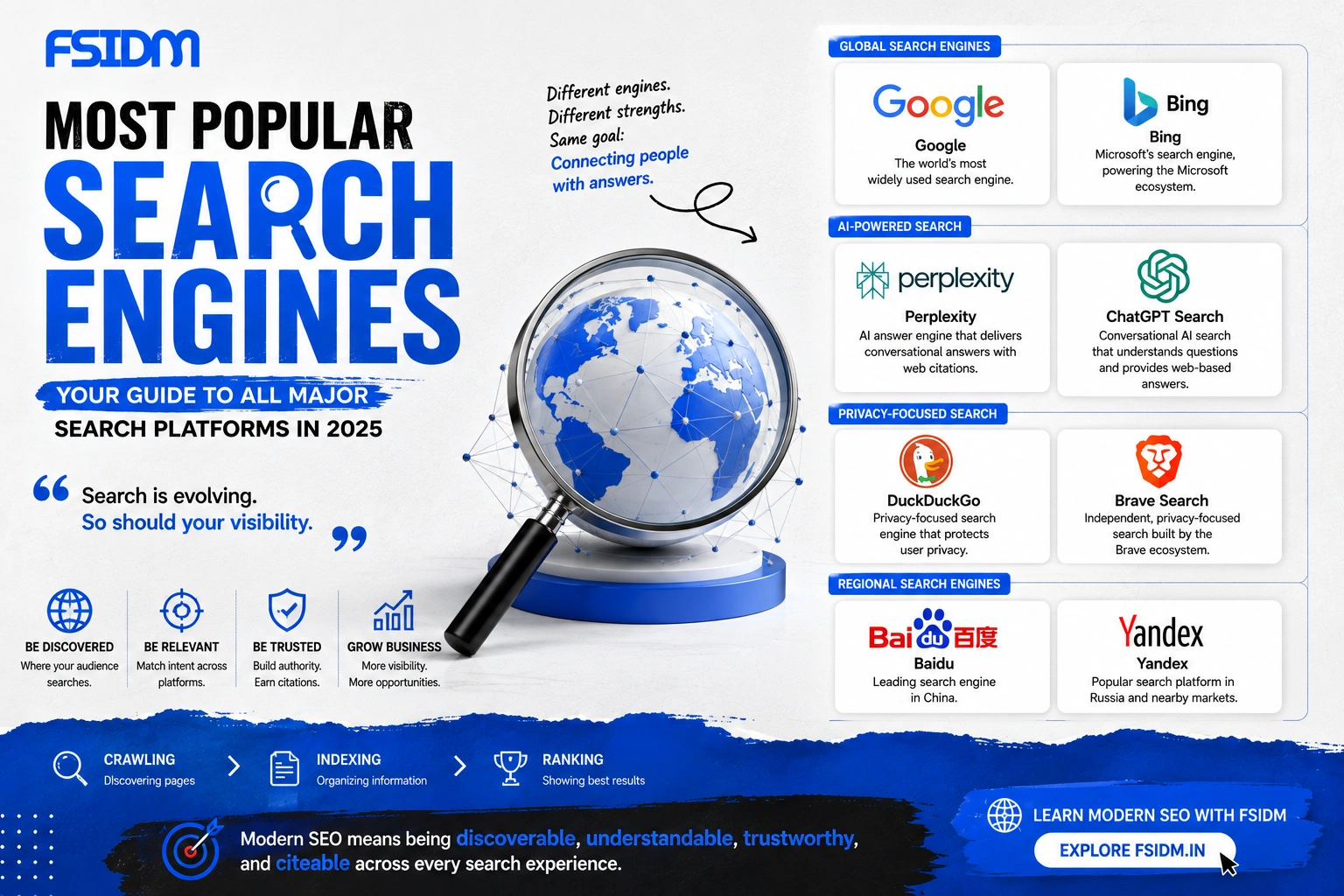
The most popular search engines can be grouped into four major categories: global search engines, AI-powered answer engines, privacy-focused search engines, and regional search engines.
1. Google
Google is the world’s most widely used search engine. It provides results across websites, images, videos, news, maps, shopping, and many other categories.
For businesses, Google is especially important because millions of people use it to discover products, services, local businesses, and information. This makes Google SEO a major part of digital marketing.
2. Microsoft Bing
Microsoft Bing is one of Google’s biggest traditional search competitors. It is closely integrated with Microsoft products such as Windows and Microsoft Edge.
Bing also plays an important role in Microsoft’s AI-powered search experiences, making it increasingly relevant for marketers interested in both traditional search and AI discovery.
3. Perplexity
Perplexity is an AI-powered answer engine that combines web search with conversational artificial intelligence. Instead of simply presenting a list of webpages, it can synthesize information into a direct answer and provide citations to its sources.
This represents a major shift from traditional search toward answer-based search.
4. ChatGPT Search
ChatGPT Search combines conversational AI with web search capabilities. Users can ask questions naturally and receive responses that incorporate information from the web.
For marketers, this creates a new opportunity beyond traditional rankings: becoming a source that AI-powered search experiences can discover, understand, and reference.
5. DuckDuckGo
DuckDuckGo is a privacy-focused search engine designed for users who want an alternative to heavily personalized search experiences.
Its positioning around privacy makes it particularly attractive to users who want greater control over their online search activity.
6. Brave Search
Brave Search is another privacy-focused search engine. It is part of the Brave ecosystem and emphasizes independent search and user privacy.
It provides an alternative for users who want search without relying primarily on the traditional Google search experience.
7. Baidu
Baidu is one of the major search engines serving users in China. It is particularly important for businesses targeting Chinese-speaking audiences and the Chinese market.
8. Yandex
Yandex is a major search platform associated particularly with Russia and surrounding markets. It provides search along with a broader ecosystem of digital services.
Popular Search Engines at a Glance
| Search Engine | Category | Key Focus |
|---|---|---|
| Global Search | General web search, local, images, news, shopping and more | |
| Bing | Global Search | Web search and Microsoft ecosystem |
| Perplexity | AI Answer Engine | Conversational answers with web citations |
| ChatGPT Search | AI Search | Conversational search and web-based answers |
| DuckDuckGo | Privacy Search | Privacy-focused web search |
| Brave Search | Privacy Search | Independent and privacy-focused search |
| Baidu | Regional Search | Search for the Chinese market |
| Yandex | Regional Search | Search and digital services, particularly in Russia and nearby markets |
Traditional Search Engines vs. AI Search
The search landscape is changing. Traditional search engines generally present a ranked list of webpages, while AI-powered search experiences can understand conversational questions and synthesize information from multiple sources.
| Traditional Search | AI-Powered Search |
|---|---|
| Shows ranked webpages | Can generate direct answers |
| Users browse search results | Users can have conversations |
| Strong focus on query matching | Strong focus on context and intent |
| Websites are destinations | Websites can become sources or citations |
Which Search Engine Should Businesses Focus On?
For most businesses, Google should remain a major SEO priority because of its enormous search ecosystem. However, modern digital marketing should not stop at traditional Google rankings.
Businesses should increasingly consider visibility across Bing, AI-powered search experiences, and other relevant platforms depending on where their target audience searches.
This means modern SEO is expanding from simply ranking webpages to making a brand discoverable, understandable, trustworthy, and citeable across multiple search environments.
Frequently Asked Questions
What is the most popular search engine?
Google is the most widely used search engine globally.
What are the main search engines?
Major search platforms include Google, Microsoft Bing, DuckDuckGo, Brave Search, Baidu, and Yandex. AI-powered search experiences such as Perplexity and ChatGPT Search are also becoming important for information discovery.
Is Bing better than Google?
Neither is universally better. The best option depends on the user’s preferences, location, search needs, and the type of results they want.
What is the best AI search engine?
AI search experiences such as Perplexity and ChatGPT Search provide conversational ways to discover and understand information. The best option depends on the user’s specific needs.
Why should SEO professionals care about Bing?
Bing provides another major search ecosystem and is closely connected with Microsoft’s products and AI experiences. Optimizing for Bing can therefore expand a brand’s search visibility beyond Google.
Interview Question: Name the Most Popular Search Engines
Answer: The most popular search engines and search platforms include Google, Microsoft Bing, Perplexity, ChatGPT Search, DuckDuckGo, Brave Search, Baidu, and Yandex. They serve different purposes, from traditional web search to privacy-focused and AI-powered search.
Interview Tip
“Google dominates traditional search, Bing is Microsoft’s major alternative, privacy engines focus on user control, and AI platforms are changing how people discover answers.”
Learn Modern SEO With FSIDM
Understanding different search engines is an important part of modern SEO. Today, marketers need to think beyond one search results page and understand how brands can become visible across traditional search engines and AI-powered search experiences.
Don’t just optimize for one search engine. Build visibility wherever your audience searches.
Explore FSIDM at fsidm.in.