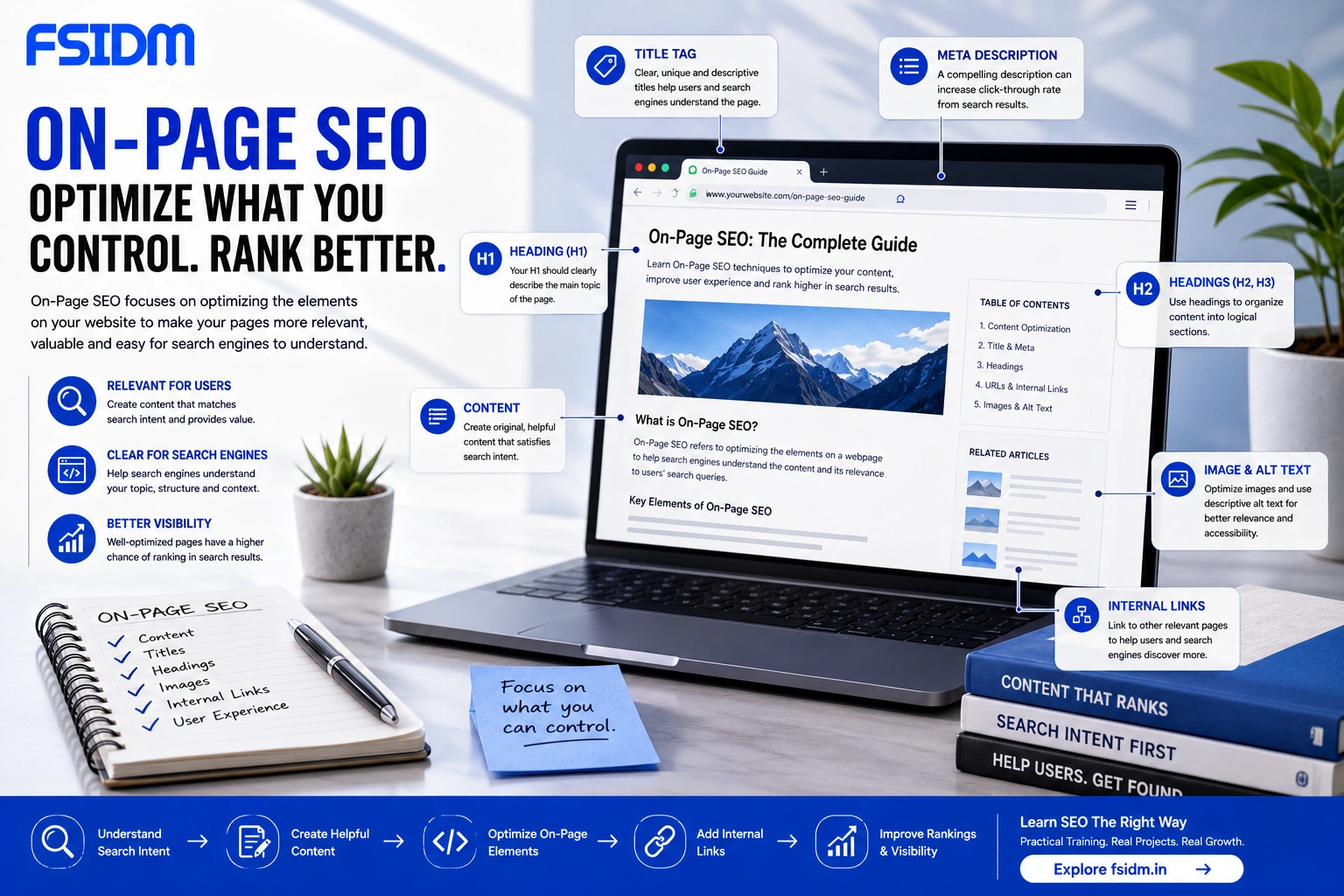
On-Page SEO, also called on-site SEO, is the practice of optimizing individual web pages to improve their visibility in search engines and attract relevant organic traffic.
Unlike Off-Page SEO, which focuses on external signals such as backlinks and brand mentions, On-Page SEO focuses on elements that exist directly on your website and are largely under your control.
What Does On-Page SEO Include?
On-Page SEO primarily focuses on three areas: content, HTML elements, and website architecture. The goal is to make a page useful for people while helping search engines understand its topic, relevance, and structure.
1. Content Optimization
Content is a major part of On-Page SEO. Your page should provide useful, relevant information that satisfies the user’s search intent.
- Keyword Placement: Use your primary keyword naturally in important parts of the page without keyword stuffing.
- Search Intent: Make sure the content matches what the searcher actually wants, whether that is information, comparison, a product, or a service.
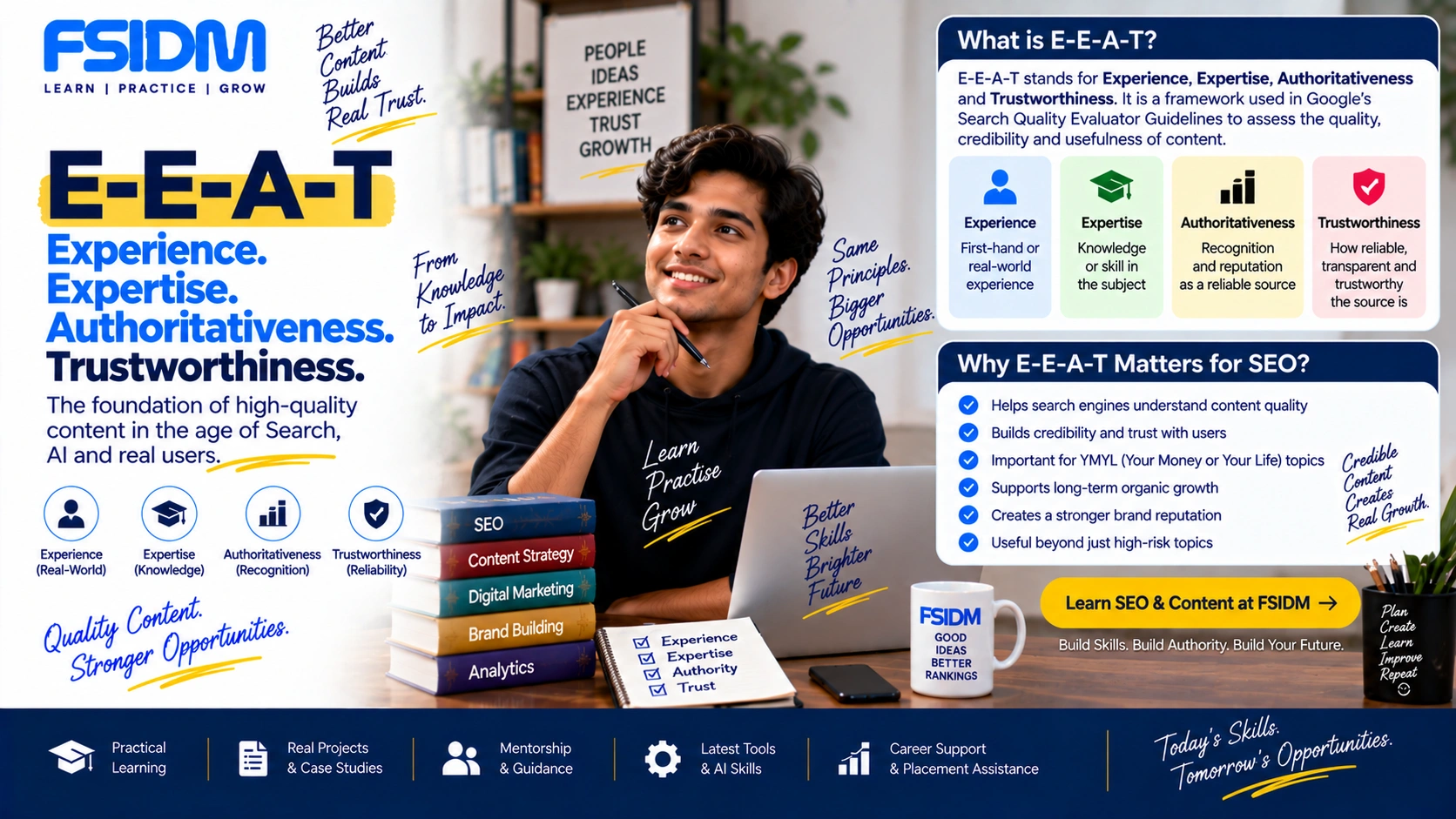
- E-E-A-T: Demonstrate Experience, Expertise, Authoritativeness, and Trustworthiness where relevant.
- Readability: Use clear language, short paragraphs, headings, lists, and appropriate formatting to make content easy to consume.
2. HTML and Metadata Elements
Search engines use HTML elements and metadata to understand the subject and structure of a webpage.
Title Tag
The title tag is the main title associated with a webpage and is commonly displayed as the clickable headline in search results. A clear, descriptive title can help both search engines and users understand the page.
Meta Description
The meta description provides a short summary of the page. Although it is not a direct ranking factor, a useful description can help encourage users to click the result.
Heading Tags
H1, H2, and H3 headings organize the content into a clear hierarchy. The H1 generally represents the main topic, while H2 and H3 headings organize supporting sections.
Image Alt Text
Alt text provides a textual description of an image. It can improve accessibility and help search engines understand the image’s context.
3. URLs and Internal Linking
The way pages are structured and connected also contributes to effective On-Page SEO.
SEO-Friendly URLs
Use descriptive, readable URLs that communicate what the page is about. Avoid unnecessarily complicated URLs containing meaningless numbers or parameters where possible.
Internal Linking
Internal links connect one page of your website to another relevant page on the same website. They help users discover related content and help search engines understand relationships between pages.
On-Page SEO vs Technical SEO
| On-Page SEO | Technical SEO |
|---|---|
| Focuses on content and page-level elements. | Focuses on website infrastructure and technical accessibility. |
| Optimizes keywords, headings, titles, content, images, and internal links. | Optimizes crawling, indexing, performance, HTTPS, XML sitemaps, and other technical systems. |
| Helps search engines understand the relevance of an individual page. | Helps search engines access and process the website efficiently. |
Why Is On-Page SEO Important?
- It helps search engines understand what your page is about.
- It helps your content match relevant search intent.
- It improves the structure and readability of your webpages.
- It helps users navigate between related pages.
- It can improve your chances of earning relevant organic search visibility.
On-Page SEO Checklist
- Identify the primary search intent.
- Create useful, relevant, people-first content.
- Use the target topic naturally throughout the page.
- Write a clear and descriptive title tag.
- Create a useful meta description.
- Structure content with logical H1, H2, and H3 headings.
- Optimize images and add descriptive alt text where appropriate.
- Use clean, descriptive URLs.
- Add relevant internal links.
- Review the page from both a user and search-engine perspective.
Frequently Asked Questions About On-Page SEO
What is On-Page SEO in simple words?
On-Page SEO means optimizing the content and elements of a webpage so search engines can understand it and users can find useful answers to their searches.
What are examples of On-Page SEO?
Examples include optimizing content, keywords, title tags, meta descriptions, headings, images, URLs, and internal links.
Is On-Page SEO the same as Technical SEO?
No. On-Page SEO focuses mainly on page-level content and elements, while Technical SEO focuses on the technical infrastructure that allows search engines to crawl and process a website.
Does On-Page SEO only mean using keywords?
No. Keywords are only one part of On-Page SEO. Search intent, content quality, page structure, headings, internal links, images, URLs, and other page-level elements also matter.
What is the difference between On-Page SEO and Off-Page SEO?
On-Page SEO focuses on elements you optimize directly on your website, while Off-Page SEO focuses on activities and signals outside your website, such as relevant backlinks, mentions, and digital PR.
Interview Question: What Is On-Page SEO?
Answer: On-Page SEO is the practice of optimizing individual webpages, including their content, keywords, headings, metadata, images, URLs, and internal links, to improve relevance, user experience, and organic search visibility.
Interview Tip
“On-Page SEO is everything we optimize directly on a webpage to make it more useful for users and easier for search engines to understand.”
Learn SEO With FSIDM
On-Page SEO is one of the foundations of a strong SEO strategy. Understanding how content, search intent, HTML elements, and internal linking work together helps you build webpages that are useful to both users and search engines.
At FSIDM, you can learn SEO and digital marketing through a practical, industry-focused approach.
Learn the fundamentals. Practice the strategy. Build better websites.
Explore FSIDM at fsidm.in.