SEO stands for Search Engine Optimization. It is the practice of improving a website so it becomes more visible when people search for products, services, information, or topics related to that website.
But SEO isn’t simply about getting more visitors. The more useful way to look at it is this: SEO helps connect people who are searching with websites that can genuinely answer their needs.
What Does SEO Actually Do?
Imagine you have a great digital marketing course, a useful service, or an excellent product. You put it on a website, but nobody can find it.
That’s where SEO enters the picture.
SEO improves different parts of your website so search engines can discover, understand, and evaluate your pages for relevant searches. The end goal is to earn organic visibility and traffic rather than relying entirely on paid advertisements.
How Do Search Engines Work?
Before understanding SEO, you need to understand what happens when a search engine discovers a webpage.
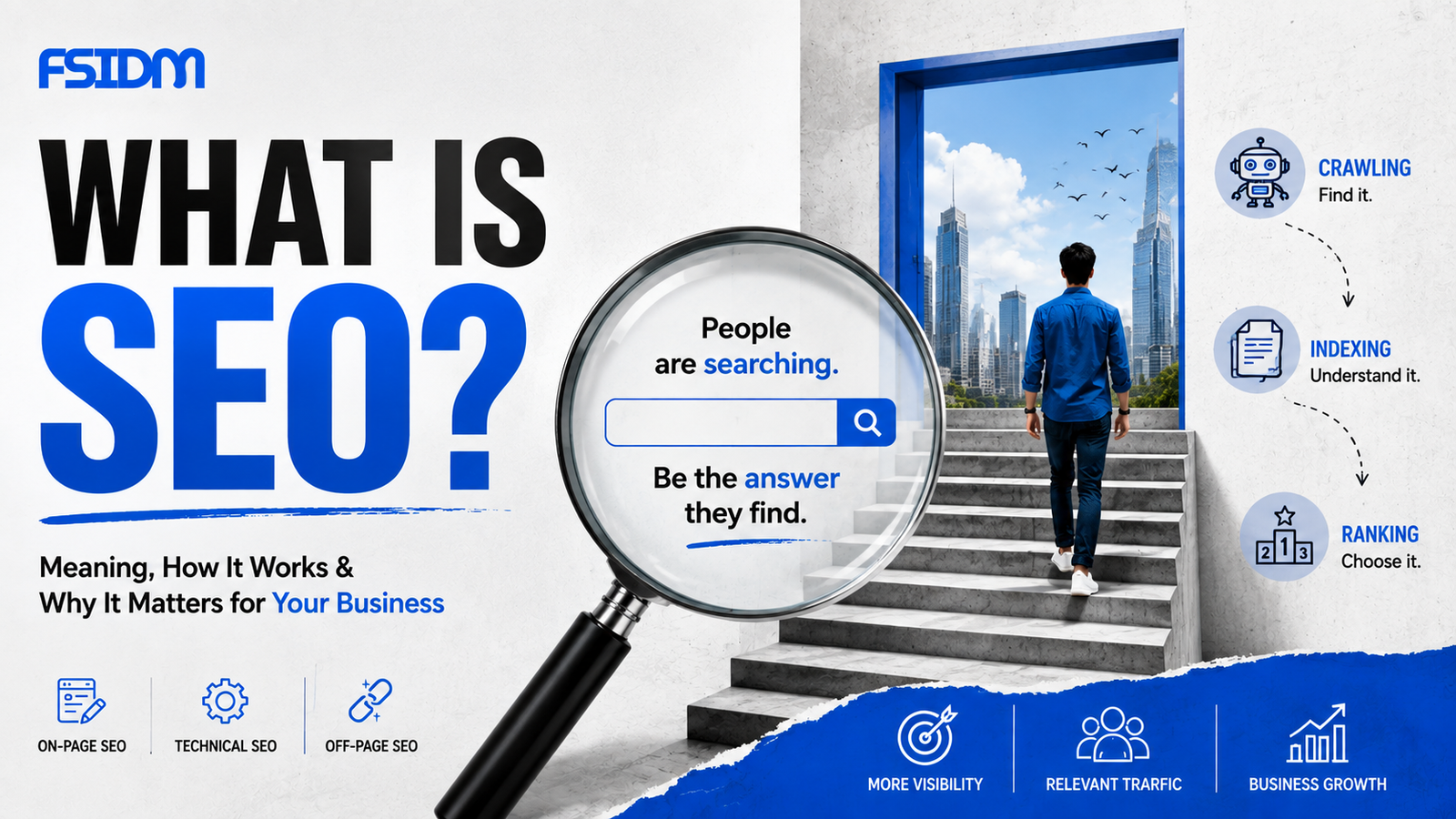
The process can be simplified into three stages: crawling, indexing, and ranking.
1. Crawling: Finding Your Website
Search engines use automated bots, commonly called crawlers or spiders, to discover new and updated webpages.
They can discover pages through links, sitemaps, and URLs they already know about.
Think of crawling as Google exploring a huge city. Your webpage is one of the places it needs to discover.
2. Indexing: Understanding the Page
After discovering a webpage, the search engine analyzes its content and other information and may store it in its index.
You can think of an index as a massive organized library. If a page is not available in the index, it generally cannot compete normally for relevant search results.
3. Ranking: Choosing the Result
When someone enters a search query, the search engine evaluates relevant indexed pages and determines which results are appropriate to display.
This is where factors such as relevance, content quality, authority, technical accessibility, and the intent behind the search become important.
| Stage | What Happens | Easy Way to Remember |
|---|---|---|
| Crawling | Search engines discover webpages. | Find it. |
| Indexing | Search engines analyze and may store webpages. | Understand it. |
| Ranking | Relevant pages are evaluated for a search. | Choose it. |
The Three Main Pillars of SEO
The supplied search overview identifies three main areas of SEO: On-Page SEO, Technical SEO, and Off-Page SEO. Each one addresses a different part of the search visibility problem.
On-Page SEO
On-Page SEO focuses on the content and elements present on your webpages.
- Content
- Keywords and topics
- Headings
- Page structure
- Internal links
- Information that satisfies the searcher’s need
The important point is that On-Page SEO isn’t about repeatedly placing a keyword on a page. It is about making the page relevant and useful for the person behind the search.
Technical SEO
Technical SEO focuses on the technical foundation of a website and helps search engine bots access and process it.
- Site speed
- Mobile friendliness
- HTTPS
- Crawlability
- Website architecture
- Indexability
A simple way to understand Technical SEO is: your content needs a foundation that search engines can access and understand.
Off-Page SEO
Off-Page SEO focuses on building the website’s reputation outside its own domain.
Backlinks are a major part of this. When relevant and reputable websites link to your content, those links can act as signals of confidence and authority.
Off-Page SEO can also involve reputation, relevant mentions, and other activities that strengthen how a brand is perceived beyond its own website.
Why Is SEO Important?
Think about the difference between someone randomly seeing an advertisement and someone actively searching for the exact thing you offer.
If someone searches for “digital marketing course in Ahmedabad,” they have already expressed an interest. They are looking for information, options, or a solution.
SEO helps a business compete for visibility at that moment.
That can make organic search valuable for businesses because it can help them:
- Reach people actively searching for relevant information
- Increase organic visibility
- Attract relevant website visitors
- Generate potential leads and customers
- Build online visibility and credibility
- Create an ongoing source of organic discovery
SEO Is More Than Ranking #1
Here’s where the usual definition of SEO becomes a little too narrow.
Suppose your website ranks first for a keyword, but the people searching that keyword have no interest in what you sell. Technically, you achieved a ranking. From a business perspective, however, the result may mean very little.
The better question is: Are you visible for the searches that actually matter to your audience?
That’s why effective SEO connects search intent, relevance, visibility, and business objectives rather than treating rankings as the only goal.
A Simple Example of SEO
Imagine two digital marketing institutes in Ahmedabad.
Institute A has a visually attractive website but provides little useful information about its courses, career questions, or SEO-related topics.
Institute B creates useful content around questions students actually ask, maintains a technically accessible website, clearly explains its courses, and builds its online reputation.
When someone searches for information related to digital marketing training, Institute B has more opportunities to become visible because it has built its website around both user needs and search accessibility.
That’s SEO in practice. It isn’t just adding a keyword to a page and waiting for Google to reward you.
SEO in Today’s Search Environment
The search experience has expanded beyond the traditional list of organic results.
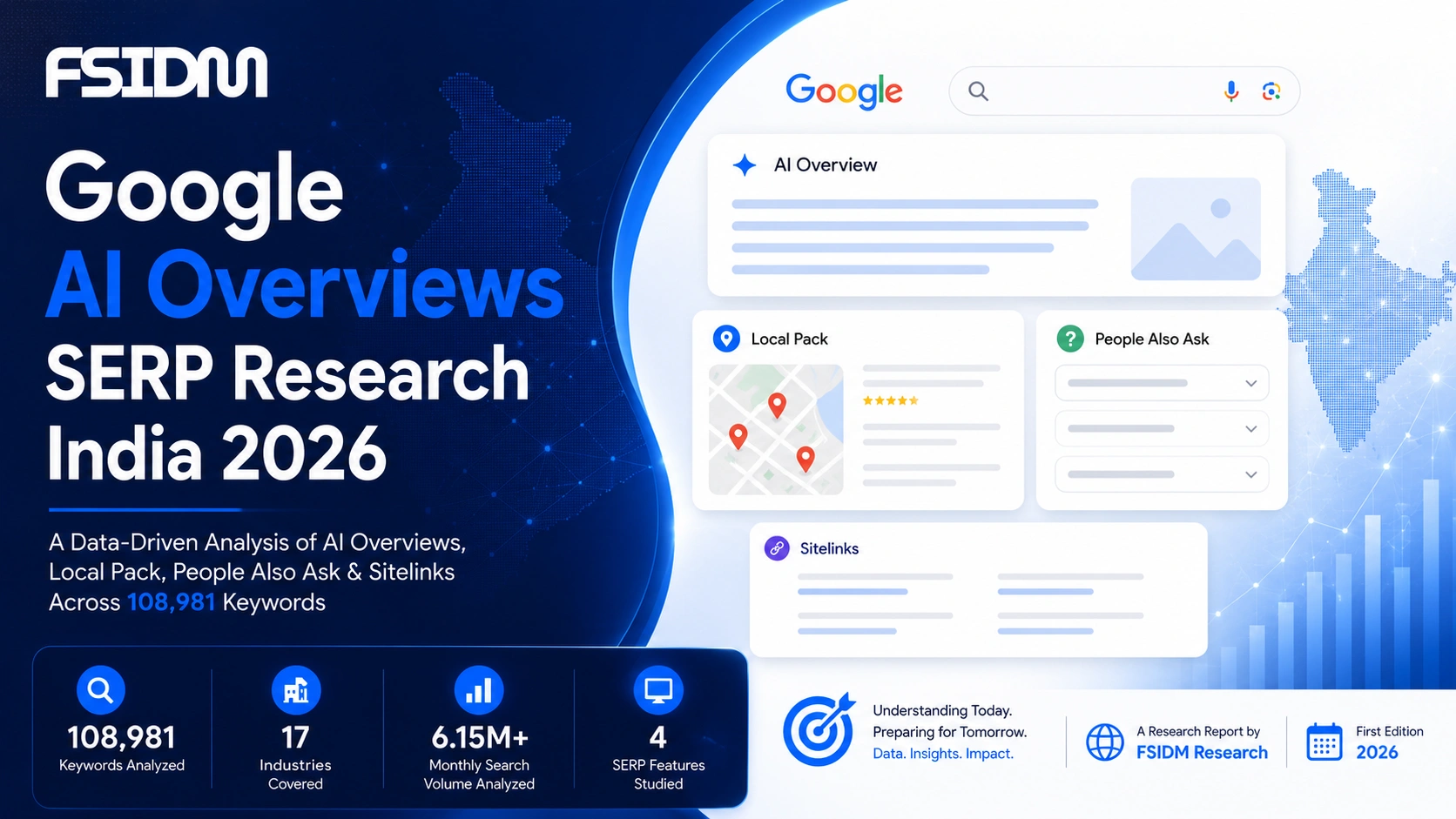
Depending on the query, users may encounter features such as People Also Ask, Local Pack, Sitelinks, and other search-result enhancements. The supplied overview also refers to AI-powered search engines, showing how search visibility is becoming broader than traditional blue-link rankings.
This means SEO professionals increasingly need to think about the complete search experience, not just one ranking position.
SEO and AI-Powered Search
AI-powered search changes how users may discover information. Instead of always choosing a webpage from a list of results, users can increasingly interact with search in a more conversational way.
This creates a useful question for modern SEO:
Can your information be discovered, understood, and considered useful within changing search experiences?
This is where newer areas such as AI SEO, Answer Engine Optimization (AEO), Generative Engine Optimization (GEO), and LLM SEO become relevant.
They do not make the fundamentals of SEO irrelevant. Instead, they expand the conversation from traditional rankings toward broader search and answer visibility.
SEO at a Glance
| SEO Area | Main Focus | Examples |
|---|---|---|
| On-Page SEO | Content and relevance | Content, keywords, headings, internal links |
| Technical SEO | Website accessibility | Speed, crawlability, mobile friendliness, HTTPS |
| Off-Page SEO | Authority and reputation | Backlinks, reputation, external mentions |
| AI Search Optimization | Emerging search visibility | AI SEO, AEO, GEO, LLM SEO |
A Practical SEO Mental Model
If you’re learning SEO, remember this sequence:
Discover → Understand → Rank → Attract → Convert
Technical SEO helps with discovery and accessibility. On-Page SEO helps search engines understand the subject and relevance of a page. Off-Page SEO contributes to authority and reputation. Together, these activities support visibility that can eventually contribute to business results.
What Does Pranav Veerani Say About SEO?
Pranav Veerani: “SEO isn’t about convincing Google that you’re the best. It’s about building something useful enough that Google has a reason to show it to the right person.”
The underlying idea is simple: rankings should be viewed as part of a larger process. The strongest SEO strategy starts with understanding what people need and then building a website that genuinely serves that need.
Common SEO Mistakes Beginners Make
- Thinking SEO is keyword stuffing: Repeating keywords does not automatically create useful content.
- Focusing only on rankings: Relevant traffic and business outcomes matter too.
- Ignoring technical problems: Search engines need to access and process your website.
- Chasing backlinks blindly: The supplied overview emphasizes reputable backlinks rather than simply accumulating links.
- Forgetting the user: Search optimization should still solve a genuine problem.
- Treating SEO as a one-time task: Search visibility requires ongoing attention as websites, competitors, and search experiences change.
Frequently Asked Questions About SEO
Is SEO free?
Organic search results do not require paying a search engine for every click in the same way paid advertising does. However, SEO itself requires investment in people, content, tools, technical work, and time.
How long does SEO take to work?
There is no single timeline for every website. The supplied overview does not provide a specific timeframe. Results can depend on the website, competition, content, technical condition, authority, and implementation.
What is the difference between SEO and PPC?
SEO focuses on improving organic search visibility, while PPC uses paid advertising to place advertisements in front of relevant searches. The supplied overview specifically distinguishes organic traffic from traffic generated through paid advertisements.
Can SEO help a small business?
Yes. SEO can help a small business become more visible when people search for its products, services, or topics related to its business. Local businesses can also benefit from optimizing for location-related searches.
Is SEO still relevant with AI-powered search?
Yes. The supplied overview explicitly includes AI-powered search engines in its definition of modern search visibility. The fundamentals of making a website useful, accessible, relevant, and understandable remain important as search experiences evolve.
SEO Interview Question and Answer
Interview Question: What is SEO?
Answer: SEO stands for Search Engine Optimization. It is the practice of improving a website so it becomes more visible in organic search results for relevant searches. It includes On-Page SEO, Technical SEO, and Off-Page SEO, with the overall goal of attracting relevant organic traffic and connecting users with useful information, products, or services.
Interview Tip
If you’re answering this in an interview, don’t stop at saying, “SEO means ranking a website on Google.” Explain the complete journey: search engines need to discover your website, understand its content, evaluate its relevance, and then decide which results to show for a user’s query.
Learn SEO Practically with FSIDM
Knowing what SEO stands for is only the first step. The real learning begins when you start researching keywords, analyzing search intent, auditing websites, optimizing pages, understanding search performance, and building strategies.
If you want to move from SEO theory to practical digital marketing skills, FSIDM (Full Stack Institute of Digital Marketing) can help you learn digital marketing through structured practical training.
Don’t just learn what SEO is. Learn how to actually do it.